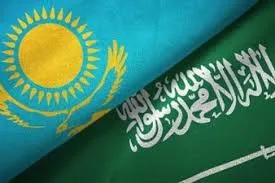
Kazakhstan and Saudi Arabia have complementary mining ambitions: one possesses an established geological and metallurgical base, while the other is mobilising capital and industrial policy around critical minerals.
Meetings surrounding the Astana Mining & Metallurgy Congress in June 2026 focused on exploration, extraction, processing, infrastructure and higher-value production. Kazakhstan’s government said the parties were considering joint initiatives involving state institutions, national companies and private businesses.
The strategic fit is credible. Kazakhstan produces uranium and has established capabilities in metals including zinc, titanium and magnesium. It is seeking investment to explore a wider group of critical-mineral occurrences and expand domestic processing. Saudi Arabia, meanwhile, is using mining to diversify its economy and establish international supply relationships.
Yet the relationship begins from a modest commercial base. Kazakhstan reported bilateral trade of US$11.7 million in 2025, despite a 17% increase. Saudi foreign direct investment into Kazakhstan over the preceding two decades totalled US$115.3 million. Those figures are small relative to the capital required for a major mine or processing complex.
The partnership will become materially important only when it produces defined assets, financing structures and customers. Cooperation on geological mapping can improve knowledge, but a bankable mine requires ownership rights, resource definition, infrastructure, metallurgy and an offtake strategy.
Saudi participation could take several forms: direct equity, joint ventures, project finance, processing investment or long-term purchase agreements. Kazakhstan could offer access to mineral opportunities and established technical capability. The allocation of technical, commodity-price and geopolitical risks would determine whether such projects advance.
There is also a wider geopolitical dimension. Countries are building mineral relationships that do not depend exclusively on traditional Western capital or Chinese processing. Middle-power partnerships can diversify finance and markets, although they do not remove the commercial discipline required by individual projects.
For African governments, the lesson is that diplomatic agreements gain value when linked to a project pipeline. Memoranda should be followed by named opportunities, data rooms, responsible agencies and deadlines. Otherwise, cooperation remains an expression of intent rather than a new supply chain.
Kazakhstan’s attraction is broader than a list of commodities. It offers an existing mining sector, technical institutions and metallurgical experience, all of which can shorten the path between an exploration target and an investable project. Saudi participation could provide equity, project finance, industrial partnerships or long-term demand.
The parties will still need to decide where processing occurs and how value is divided. Exporting concentrate, refining in Kazakhstan and supplying material to Saudi industry produce different employment, infrastructure and revenue outcomes. Those choices cannot be resolved by a general cooperation statement.
The relationship should therefore be evaluated through conversion. A credible next phase would identify a limited number of projects, publish responsible agencies and create investment structures capable of funding technical work. Without that progression, the agreement will remain strategically interesting but commercially small.
Disclosure will also matter. Investors need enough geological, legal and financial information to compare opportunities and understand which party carries exploration and development risk. A transparent project pipeline would turn broad diplomatic interest into decisions that companies can evaluate.