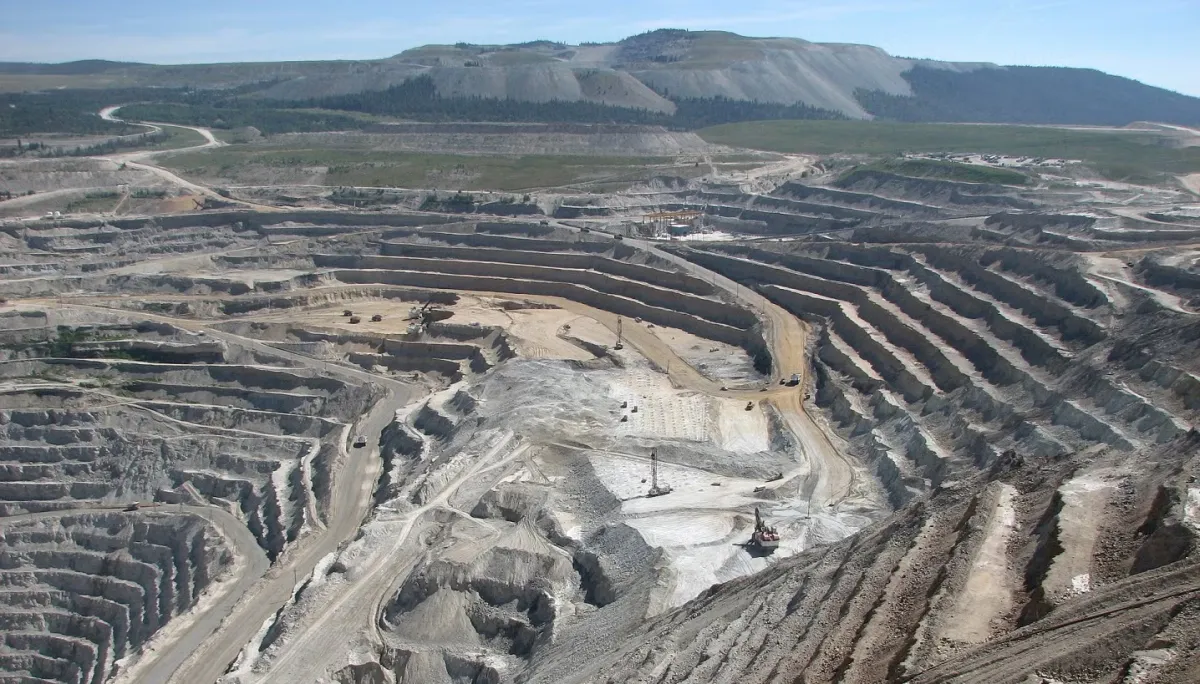
The Democratic Republic of Congo’s mining opportunity is usually described through deposits, licences and production. That framing overlooks the extensive industrial economy required to keep its mines operating.
In 2024, the country exported more than 3.1 million tonnes of copper, according to the Ministry of Mines. Large operations continue to add processing capacity, while new exploration and infrastructure projects are broadening activity across the Copperbelt.
This growth creates demand far beyond the companies extracting the ore. Mines require haulage equipment, tyres, pumps, electrical systems, reagents, laboratories, water treatment, automation, construction, maintenance and reliable transport. Banks, insurers, training providers and environmental specialists also participate in the operating chain.
For companies considering the DRC, mineral ownership is therefore only one—and often the most capital-intensive—route into the market.
Production growth creates industrial demand
Kamoa-Kakula illustrates the scale of the supporting economy surrounding a modern mining complex. The operation produced 388,838 tonnes of copper in 2025, while its on-site smelter began producing copper anodes and sulphuric acid. Ivanhoe expects the smelter eventually to process copper at an annualised rate of 500,000 tonnes.
Such expansion affects multiple markets simultaneously. Higher output increases requirements for power, processing equipment, replacement parts and technical labour. Smelting creates demand for specialised maintenance and environmental controls, while the movement of higher-value products requires dependable road, rail, border and port services.
Ivanhoe expects local smelting to approximately halve its logistics costs because copper anodes contain substantially more copper per truckload than concentrate. The same facility could produce as much as 700,000 tonnes of sulphuric acid annually at steady state, creating a domestic source of a critical mining input.
This demonstrates how one mine expansion can reshape commercial demand well beyond the pit.
Several routes into the mining economy
Equipment remains the most visible opportunity. Drilling rigs, haul trucks, processing systems and environmental-monitoring technologies are among the areas identified for potential participation in the DRC market. Power, transport, housing and downstream processing create additional openings.
Yet selling machinery is only one business model. International companies can also enter through:
- Distribution and authorised dealership arrangements.
- Equipment leasing and fleet-management services.
- Engineering, procurement and construction contracts.
- Maintenance and component-rebuilding facilities.
- Digital mine-management and process-control systems.
- Independent laboratories and environmental services.
- Power generation, storage and transmission projects.
- Trade finance, insurance and equipment financing.
- Training programmes and technical partnerships.
The stronger propositions combine international technology with capacity inside the DRC. Mines do not only require products; they need availability, response time and accountability when equipment fails.
A supplier capable of keeping parts in-country, training technicians and supporting equipment throughout its operating life may offer more value than a distant exporter competing principally on price.
Local content changes the entry model
The market cannot be approached solely as an export destination. Congolese subcontracting legislation generally reserves covered activities for companies with majority Congolese capital and Congolese management, subject to prescribed conditions and limited exceptions.
Enforcement is also reaching deeper into mining procurement. In 2026, the subcontracting regulator reinforced local participation in the distribution of mining inputs including acids, lime, coal and other reagents.
For foreign companies, this does not eliminate opportunity. It changes the structure through which that opportunity can be pursued.
Partnerships with eligible Congolese businesses, local distribution arrangements, technical-licensing agreements and joint investments in service capacity can provide routes into the market. But credible participation requires careful partner selection, transparent ownership and clear allocation of operational responsibility.
A nominal local partnership created only to satisfy registration requirements is unlikely to provide the technical performance expected by a large mine. Conversely, ownership compliance without financing, equipment or skills will not create a competitive supplier.
The commercial opportunity lies in bringing those elements together.
Infrastructure is both a constraint and a market
Electricity shortages and inadequate transport links continue to raise operating costs in the DRC. These limitations can delay mine expansion, complicate procurement and make the country more difficult for new suppliers to serve.
They also represent investable markets.
Mining companies increasingly require captive or contracted power, renewable generation, battery storage and cross-border electricity arrangements. Logistics providers are needed to move machinery and consumables into the Copperbelt and export metal through southern and western corridors.
The development of the Lobito Corridor could support supplier growth and downstream processing, although the Extractive Industries Transparency Initiative cautions that these outcomes depend on governance, financing, industrial capacity and coordination between Angola, the DRC and Zambia.
Infrastructure should therefore not be treated as a background condition. It is part of the mining investment opportunity itself.
Presence matters more than occasional sales
The most sustainable entry strategy is unlikely to be occasional product shipments managed entirely from abroad. Mining customers assess whether a supplier can deliver consistently, maintain equipment, provide technical support and respond when operations are at risk.
That favours companies prepared to establish representation in Lubumbashi or Kolwezi, maintain regional inventory, train local teams and build relationships with mine procurement departments and Congolese subcontractors.
The DRC’s mining economy is becoming large enough to support more specialised service businesses, but participation carries costs. Establishing local capacity requires working capital, compliance systems, reliable partners and patience with procurement and customs procedures. Negotiations with public institutions and state-owned companies can also be prolonged.
The opportunity is therefore not simply to sell into a growing mining market. It is to build the industrial capacity that allows that market to function.
Every additional tonne of Congolese copper must be powered, processed, tested, transported and financed. The companies able to perform those tasks reliably can participate in the country’s mining growth without ever owning a mine.