The Democratic Republic of Congo is giving formal institutional status to the body responsible for implementing its strategic partnership with the United States. The immediate challenge is no longer negotiating the framework, but advancing the mining, energy and transport projects identified since the agreement was signed on 4 December 2025.
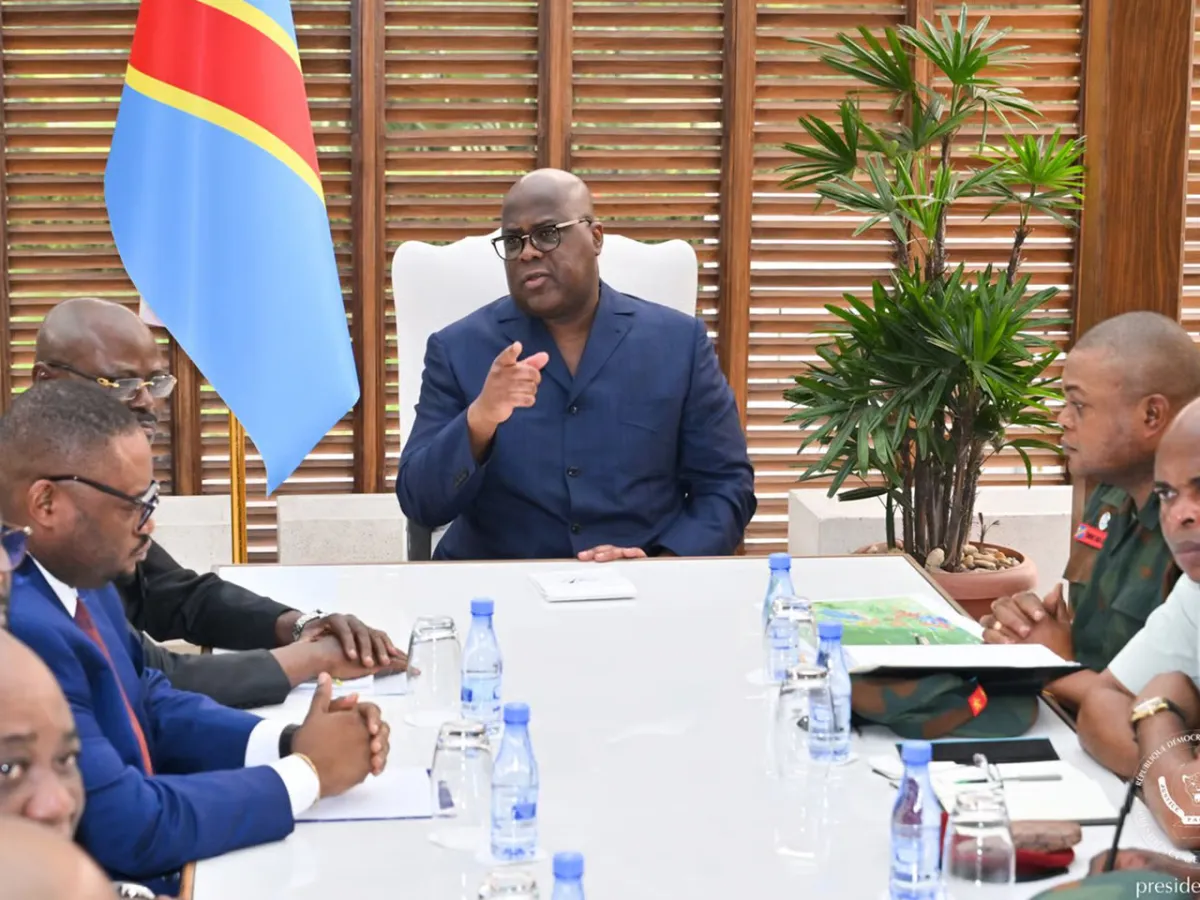
Deputy Prime Minister and Economy Minister Daniel Mukoko Samba presented a draft decree establishing the organisation and operating rules of the “DRC–USA Task Force” during a Council of Ministers meeting. Working under the authority of Prime Minister Judith Suminwa, the body is expected to coordinate government institutions, monitor commitments and prepare the decisions required for implementation.
The task force is not entirely new. Suminwa chaired its first coordination meeting on 11 June 2026. At that meeting, the government said the DRC had submitted approximately 50 strategic projects to the United States and received an initial list of assets connected to the bilateral framework.
The decree therefore appears intended to formalise an existing mechanism by defining its legal mandate, membership and responsibilities. DRC Prime Minister’s Office
Preferential access does not guarantee investment
The strategic partnership gives US investors a right of first offer over certain assets and projects designated by the DRC. These may include mining concessions, deposits, exploration areas and infrastructure or industrial-processing projects.
When a US investor submits a proposal for a project included in the Strategic Asset Reserve, the agreement provides for a negotiation period of up to nine months. If the offer is unsuccessful, the opportunity may subsequently be presented to investors considered aligned with the partnership’s objectives.
The agreement also provides for discussions on establishing a Strategic Minerals Reserve in the DRC, increasing domestic mineral processing and offering US participants priority access to certain export volumes.
Other provisions cover the Sakania–Lobito transport corridor, Grand Inga, artisanal-mining formalisation and reforms to the DRC’s fiscal and administrative framework. International Energy Agency
These mechanisms position US companies favourably, but they do not automatically finance or deliver projects. Each opportunity must still meet investors’ technical, legal, financial, environmental and security requirements.
The Congolese task force must therefore transform a politically selected list into an investable portfolio. That means clarifying mineral rights, preparing technical studies, defining commercial structures, identifying credible partners and coordinating administrative approvals.
Fifty projects await decisions
The partnership extends beyond access to copper, cobalt, germanium and gold. It is intended to support energy generation, transport infrastructure, mineral processing and new export corridors.
In June, a consortium comprising Mida Advisors, Standard Bank and Bank of America presented the government with a proposed mechanism for mobilising long-term capital for energy, transport and mineral-processing projects. The meeting demonstrated financial interest, but did not amount to firm funding commitments for the submitted projects. DRC Prime Minister’s Office
Kinshasa has also made clear that Washington will not finance the programme alone. Projects of the scale of Grand Inga or the Lobito corridor will require private investors, development banks, multilateral institutions and potentially several international partners operating through shared financing structures.
The task force will consequently be judged on whether it reduces the administrative fragmentation that has delayed projects in the DRC. Investors need identifiable decision-makers, coordinated approvals and clear deadlines.
The indicators of progress will be measurable: how many projects Washington accepts for further development, how many offers are made for strategic assets, how much committed capital is secured, which contracts reach financial close and when construction begins.
Those results—not the creation of another coordination body—will determine whether the DRC–US partnership moves from geopolitical agreement to industrial implementation.