China’s mining-technology industry appears to be entering a new phase.
For years, the country’s equipment manufacturers expanded internationally by selling excavators, loaders, haul trucks, drilling machines and processing equipment. The emerging strategy is broader: export not only the machine, but the complete operating system surrounding it.
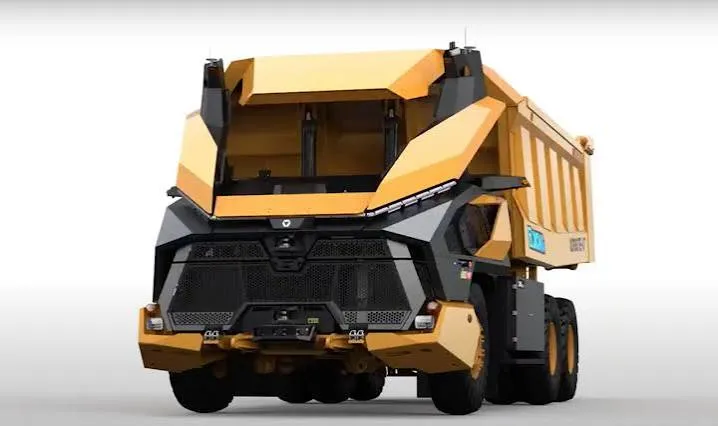
That system may include autonomous-driving software, onboard sensors, remote-control stations, fleet dispatch, battery-electric trucks, charging or battery-swapping infrastructure and operational support.
Recent partnerships involving Rio Tinto, CITIC, CiDi and MMD indicate how this model could move from domestic Chinese mines into international operations.
The commercial proposition is no longer simply a lower-priced truck. It is an integrated platform for moving material with fewer operators in hazardous areas, closer control of fleet movements and, in some applications, lower direct emissions.
Capital is moving towards mining technology
In June 2026, a new equity investment fund was established in Suzhou Industrial Park by CITIC Investment Holdings, CITIC Fund, Rio Tinto and several other partners.
According to the Suzhou Industrial Park administration, the fund will target areas including mining technology, automation, digitalisation, new energy and resource recycling.
The significance lies in the combination of industrial capital and operational mining experience.
Mining-technology companies often face a difficult transition between developing a prototype and demonstrating reliable performance under continuous production conditions. Access to capital alone does not resolve that challenge. They also need operating sites, equipment-manufacturing partners and customers prepared to conduct structured trials.
A fund backed by mining and industrial groups can potentially connect these requirements.
Industry reporting has identified autonomous-haulage and battery-swapping specialist Boonray Technology as a proposed investment target. However, any final investment terms and deployment commitments should be distinguished from the fund’s confirmed establishment and stated investment mandate.
China has already created domestic scale
The strongest foundation for international expansion is the scale of deployment already taking place within China.
CiDi reported that it delivered 630 autonomous mining-truck units or solution sets in 2025, an increase of 317% from the previous year. By the end of February 2026, the company said its delivered and pending deployments exceeded 1,500 units.
CiDi reported 2025 autonomous-driving revenue of RMB843 million—approximately US$117 million—and said its autonomous mining systems had transported more than 140 million tonnes of material cumulatively by February 2026.
These figures are company-reported, but they demonstrate that the market has progressed beyond isolated prototypes.
In March 2026, CiDi announced an agreement under which it would provide the autonomous-driving system for a planned fleet of 500 electric mining trucks involving Guangna Group, Tonly, CATL and Jiangsu Hengwang.
Large domestic orders give developers an opportunity to accumulate operating data, improve dispatch algorithms and test maintenance requirements across more machines and operating cycles.
Yet domestic scale does not automatically establish international suitability.
The route to international markets
In April 2026, MMD and CiDi signed an agreement to integrate CiDi’s autonomous-driving hardware and software into MMD’s TraxIQ material-handling platform.
Under the arrangement, MMD will lead global commercialisation and deployment, while CiDi will provide sensing, computing and autonomous-driving systems. The agreement also includes retrofit kits intended to automate compatible existing mining equipment.
This is an important change in market strategy.
Rather than attempting to establish an entirely new international sales and support network, a Chinese technology company can work through a partner with existing engineering capacity and relationships across established mining markets.
MMD says the parties will first undertake further validation in mining environments outside China, drawing on CiDi’s Chinese operating experience.
The distinction matters: the technology has achieved material domestic deployment, while its international operating record is still being developed.
From individual machines to integrated systems
Autonomous haulage is not created by removing the driver from a truck.
A functional system requires several connected layers:
- Vehicles capable of receiving electronic commands
- Positioning, perception and obstacle-detection systems
- Reliable mine-site communications
- Fleet-management and dispatch software
- Traffic rules for autonomous and human-operated equipment
- Remote supervision and intervention
- Maintenance and diagnostic capability
- Digital mapping and continuous route updates
- Procedures for emergencies and degraded operating conditions
Electrification introduces another layer. A mine must determine how trucks will charge or exchange batteries without disrupting production.
Battery swapping can reduce the time that a truck remains unavailable for charging, but it requires compatible batteries, automated or semi-automated exchange stations, grid capacity and careful management of battery condition.
The product is therefore not just the truck. It is the truck, energy system, communications network, operating software and maintenance model functioning together.
Mixed fleets may determine adoption speed
A complete transition from conventional vehicles to an autonomous fleet is rarely practical in a single step.
Many mines must continue operating human-driven trucks, service vehicles, graders, loaders and light vehicles while introducing autonomous machines.
CiDi says it has developed systems for mixed-fleet operations in China. Its partnership with MMD also includes retrofit technology designed for compatible existing machines.
This could be commercially significant. A retrofit pathway may allow an operator to introduce autonomy without immediately replacing its entire fleet.
But mixed traffic is also one of the most demanding operating environments. Autonomous vehicles must anticipate the less predictable behaviour of human drivers while maintaining safe separation and avoiding unnecessary stoppages.
Performance will have to be assessed at the system level. A truck can be technically autonomous but still fail to deliver value if communications interruptions, conservative traffic rules or repeated interventions reduce overall fleet productivity.
Why African miners will watch closely
No major African deployment arising from these specific partnerships had been announced in the reviewed sources as of August 2026.
The African relevance is therefore prospective, not a confirmed rollout.
Nevertheless, African mines are likely to follow these developments for several reasons.
Autonomous haulage can reduce human exposure to hazardous working areas and address operator shortages at remote sites. Electric haulage may also reduce diesel consumption where a mine has sufficient electrical capacity.
Chinese manufacturers are already important suppliers of equipment and industrial infrastructure across Africa. If autonomous technology is offered through established international partners or as part of wider equipment and financing packages, it could provide another route to adoption.
The strongest early opportunities may be controlled open-pit environments with repetitive haul routes, high equipment utilisation and reliable communications and power infrastructure.
Operations with unstable power, limited connectivity or weak local technical support will face a more difficult transition.
The questions African mines should ask
Price will matter, but it should not dominate the evaluation.
Before selecting an autonomous-haulage platform, a mine should establish:
Interoperability
Can the system work with the mine’s existing trucks, loading units and fleet-management software, or will it require a single-vendor environment?
Local support
Who will maintain the sensors, computers, communications equipment and electric drivetrains? How quickly can replacement components reach the site?
Safety validation
Which operating scenarios have been tested, and what independent assurance supports the safety case? How does the system respond to communication loss, poor visibility, road deterioration or unexpected human activity?
Data control
Where will operational data be stored? Who can access it? Can the mine transfer historical data if it changes technology providers?
Energy requirements
If the fleet is electric, what additional generation, storage, charging or battery-swapping infrastructure is required? Can the power system support peak demand without compromising the processing plant?
Measurable productivity
The relevant measure is not the number of driverless trucks deployed. It is the effect on tonnes moved, cycle time, equipment availability, safety exposure and total cost per tonne.
The international test has begun
China has demonstrated that autonomous mining technology can be deployed at significant scale within its domestic market.
The next phase will be harder.
International mines differ in regulation, fleet composition, labour arrangements, road design, communications infrastructure, climate and maintenance capacity. Technology proven in a Chinese coal operation will still require site-specific validation before it can be relied upon at a copper, gold, iron-ore or phosphate operation elsewhere.
Partnerships such as CiDi–MMD provide a route into those markets. The Rio Tinto–CITIC fund shows that capital is also being organised around the technology ecosystem.
Together, these developments point towards an export model built around technology, manufacturing, infrastructure and commercial partnerships—not equipment alone.
For African mining companies, the arrival of more autonomous-equipment providers could increase competition and expand the range of available solutions.
But the winning system will not necessarily be the one with the most advanced demonstration. It will be the one that can maintain safe, productive and supportable operations at the mine where it is actually deployed.