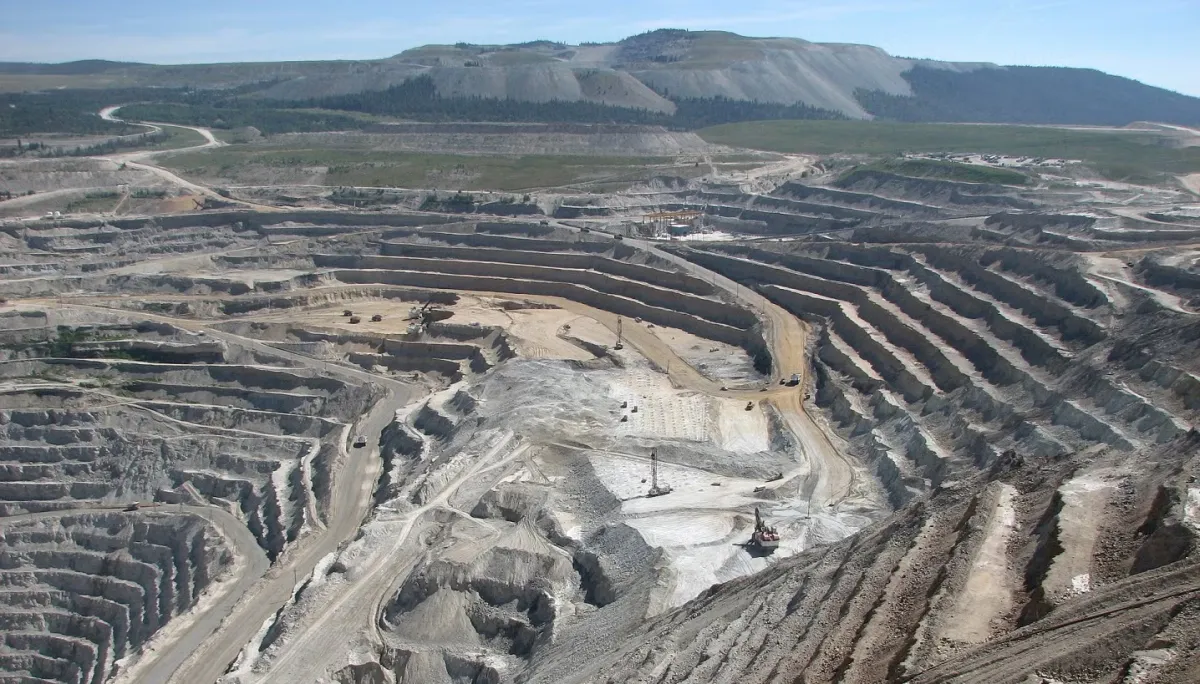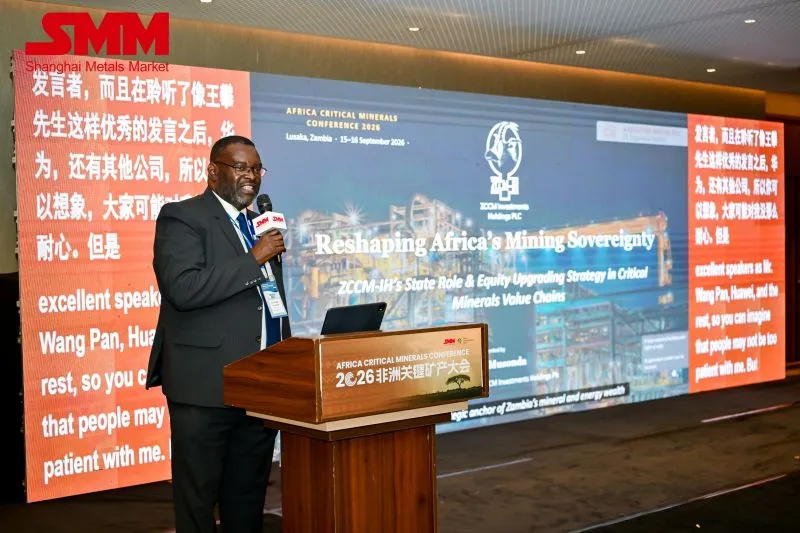
Louis Watum Kabamba’s first year as mines minister has brought greater coherence to a shift already under way in the Democratic Republic of Congo’s mining policy. Kinshasa is no longer seeking only to increase production and tax receipts. The state is also attempting to exert greater influence over export volumes, company ownership, domestic processing, mineral marketing and the organisation of artisanal mining.
The promulgation of a local-content law, continued regulation of cobalt exports, inauguration of a pilot gold refinery, the first official shipment of lithium concentrate and the launch of an artisanal mining pilot zone all belong to this broader policy direction.
These measures have not reached the same stage of maturity. Some are now established in law. Others have achieved an initial operational milestone, while several remain projects whose economic impact has yet to be documented.
The first-year record should therefore be understood as a mining policy still under construction. The DRC has installed several instruments. It must now demonstrate that they can durably change how value from the mining industry is distributed.
Local content broadens Congolese participation
The promulgation of the local-content law on July 3, 2026, represents the most significant institutional development of the period.
The reform reaches beyond mining subcontracting. It is intended to increase Congolese participation in the supply of goods and services, employment, professional training, skills transfer and—subject to provisions still requiring clarification—the ownership of companies operating in the country.
The process began before Watum’s appointment to the Mines Ministry, when he headed the Ministry of Industry. Its adoption nevertheless demonstrates continuity between industrial and extractive policy: minerals are to be assessed not only by their production or export value, but also by the economic activity they generate inside the DRC.
The law’s real reach will now depend on its implementing measures. The government must define supplier-certification requirements, reserved business categories, obligations placed on major contractors and mechanisms for verifying beneficial ownership.
Nominee shareholders remain the principal risk. A company may be legally registered as Congolese while remaining financed, managed or effectively controlled by foreign interests. Implementation should therefore measure the value of contracts secured by genuinely independent Congolese companies, rather than merely count locally registered entities.
Access to finance is the other constraint. Without credit, equipment, technical certifications and bank guarantees, Congolese small and medium-sized enterprises will struggle to execute large contracts for industrial mining companies.
Cobalt introduces supply management
Cobalt regulation represents the most interventionist part of the emerging policy.
The original export suspension was introduced in February 2025, before Watum became mines minister, in response to depressed prices and excess global supply. It was subsequently replaced by an export-quota system administered by the Authority for the Regulation and Control of Strategic Mineral Substance Markets, or ARECOMS.
The policy reduced the immediate availability of Congolese cobalt in international markets and contributed to supporting prices. It also demonstrated that the DRC intends to use its dominant position in global mine supply to influence value, rather than allow producers alone to determine the pace of exports.
The system nevertheless carries material risks. Lower export volumes can affect companies’ immediate revenues and the state’s fiscal receipts. Quota allocation must also remain transparent to avoid preferential treatment or market distortions between producers.
Its effectiveness cannot be judged solely by movements in the international cobalt price. A complete assessment must compare exported volumes, total sales value, tax receipts, accumulated stocks and the effect on mine production.
Higher prices are a favourable signal. They do not yet prove that the quota system has maximised value for the DRC.
Lithium opens a new export industry
The first official shipment of spodumene concentrate from Manono on July 22, 2026, was an important operational milestone.
The consignment produced by Manono Lithium left the port of Mutowa in Tanganyika Province for Kigoma in Tanzania, before being transferred to international markets. The CEEC certified it as the first official export of a lithium-bearing product from the DRC.
The shipment adds the DRC to an African lithium market in which Zimbabwe and Mali have established an early lead. It also begins to diversify a Congolese mining industry that remains heavily dependent on copper and cobalt.
Its commercial importance cannot yet be quantified. The shipment’s volume, grade and value were not disclosed, nor were the buyer and final destination identified.
The next priorities are to stabilise production, secure the transport corridor between Manono and Lake Tanganyika and clarify the level of lithium processing to be developed inside the DRC.
A lithium industry cannot be evaluated solely on shipments of concentrate. Its national value will depend on revenue, employment, infrastructure and the processing capacity established in the country.
Gold refining tests the domestic-processing strategy
The inauguration of DRC Gold Refinery in Kalemie on March 11, 2026, provides another physical expression of the government’s policy: more minerals should be processed before export.
The pilot refinery, established through a partnership between DRC Gold Trading and Lunga Mining, has an announced monthly capacity of 500 to 600 kg of gold and is intended to produce metal with purity of up to 99.9%.
The facility will create value only if it secures a regular and traceable supply of raw gold.
The main constraint facing Congo’s gold industry is not simply the absence of refining equipment. Informal supply chains remain dominant. Smugglers can offer artisanal producers rapid payment, lower taxation and established export routes through neighbouring countries.
The refinery must therefore offer competitive prices, acceptable payment periods and traceability compatible with international market requirements.
Its relevant performance measure will be the quantity of gold actually purchased and refined—not its installed capacity alone.
Artisanal mining seeks a viable model
The ministry also points to 64 artisanal mining zones in Lualaba and Haut-Katanga, together with 1,489 cooperatives and processing entities.
The launch of the Kasulo ZEA 786 represented the main operational step. More than 5,000 artisanal miners previously working at the T17 site, inside Kamoto Copper Company’s concession, were due to be transferred to the pilot zone.
The operation responds to the recurring conflict between industrial permit holders and artisanal miners occupying their concessions.
Administrative recognition does not, however, make an artisanal mining zone viable. A site needs sufficient mineralisation, acceptable safety conditions, equipment, traceability services and licensed buyers.
The insurance programme announced for miners and their dependants could become an important innovation. Its success should be measured by the number of registered beneficiaries, risks covered, financing of premiums and claims actually paid.
The reform will ultimately be judged by how many legally created zones become functioning economic areas.
Digitalisation prepares a longer-term reform
The proposed digitalisation of geological archives completes this policy framework.
Watum has held discussions with Belgium’s Royal Museum for Central Africa and European partners about digitising historical geological data and making it compatible with artificial-intelligence and advanced analytical platforms.
For the DRC, this involves more than administrative modernisation. Better control of geological information could improve exploration targeting, increase the value of mining permits and strengthen the state’s position in negotiations with investors.
The programme remains at a preparatory stage. Its progress should be measured through secured financing, the number of archives digitised, geographic coverage, data-access rules and the capacity of Congolese institutions to manage the resulting information.
A policy that must now produce data
Watum’s first year has strengthened a direction already visible in Congolese mining policy: the state wants to intervene more directly in mineral marketing, processing, local participation and the organisation of production.
Several advances are verifiable. The local-content law has been promulgated. The cobalt-quota system is operational. A pilot gold refinery has been inaugurated. A first lithium shipment has been certified. An artisanal mining pilot zone has been launched.
The next phase will be more demanding. It must produce comparable data: the value of local contracts, cobalt export volumes, fiscal receipts, lithium production, gold refined, viable artisanal zones and revenue transferred to mining communities.
Congolese mining policy now has several new instruments. Its credibility will depend on whether they retain more value inside the DRC—and whether that value becomes visible in public accounts, Congolese companies and mining communities.