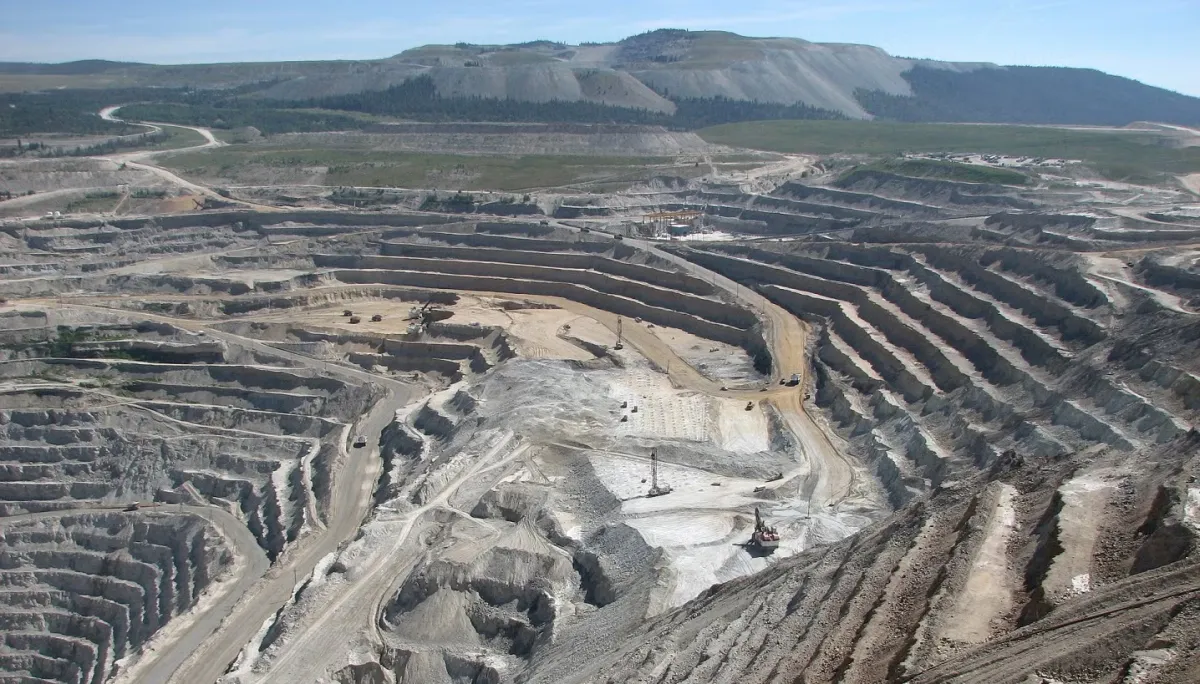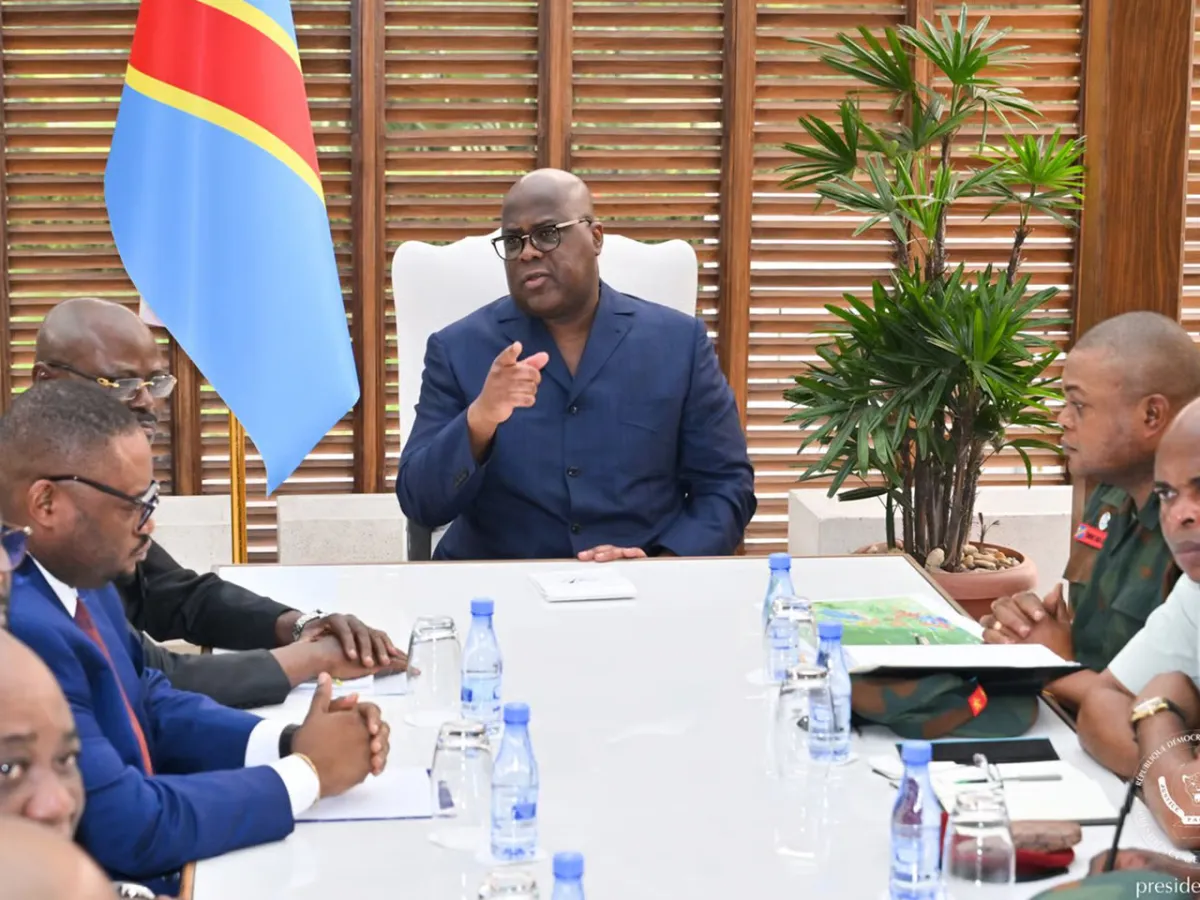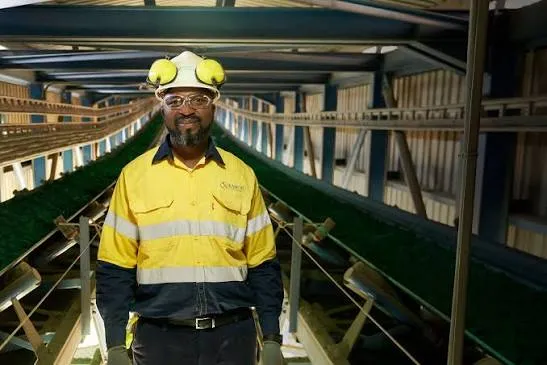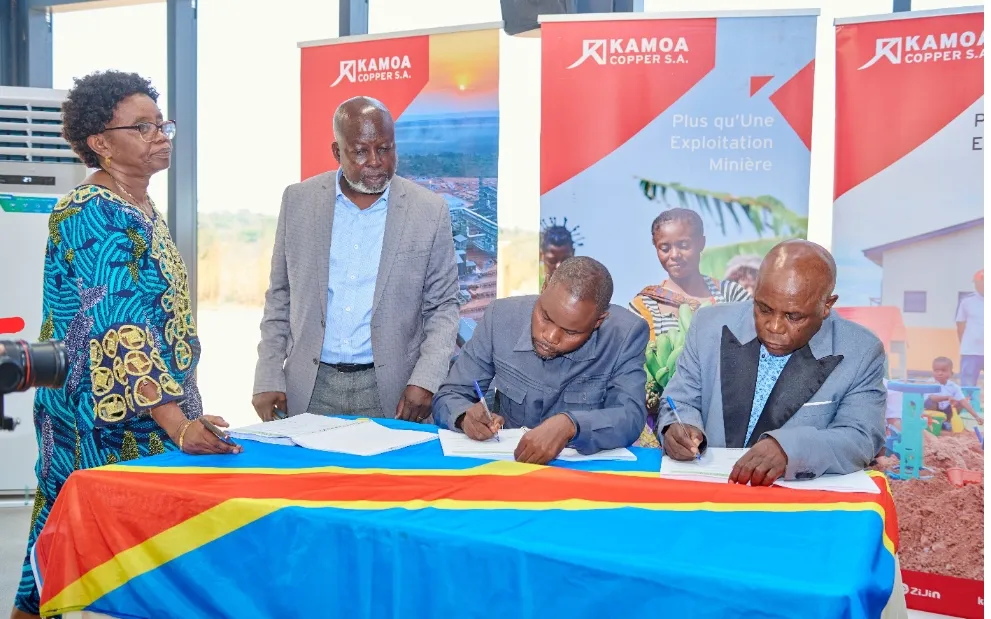
Kamoa Copper S.A. has signed a new cahier des charges committing US$16,855,000 to five community projects in Mutshatsha Territory, Lualaba Province, over the period 2026 to 2030. The signing took place at the company's site in the presence of representatives of the provincial mines ministry, the territorial administrator, customary authorities and community delegates, alongside managing director Annebel Oosthuizen. Congolese outlets carried the announcement on 18 and 19 August 2026.
The cahier des charges is the schedule of socio-economic commitments that the 2018 mining code requires every holder of an exploitation licence to negotiate with the communities its operations affect. It is one of three legal channels through which mining money is meant to reach the ground in the DRC. The second is the mining royalty, of which 25% goes to the province and 15% to the decentralised territorial entities hosting the mine. The third is the dotation — a minimum of 0.3% of annual turnover, paid to a dedicated legal entity that selects and manages community projects.
That third channel is what puts the Mutshatsha figure in proportion. Kamoa's dotation for the 2021 financial year was US$2,493,360, paid to its specialised body DOT-KAMOA in December 2022. For 2023 it was US$8,111,876. For 2024 it reached US$9,319,833.29, settled in four tranches ending on 30 December 2025. Ivanhoe Mines reported Kamoa-Kakula revenue of US$3.28 billion for 2025, which implies a dotation of roughly US$9.8 million falling due during 2026.
The new cahier des charges averages US$3.37 million a year. A single year of the dotation is nearly three times that. Put another way, the entire five-year Mutshatsha envelope is worth about half of one per cent of what the complex sold in 2025 alone.
Neither the company's communication nor the reporting around it states whether the US$16.855 million is additional to the dotation or drawn from it. That is not a trivial distinction. The Carter Center's white paper on Congolese cahiers des charges records that operators in Lualaba have treated the three community-development levers as interchangeable, and African Resources Watch has documented companies elsewhere in the country paying partially, late, or on an understated turnover base. Kamoa is not among them: it has published each tranche, and its declared dotation figures track its declared turnover. But the question of whether Mutshatsha's five projects are new money or programmed money remains open on the public record.
What the money is meant to build
The five priority projects, the company says, were identified with the communities themselves. They cover health — a general reference hospital and a health centre; education — six schools plus a bursary scheme; potable water supply systems; economic and agricultural development, including a semi-industrial flour mill, a cold store, agricultural training, input support and orchard development; and a community radio-television station.
Every one of these is a capital asset. None of them runs on capital. A reference hospital requires clinicians, drugs, power and maintenance; six schools require teachers; a flour mill and a cold store require working capital, spare parts and a reliable electricity supply in a territory where the grid is the binding constraint on almost everything. The announcement does not disclose a project-by-project budget, an operating-cost provision, or which institution assumes recurrent funding once construction is complete. In Lualaba, that is the failure mode most frequently observed: buildings delivered, services absent.
The company points to existing programmes as evidence of continuity — a Sustainable Livelihoods scheme running since 2017 for households whose economic activity was displaced by the mine, and community training that it says has provided more than 700 places in agriculture and textiles, including some 280 in adult literacy. Those are real, and they predate this document. They are also not the same thing as a costed five-year delivery plan.