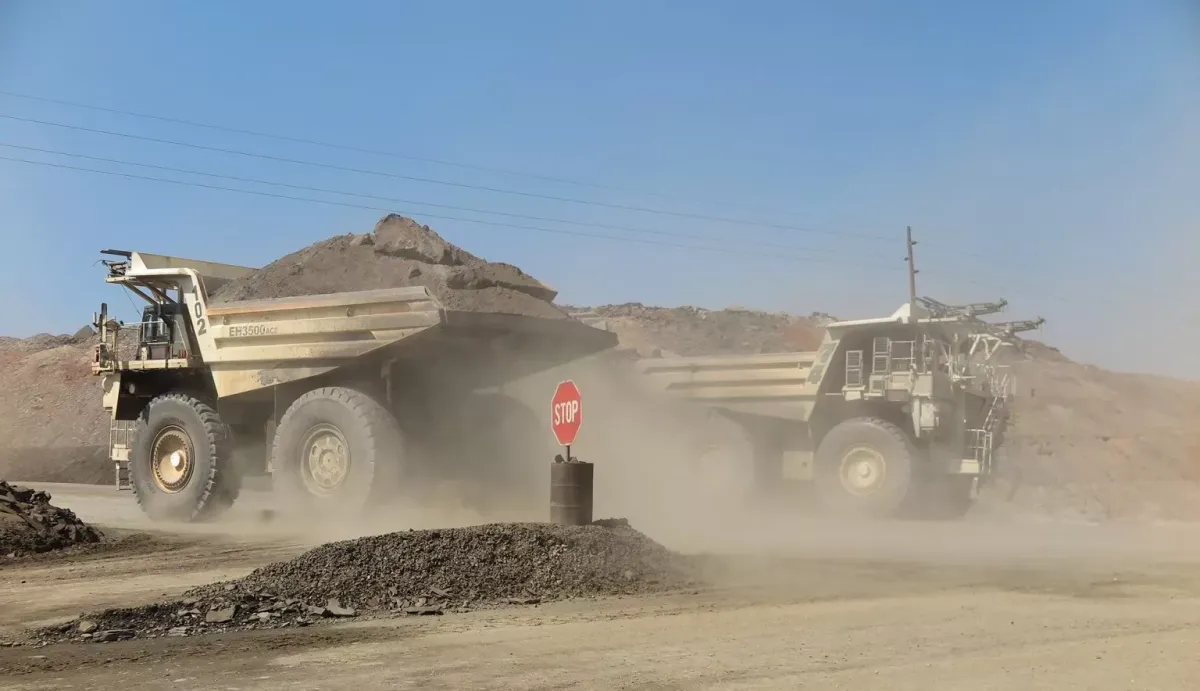
Investing in the DRC mining sector — whether through listed equities, direct project acquisition, or joint venture — requires understanding the permit system, fiscal framework, ownership rules, and operational environment that govern all mining activity in the country.
This guide sets out the process in a logical sequence. It is informational and does not constitute legal or investment advice; readers relying on it for investment decisions should engage legal counsel qualified in DRC mining law and financial advisers regulated in their jurisdiction.
Why investors consider the DRC
The DRC's mining sector offers exposure to two of the minerals most directly linked to global electrification — copper and cobalt — at scale and at grades that are difficult to replicate elsewhere. Reserves of both minerals are large relative to global totals. The pipeline of permitted and partially developed projects is deep.
The combination of resource quality and growth trajectory creates an investment case that is well-understood by institutional investors with an emerging-markets mining allocation.
The counterweights are fiscal, governance, and operational.
The 2018 Mining Code raised royalties, removed the stability clause, and introduced the super-profits tax. Infrastructure — power, roads, and logistics — imposes costs and risks that operators in other jurisdictions do not face. Regulatory unpredictability, while no greater than in some peer jurisdictions, is a real variable in project economics.
Investment vehicles
Listed equities: The most liquid form of DRC mining exposure available to institutional investors. Ivanhoe Mines (TSX/JSE: IVN) provides exposure to Kamoa-Kakula and Kipushi. Glencore (LSE/JSE: GLEN) provides exposure to KCC and Mutanda within a diversified mining and trading portfolio. Barrick Gold (NYSE/TSX: GOLD) provides exposure to Kibali within a multi-asset gold portfolio. AngloGold Ashanti (JSE/NYSE: AU) provides Kibali exposure alongside South African and international gold assets. CMOC Group (HKEX: 2060 / SSE: 603993) provides TFM/KFM exposure as part of a DRC-heavy Chinese-listed mining company.
Project acquisition or JV: Direct acquisition of a mining project in the DRC requires negotiating and structuring a joint venture agreement with a DRC-incorporated operating company, navigating CAMI permit transfer approval, satisfying Article 71 state equity requirements, and completing an environmental and social impact assessment.
This path is capital-intensive and time-consuming but provides more direct economic exposure to individual assets than listed equity positions.
Early-stage exploration investment: The DRC's permit system allows foreign companies to acquire exploration permits through CAMI. Open ground exists, though most attractive targets in Lualaba and Haut-Katanga are already permitted or have historical permit histories. Junior exploration companies with DRC permits can be accessed through Canadian or Australian exchanges.
The permit process as an investor
Understanding CAMI permit mechanics is fundamental to project-level investment analysis. Key points:
Permits transfer with CAMI approval. An acquisition of shares in a DRC mining company does not transfer the permit without CAMI's approval of the transfer. Failure to obtain CAMI approval makes the transfer legally void. This has been a source of dispute in several historical DRC mining transactions.
The 10 percent state equity is non-dilutable. Any new PE-stage project will carry a 10 percent free-carried government interest. Project economics must reflect this before investment decisions are made.
Environmental certificate timing is unpredictable. Budget 18–36 months for ESIA and certificate processes at new PE-stage projects. Timeline overruns are common.
Stability provisions are absent. The 2018 Code does not include a stability clause. Fiscal terms — including royalties — can change by regulation. Build this into project DCF models with sensitivity analysis around royalty rate changes.
[Internal link: "licensing guide" → Pillar: How to get a mining licence in the DRC]
Fiscal structure for modelling
A DRC copper-cobalt project model should include the following fiscal line items:
Royalties: 3.5 percent on copper (ex-works), 10 percent on cobalt (ex-works). Corporate income tax: 30 percent of net profit. Super-profits tax (Article 251): 50 percent of profit above 25 percent price uplift over feasibility study price.
Surface rental fees: per-hectare annual charge on permit area. Export duties: currently zero for most metals from the DRC, but the policy has been reviewed periodically. Withholding taxes on dividends: 10 percent for DRC-incorporated entities, subject to treaty provisions. PDC and Cahier des Charges: annual community development obligations funded at a specified percentage of profit.
Can foreigners own mining projects?
Yes. The DRC Mining Code permits foreign investors to hold majority interests in DRC mining companies. The 10 percent mandatory free-carried state equity under Article 71 is the only compulsory domestic participation requirement for new PE-stage projects. There is no restriction on the remaining 90 percent being held by foreign investors or companies.
Foreign investors must conduct their investment through a DRC-incorporated operating company (SA or SPRL structure under OHADA law). Foreign parent holding structures cannot hold permits directly.
Operational environment
The DRC's operational environment for mining presents a set of challenges that affect project economics and timelines but are manageable by operators with the resources to address them:
Power: The national grid (SNEL) is unreliable and insufficient in the Copperbelt region. Large projects have built captive generation (hydroelectric at Kamoa-Kakula and Kibali; diesel and grid mix elsewhere). Captive power adds capital cost but improves operational certainty.
Logistics: No direct sea access. Copper and cobalt must travel by road and rail to Indian Ocean ports (Dar es Salaam, Durban) or, when the Lobito Corridor is complete, to the Atlantic port of Lobito in Angola. Logistics costs are a material component of cash operating costs.
Security:
The southern provinces (Lualaba, Haut-Katanga) have a relatively stable security environment for industrial mining. The eastern provinces have security considerations that add cost and operational complexity for projects there.