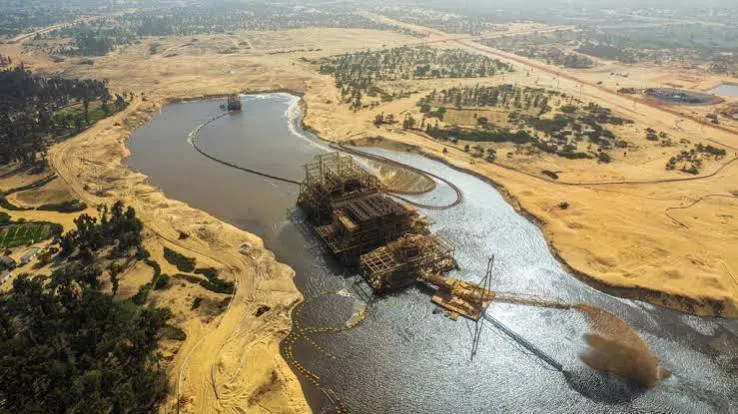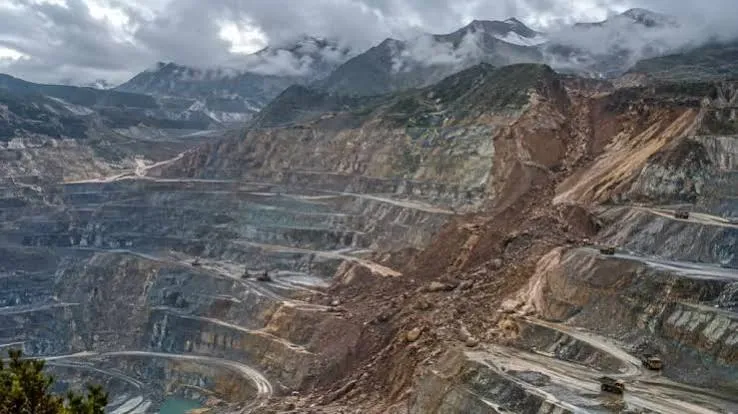
The acquisition of Chemaf's mining assets in the Democratic Republic of Congo moved to its administrative phase on April 29, 2026, when Popol Mabolia Yenga, Director General of the Mining Cadastre (CAMI), received representatives of Virtus Minerals, the company's new owner, to review the status of titles and rights attached to assets operated in the Lualaba and Haut-Katanga provinces. The transaction involved the purchase of Chemaf's assets for approximately $30 million, with an assumed debt estimated at close to $900 million.
The meeting focused on Chemaf's mining portfolio, covering mineral and quarry rights, active contracts, ongoing administrative procedures, and rights registered with CAMI. Congolese authorities have described this administrative phase as essential to securing the legal transition between the former and new ownership, consistent with the government's broader push to strengthen oversight and financial traceability in the extractive sector.
Chemaf, formally known as Congo Eastern Mining Frontier, operates several strategic assets in the Congolese Copperbelt, a region that accounts for a significant share of the country's copper and cobalt output — both critical inputs for battery manufacturing, electric vehicles, and advanced technology equipment. Virtus Minerals completed the acquisition in March 2026 under a framework presented as part of the expanding economic relationship between the DRC and the United States in critical minerals, and is widely described as one of the first large-scale American investments in a sector long dominated by Asian, particularly Chinese, capital.
According to Reuters, as cited by Deskeco, Virtus Minerals has indicated plans to progressively restart Chemaf's mining operations with its partners, targeting a return to large-scale production by 2027 while preserving existing employment. However, Reuters also reported that certain statements made by Virtus Minerals regarding its prior activities in the DRC appear exaggerated or difficult to verify independently, raising questions about the group's operational track record and its capacity to manage assets of this scale while absorbing a substantial inherited debt load.
For Congolese authorities, the CAMI discussions are primarily aimed at ensuring compliance with the national Mining Code and securing a transition that meets regulatory requirements. In a sector that represents a substantial share of the DRC's export receipts, the integrity of mineral title transfers and the stability of incoming investment remain material economic priorities for Kinshasa.