The excavator is one of the most versatile and widely deployed machines in mining. From loading haul trucks in open-pit copper mines to rehabilitating portals at underground operations, excavators perform a range of tasks that few other machines can match for flexibility and reach. Understanding the different types — and how they differ in design, capability and application — is fundamental knowledge for anyone procuring or managing mining equipment in Africa or beyond.
The role of excavators in mining
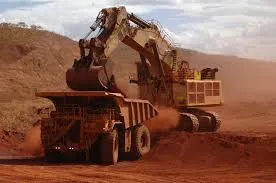
An excavator's primary function is to dig material and load it into trucks or onto conveyors. In surface mining, this places excavators at the heart of the production cycle — the interface between the blast and the haul fleet. The efficiency of the excavator fleet determines how effectively blasted material is cleared and how well the haul trucks are utilised.
Beyond loading, excavators perform stripping (removing overburden to expose ore), road building, slope rehabilitation, maintenance excavation, and a range of support tasks across both surface and underground operations.
Hydraulic excavators
The hydraulic excavator — with its characteristic hinged boom, stick and bucket powered by hydraulic cylinders — is the standard workhorse of surface mining. Hydraulic excavators are available in a vast range of sizes, from compact 5-tonne machines used for underground rehabilitation and tight-space work to 1,000-tonne mining shovels used at the world's largest open pits.
In the mining context, the key distinctions are between backhoe excavators (where the bucket faces toward the machine, used for digging below the machine's level) and face shovels (where the bucket faces away from the machine, used for loading blasted material at or above the machine's level). Face shovels are generally preferred for high-production ore loading because their digging motion is more efficient in a blasted rock pile.
Leading hydraulic excavator manufacturers for mining applications include Caterpillar (7495 and 6090 series), Komatsu (PC8000 and PC5500), Liebherr (R 9800 and R 9600), and Hitachi (EX8000-7 and EX5600-7). These mining-class excavators have bucket capacities of 30–50+ cubic metres and match the productivity requirements of the largest haul truck fleets.
Electric rope shovels
At the highest production levels — the world's largest copper, iron ore and coal mines — electric rope shovels replace hydraulic excavators. Rather than using hydraulic cylinders, these machines use a system of ropes, drums and pulleys driven by large electric motors to power the dipper (bucket) through the rock pile.
Electric rope shovels have several advantages over hydraulic excavators at large scale: higher payload capacity per cycle (up to 120 tonnes), very high duty cycle over 20+ year mine lives, and lower energy cost per tonne loaded (they run on grid power, not diesel). The dominant manufacturers are Komatsu Mining (formerly P&H) and Caterpillar (formerly Bucyrus).
Draglines
Draglines are specialised excavators used almost exclusively in coal and phosphate surface mining, where soft overburden must be stripped efficiently to expose flat-lying ore seams. Unlike conventional excavators, draglines cast their bucket on a cable out to a distance of 100+ metres, drag it back loaded, and swing to dump into a spoil pile.
The scale of large draglines is extraordinary — weighing up to 13,000 tonnes, with booms over 100 metres long and buckets holding 100 cubic metres. They walk on pontoon-like feet rather than crawling on tracks. In the right application, their economics are unmatched: a large dragline can move overburden at $1–2 per cubic metre versus $3–5 for truck-shovel systems.
Underground excavators
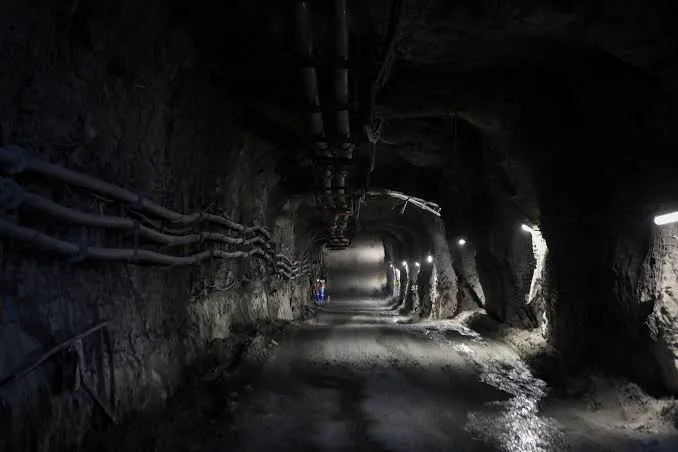
Underground mining uses compact excavators for a range of support activities: portal rehabilitation, surface-to-shaft excavation, underground infrastructure maintenance, and backfill operations. The key requirement is fit within tunnel dimensions — typically limiting machines to 3–4 metres high and wide. Komatsu, Caterpillar and Volvo all manufacture compact excavators widely used in African underground mining contexts.
Excavator selection for African operations
For African mine operators selecting excavators, several factors deserve particular attention:
Commodity and ore type: Hard rock copper or gold ore requires machines with high digging forces and robust structural design. Softer laterite ore or alluvial deposits can be handled with lighter, less expensive equipment.
Haul truck matching: The excavator should be sized to fill the specific haul truck in three to five passes. Too few passes waste loading time; too many reduce loading efficiency. Matching excavator bucket capacity to truck payload is a fundamental sizing exercise.
Service and parts availability: Caterpillar and Komatsu have the broadest parts networks across Africa. Liebherr and Hitachi are strong in Southern Africa. Parts availability timelines in remote DRC, Zambian or Ghanaian locations should be a key evaluation criterion.