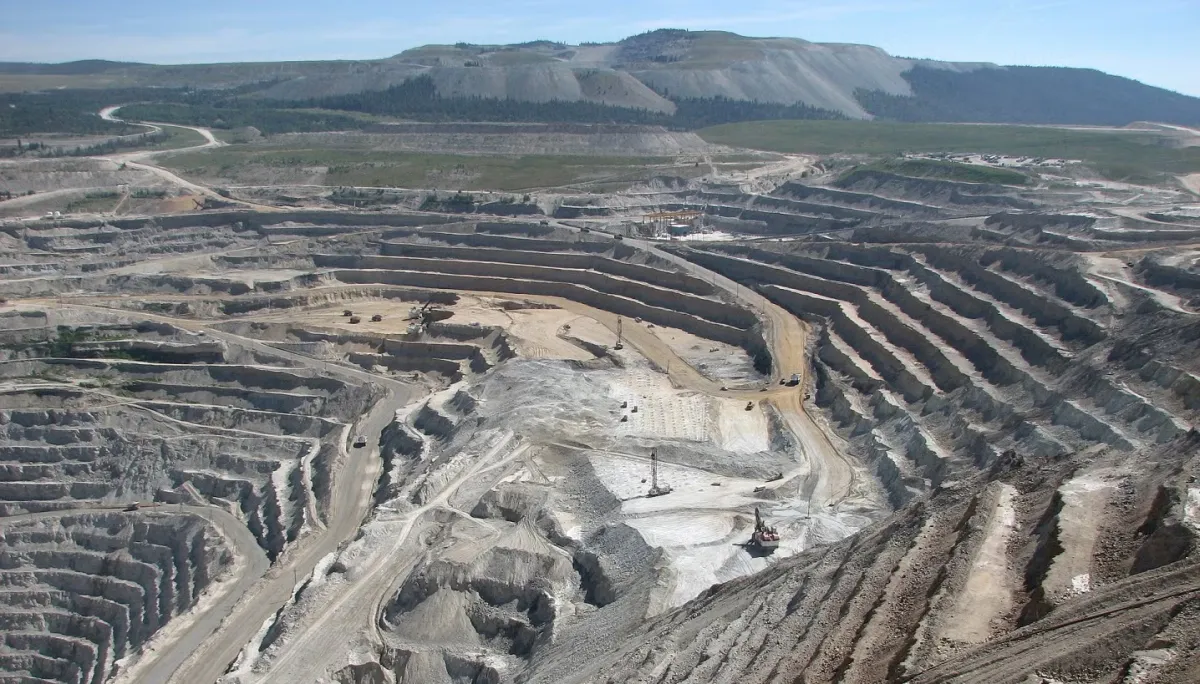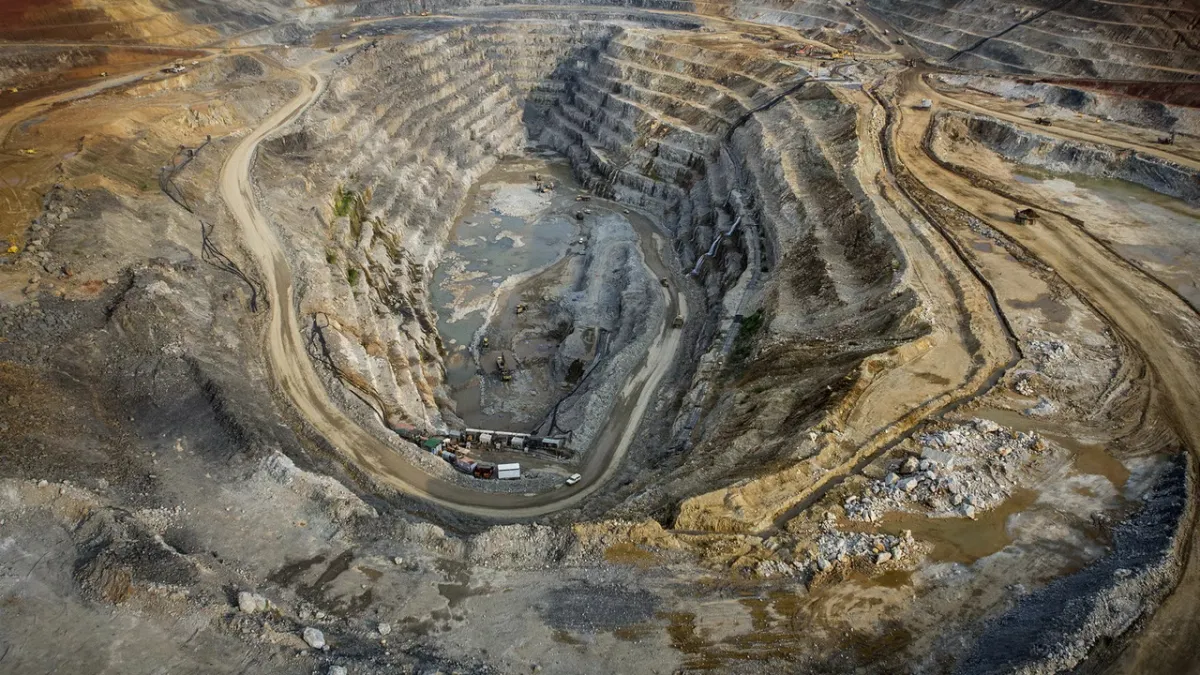
Copper mining in the DRC is large enough to move global markets. The country produced approximately 2.0 million tonnes of copper in 2023, according to Banque Centrale du Congo data, and a pipeline of operational expansions at Kamoa-Kakula, TFM/KFM, and associated projects suggests that output could approach or exceed 3 million tonnes annually by the late 2020s if capital programmes proceed on schedule. That trajectory would place the DRC alongside or above Zambia's historical production records, making the Congolese share of African copper output dominant.
DRC copper in the global market
The DRC ranked third globally in mined copper production in 2023 behind Chile and Peru. The USGS 2025 mineral commodity summary places DRC copper reserves at approximately 20 million tonnes of contained copper, the third-largest reserve base in the world.
Copper from the DRC enters global refined-metal markets primarily as cathode copper produced via the solvent extraction–electrowinning (SX-EW) process from oxide ores, though the industry is transitioning toward sulphide ore processing at depth, which requires flotation concentrators. Most cathode copper exports move to Asian consumers by rail and road to Indian Ocean ports — Dar es Salaam in Tanzania and Durban in South Africa — and then by sea to China, which remains the dominant buyer of DRC copper cathode.\
Biggest mines and operators
The four operations that dominate DRC copper output are:
Kamoa-Kakula (Lualaba province, near Kolwezi): approximately 437,000 tonnes in 2023. Joint venture: Ivanhoe Mines (39.6%), Zijin Mining (39.6%), Crystal River Global (0.8%), DRC government (20%). The operation is in a phased expansion programme. Phase 1 (a 3.8 Mtpa concentrator) was commissioned in 2021. Phase 2 doubled concentrator capacity. Phase 3 and a smelter project are in various stages of completion, with the smelter designed to produce blister copper within the country and reduce the need to export concentrate.
Tenke Fungurume / KFM (Lualaba province, near Fungurume): approximately 450,000 tonnes of copper and 18,000 tonnes of cobalt in 2023. Operated by CMOC Group (80%), with Gécamines holding 20%. TFM has been the country's largest single copper operation for several years. KFM is the adjacent CMOC expansion project, designed to add production capacity from the same Tenke Fungurume permit area.
Mutanda (Lualaba province): approximately 300,000 tonnes of copper per year, with cobalt as a significant co-product. Glencore owns 100%. Mutanda was placed on care and maintenance in 2019 due to cobalt market conditions and returned to production in 2022. It now runs at capacity.
KCC — Kamoto Copper Company (Lualaba province, near Kolwezi): copper and cobalt. Glencore 75%, with minority interest held through the state participation structure. KCC is one of Glencore's primary DRC copper assets alongside Mutanda.
[Internal link: "KCC and Mutanda in detail" → Pillar: KCC and Mutanda: Glencore's copper-cobalt footprint in the DRC] [Internal link: "TFM ownership and history" → Pillar: Tenke Fungurume and KFM: the CMOC copper-cobalt story in the DRC]
Provinces and logistics
All four major copper operations are in the DRC's Copperbelt provinces — Lualaba and Haut-Katanga. Kolwezi is the operational centre of gravity. The city sits at the convergence of several mine access routes, houses operator offices and processing facilities, and serves as the departure point for copper cathode moving south and east toward ports.
[Internal link: "provincial geography" → Pillar: Lualaba and Haut-Katanga: where the DRC's copper-cobalt belt works]
Rail is the preferred long-distance transport mode, but the DRC's rail network — operated primarily by SNCC — suffers from infrastructure constraints and inconsistent reliability. Many operators use road transport to the Zambian border and connect to rail there. The Lobito Corridor, a US- and EU-backed infrastructure initiative to rehabilitate the Lobito Atlantic Railway (formerly the Benguela Railway) from Angola's Atlantic coast through Zambia into the DRC's Copperbelt, represents the most significant infrastructure investment in the corridor in decades. When complete, it would provide a shorter, Atlantic-facing export route that reduces dependence on Indian Ocean ports.
Kamoa-Kakula
Kamoa-Kakula merits separate treatment because of its scale and development trajectory. The Kamoa-Kakula copper deposit is, on current resource estimates, the largest undeveloped high-grade copper discovery ever made. The combined resource base (Kamoa, Kakula, and Kansoko ore bodies) contains over 40 billion pounds of copper in measured and indicated categories at grades well above global average, based on Ivanhoe Mines' technical reports filed with Canadian securities regulators.
The phased build-out means production is growing annually rather than arriving in a single step. Ivanhoe's guidance for Kamoa-Kakula has moved progressively higher as expansions commission. The on-site copper smelter, if completed on schedule, would allow the JV to export blister copper rather than concentrate — a meaningful value-addition step within the DRC and a partial response to government pressure for local processing.
TFM and KFM
Tenke Fungurume's history is as instructive as its current production profile. The project was originally developed by Phelps Dodge (later acquired by Freeport-McMoRan), then sold to a Chinese buyer in 2016. In 2022, CMOC completed the acquisition of Freeport-McMoRan's remaining stake, consolidating 80 percent ownership. The transaction was one of the largest in the history of DRC mining. KFM, the expansion of TFM, adds a second concentrator and production line to the same permit area and is designed to take combined output from TFM and KFM to significantly higher levels over the 2025–2028 period.
KCC
KCC operates two underground mines — Kamoto and T17 — and a concentrator and electrowinning circuit. The operation is one of the older large-scale copper-cobalt assets in the Copperbelt, with infrastructure that reflects successive capital cycles dating to before Glencore's ownership.
What the next few years may look like
The cumulative effect of Kamoa-Kakula expansion, TFM-KFM ramp-up, and Mutanda's return from care and maintenance is a DRC copper production curve that rises through the mid-2020s. Bank analyst consensus for DRC copper output in 2027 ranges from 2.4 to 3.0 million tonnes depending on assumptions about capital delivery and ore-grade performance.
This matters for global copper markets because it coincides with a period of significant demand growth from electrification and grid infrastructure. The DRC's production growth — concentrated in a single geological corridor, dependent on a small number of operators, and governed by a fiscal regime that includes performance-sensitive charges — is a key variable in medium-term copper supply models.