Cobalt mining in the DRC matters because the country remains the world's dominant source of mined cobalt, while both industrial operations and artisanal and small-scale mining (ASM) shape supply volume, price, and sourcing risk.
The article covers production scale, where cobalt comes from, how industrial mines differ from ASM, and what law and due diligence require from buyers and operators.
How much cobalt the DRC produces
The DRC produced approximately 170,000 tonnes of cobalt equivalent in 2023, according to figures compiled by the Cobalt Institute. The United States Geological Survey's 2025 mineral commodity summary estimated the DRC's cobalt reserve base at approximately 3.5 million tonnes — roughly 46 percent of the global total.
No other country comes close on either measure.
The scale of that dominance means buyers cannot diversify away from the DRC at current demand levels. Indonesia has emerged as a secondary cobalt source from nickel laterite processing, contributing Class I nickel-cobalt product into battery supply chains, but its cobalt grades are lower and its supply profile is different.
For buyers of copper-associated cobalt hydroxide — the form in which most DRC cobalt enters intermediate processing — there is no near-term substitute geography.
Cobalt from the DRC moves primarily as cobalt hydroxide to refineries in China, which process it into cobalt sulfate and cobalt metal for battery cathode material manufacturing.
The Cobalt Institute estimates that China's share of global cobalt refining capacity is approximately 80 percent, making the DRC-to-China supply corridor the backbone of the global battery materials chain.
Where DRC cobalt comes from
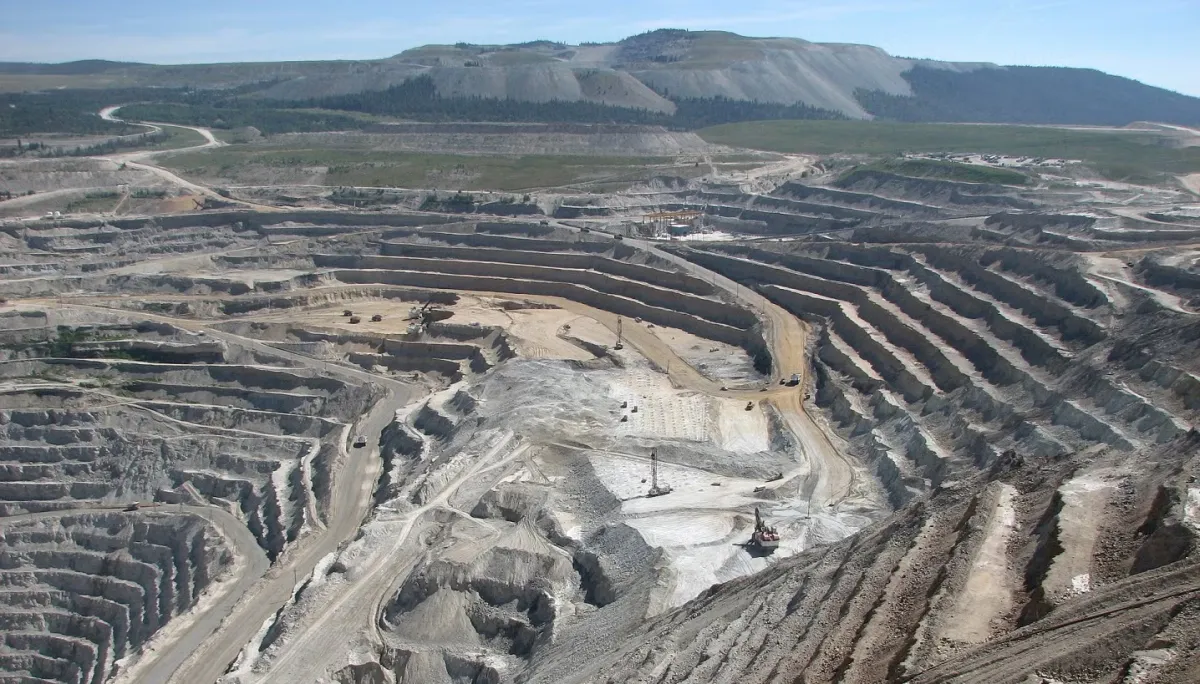
DRC cobalt production has two distinct streams: industrial mines in the Copperbelt and ASM operations spread across Lualaba province and parts of Haut-Katanga.
Industrial cobalt is produced as a co-product or by-product of copper mining at large-scale mechanised operations. The five mines that account for most industrial cobalt output are:
Tenke Fungurume / KFM (CMOC, 80%): approximately 18,000 tonnes of cobalt in 2023. The largest single industrial cobalt source in the DRC and one of the largest in the world. Located near Fungurume in Lualaba province.
Mutanda (Glencore, 100%): cobalt alongside approximately 300,000 tonnes of copper. Production resumed in 2022. Located in Lualaba.
KCC — Kamoto Copper Company (Glencore, 75%): cobalt from Lualaba province operations.
Kamoa-Kakula (Ivanhoe 39.6%, Zijin 39.6%): primarily a copper mine. Cobalt production exists but is lower relative to the other operations due to the deposit's mineralogy.
ERG / Metalkol RTR: cobalt from tailings reprocessing in Haut-Katanga. ERG is privately held and less transparent on production figures, but EITI reconciliation data provides partial disclosure.
[Internal link: "industrial mine ownership" → Pillar: Who owns the biggest mines in the DRC?] [Internal link: "CMOC Tenke Fungurume" → Pillar: Tenke Fungurume and KFM: the CMOC copper-cobalt story in the DRC] [Internal link: "Glencore KCC Mutanda" → Pillar: KCC and Mutanda: Glencore's copper-cobalt footprint in the DRC]
Industrial mines vs ASM
The distinction between industrial cobalt and ASM cobalt matters for supply volume, traceability, and compliance.
Industrial cobalt mining is mechanised, operates under formal exploitation permits issued by CAMI, and produces cobalt hydroxide through heap leach or flotation-SX-EW circuits. Output is recorded in operator disclosures. Environmental and social conditions are subject to the requirements of the 2018 Mining Code and, for listed companies, to the reporting standards of their respective exchange jurisdictions.
ASM cobalt is produced by artisanal miners working in legally designated artisanal mining zones (Zones d'Exploitation Artisanale, ZEA) or, in a significant number of cases, in areas not formally designated for artisanal activity. CAMI's 2023 annual report identified approximately 30 designated ZEA in Lualaba province.
The physical conditions of ASM cobalt mining — underground pits without mechanical ventilation or engineered support, hand-sorting in the open air, involvement of children in surface ore sorting — have been documented by UNICEF, Amnesty International, and Pact, and have generated sustained regulatory and commercial scrutiny.
Independent estimates place ASM cobalt output at between 15 and 25 percent of total national production in any given year, with variance tied to price levels and formal-sector output fluctuations. When cobalt prices are high, ASM activity expands and vice versa.
Major operators
The five most significant industrial cobalt producers in the DRC are CMOC (through TFM and KFM), Glencore (through Mutanda and KCC), Ivanhoe Mines (through Kamoa-Kakula, albeit as a secondary cobalt source), ERG (through Metalkol RTR), and China Nonferrous Metal Mining Group (CNMC), which operates the DEZIWA project. Most of these operators sell cobalt hydroxide under off-take agreements with Chinese processors.
Export and processing routes
Cobalt hydroxide produced in the DRC is trucked or railed to Dar es Salaam or Durban for ocean shipment to Chinese ports. Most cobalt then moves into sulfation circuits at Chinese refineries before entering cathode active material (CAM) manufacturing chains serving battery makers in China, Korea, and Japan.
A smaller stream of cobalt moves directly to European or North American refiners. Umicore in Belgium and Freeport Cobalt in Finland are the principal non-Chinese processors of DRC-origin cobalt. US critical minerals policy under the Inflation Reduction Act has created financial incentives for battery supply chains that reduce reliance on Chinese processing, but capacity limitations mean the DRC-to-China corridor remains dominant as of 2026.
Law, risk and outlook
The DRC's 2018 Mining Code reclassified cobalt as a strategic mineral and raised its royalty rate from 2 percent to 10 percent of the ex-works value. That change increased the fiscal take from cobalt mining materially and set the template for how the government treats minerals deemed critical to global industrial transitions.
The sourcing risk profile of DRC cobalt is shaped by three factors: ASM conditions and child labour documentation; armed-group proximity in some eastern zones, which is relevant primarily to small-volume gold and 3T rather than the main cobalt-producing provinces; and the operational and fiscal decisions of the DRC government, which retains the ability to adjust royalty rates or strategic-mineral designations through the regulatory process.