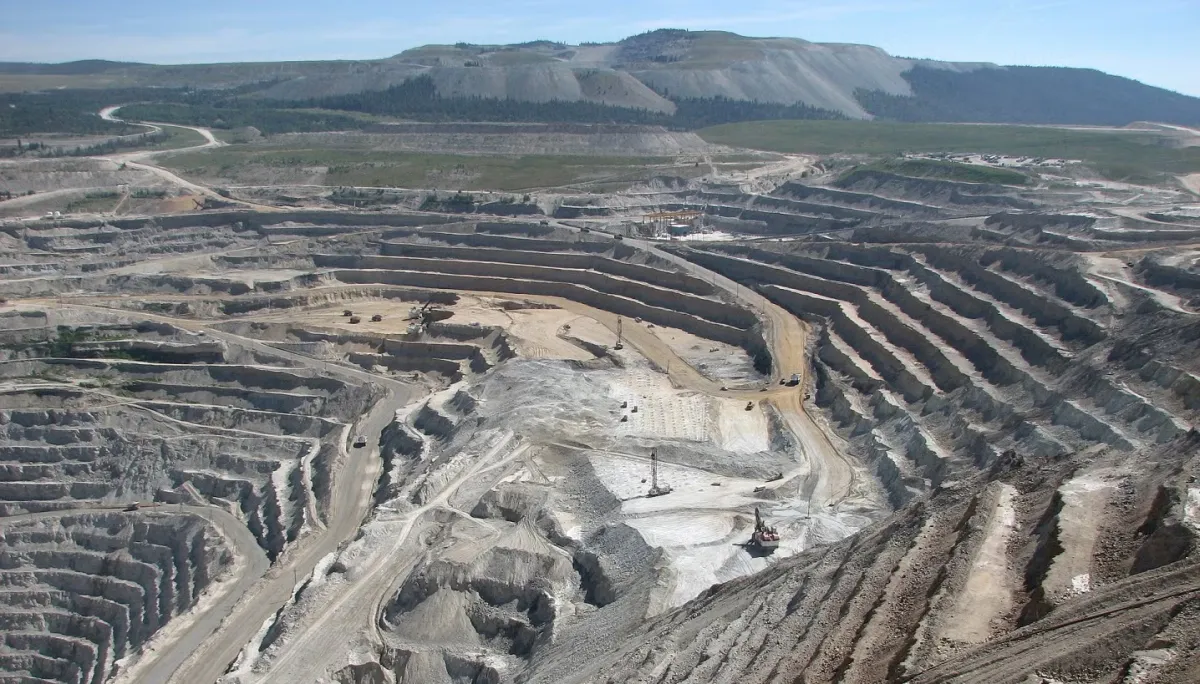
Zambia exported 521,400 tonnes of refined copper between January and July 2026, an 8.8% increase from the corresponding period of 2025, as higher cumulative shipments strengthened the country’s copper trade despite a weaker result in July.
The Zambia Statistics Agency recorded exports of 479,400 tonnes during the first seven months of 2025. The year-on-year increase was therefore 42,000 tonnes, or 8.76% before rounding—not the 88% stated in the headline of the supplied secondary report. ZamStats’ August bulletin provides the underlying figures.
The cumulative expansion is commercially significant, but it does not represent an uninterrupted increase. Refined-copper exports declined by 7.9% to 75,300 tonnes in July from a revised 81,700 tonnes in June.
Export earnings from refined copper decreased by 4.5%, from K20 billion in June to K19.1 billion in July. Over the corresponding period, the London Metal Exchange copper price reported by ZamStats slipped by 0.4%, from US$13,574.32 to US$13,525.17 per tonne.
The figures indicate that lower physical shipments were the principal driver of the July decline in earnings, rather than a substantial deterioration in the benchmark copper price.
Export growth is not production growth
The 521,400-tonne total measures refined copper exported from Zambia. It is not a direct measure of copper mined during the period.
Exports can be influenced by refinery schedules, inventory movements, customs clearance and the timing of deliveries. Zambia also participates in a regional copper-processing system that can include material originating outside the country.
The export data should consequently be assessed alongside mine-level production, smelter and refinery throughput, electricity availability and inventories. Without those supporting indicators, the 8.8% increase cannot be interpreted automatically as equivalent growth in Zambia’s mined copper output.
That distinction is particularly important when comparing the result with Zambia’s ambition to produce three million tonnes of copper annually by 2031. The government target concerns mine production, while the latest statistics concern shipments of one processed copper category.
Copper continues to dominate Zambia’s trade
Traditional exports, which are dominated by copper, generated K19.8 billion in July and represented 66.7% of the country’s total export earnings during the month.
Zambia recorded total exports of K29.7 billion and imports of K25.6 billion, producing a monthly trade surplus of about K4.1 billion. The surplus narrowed slightly from K4.2 billion in June.
The stronger copper volume also came against a contraction in Zambia’s wider merchandise trade. Cumulative trade was valued at K359.2 billion between January and July 2026, down 4.8% from K377.3 billion in the corresponding period of 2025.
Zambia exported goods worth K194.7 billion during the seven months, compared with imports of K164.6 billion.
Roads still carry most export value
Road transport accounted for K186.6 billion, or 95.8%, of Zambia’s total export value during January–July. By physical volume, roads carried 79.7% of exports, while rail accounted for only 0.3%.
Those percentages cover Zambia’s entire merchandise trade rather than copper alone. They nevertheless demonstrate the country’s dependence on roads for moving high-value exports through regional borders and towards ports.
That dependence exposes exporters to congestion, border delays, road conditions and fluctuating haulage costs. It also strengthens the commercial case for rehabilitating the TAZARA railway and developing alternative routes through Tanzania and Angola.
CMN has previously examined how Zambia and Tanzania are pursuing corridor upgrades as mining companies seek greater export capacity.
Zambia’s next monthly trade release will show whether July’s decline was temporary. The more consequential test will be whether higher refined-copper shipments are eventually matched by sustained mine production, reliable processing plants and greater use of rail.