The United States Mine Safety and Health Administration (MSHA) has reported that the mining industry's total recordable injury rate fell to 1.74 per 200,000 hours worked in 2025 — the lowest figure ever recorded in the history of American mine safety tracking. The announcement, made on 28 April 2026, marks a significant milestone for an industry that has worked for decades to reduce the human cost of extracting minerals from the earth.
The 2025 rate represents a decline from 1.82 in 2024, continuing a downward trend that has gathered pace over the past decade as new safety technologies have become standard in modern mining operations. MSHA Director Chris Williamson credited the improvement to a combination of stronger safety culture, better regulatory enforcement and — critically — advances in safety equipment and technology deployed across American mines.
The equipment driving the improvement
No single piece of equipment accounts for the declining injury rate. Rather, the improvement reflects a broad transformation in how mines approach worker safety, with technology playing an increasingly central role.
Proximity detection and collision avoidance systems are perhaps the most impactful recent development. In underground mines, collisions between vehicles and pedestrians have historically been a leading cause of fatalities. Modern proximity detection systems use a combination of radar, ultrasonic sensors and RFID tags to create a real-time awareness zone around moving equipment, triggering alerts — and in advanced systems, automatic emergency stops — when a worker enters a danger zone.
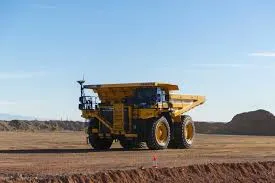
Autonomous and remote-operated equipment removes workers from the most hazardous tasks entirely. Autonomous haul trucks on surface mines, remote-controlled load-haul-dump machines underground, and tele-operated drilling equipment have all contributed to reducing exposure to high-risk environments. As of early 2026, over 3,800 autonomous haul trucks are operating on surface mines globally, with the number growing rapidly.
Gas detection systems have also evolved significantly. Modern multi-gas detectors worn by miners continuously monitor for carbon monoxide, methane, hydrogen sulphide and oxygen levels, providing real-time data to mine management systems and triggering evacuation alerts before concentrations reach dangerous levels.
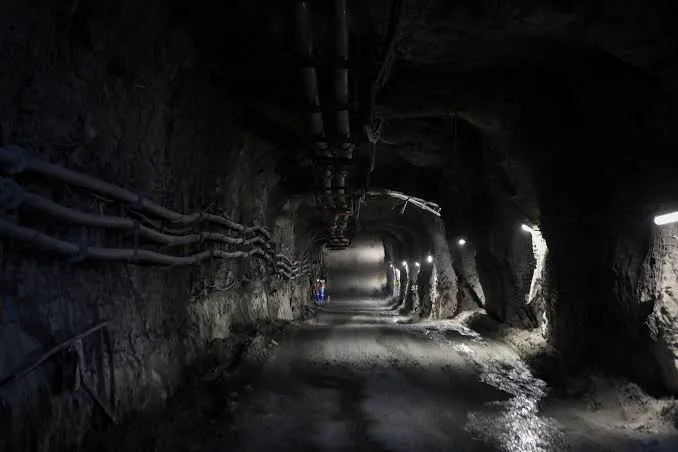
Refuge chambers represent a last line of defence in underground emergencies. These self-contained survival capsules — manufactured by companies like MineARC Systems — provide oxygen, food, water and communications for miners trapped underground, typically for periods of 96 hours to eight days. Their widespread adoption in underground coal and hard-rock mines has changed the calculus of underground emergency planning.
Personal protective equipment: still foundational
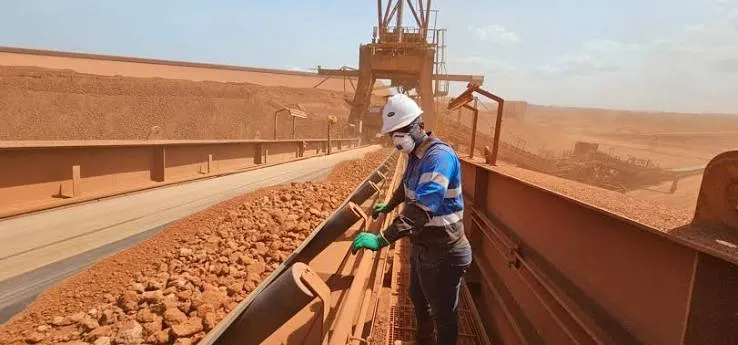
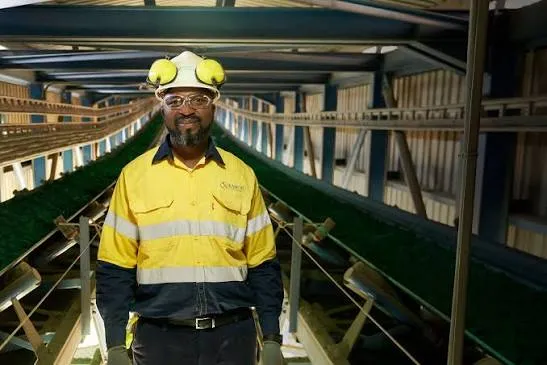
While technology innovations attract attention, improvements in basic PPE should not be underestimated. Modern hard hats incorporate impact sensors that detect falls or collisions and automatically alert supervisors. Advanced respiratory protection systems offer far greater filtration efficiency than older models. Anti-vibration gloves have reduced hand-arm vibration syndrome in drill operators. Flame-resistant clothing has become standard in coal and oil sands operations.
The cumulative effect of these improvements — better PPE, smarter electronics, and machines that remove humans from harm's way — has fundamentally changed what is achievable in mine safety.
What this means for global and African mining
The US achievement sets a benchmark that resonates well beyond North America. Mining operations in South Africa, the DRC, Ghana, Zambia and across Africa are under increasing pressure from regulators, investors and local communities to demonstrate improved safety performance.
For African mine operators, the US experience offers a practical roadmap: technology investment, structured safety training and cultural change work together. The equipment exists — proximity detection systems, gas detectors, refuge chambers and modern PPE are all commercially available and supplied by companies with established African networks. The challenge is consistent implementation and the safety culture to back it up.
As ESG requirements tighten across global mining finance, safety performance is increasingly tied to access to capital. Mines that invest in modern safety equipment are not just protecting their workers — they are protecting their social licence to operate.