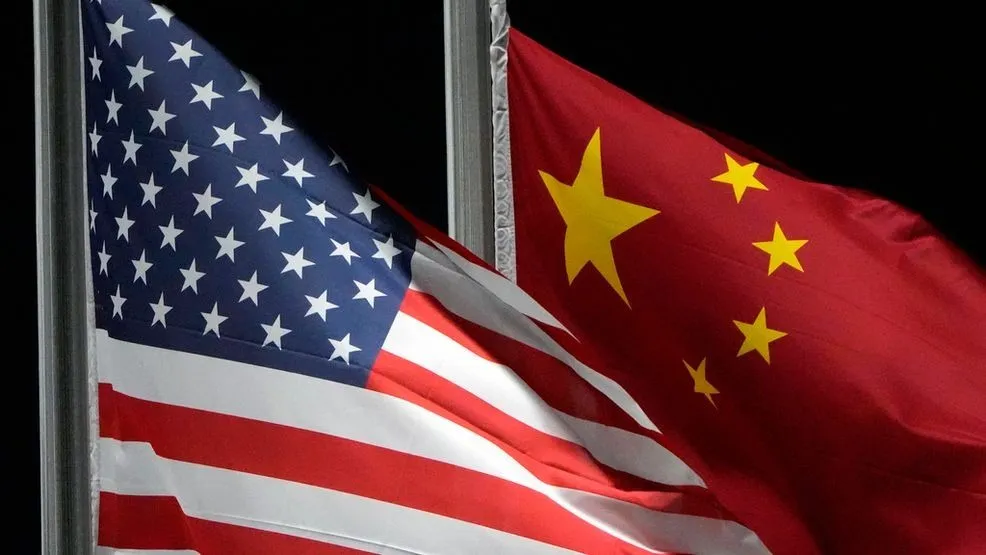
In a measured yet unmistakable rebuke to American trade policy, Beijing announced on Tuesday a fresh series of export controls that target five metals integral to defense, clean energy and high-tech manufacturing. The move follows President Trump’s recent declaration of an across-the-board 10-percent tariff on Chinese goods, a policy that has already strained relations between the two economic giants.
The new measures restrict the export of tungsten, tellururium, bismuth, indium and molybdenum, with export licenses now available only to companies that meet certain unspecified “relevant regulations.” Although Beijing declined to detail these criteria, analysts suggest that the controls are designed to leverage China’s dominance in critical mineral production. Reuters reported that similar curbs, announced earlier this week, have prompted market speculation that China is fine-tuning its arsenal of trade tools without resorting to outright bans—a contrast to the broader prohibitions imposed in December on materials including gallium, germanium and antimony.
The impact on the U.S. appears to be uneven. Data from the U.S. Geological Survey indicate that American industries, particularly those involved in molybdenum-dependent steel production, will likely remain insulated from immediate supply disruptions, given the country’s own production capacity. Meanwhile, existing tariffs of 25 percent on indium and tungsten have already pushed importers to look to South Korea, Japan and Canada for alternatives, with U.S. reliance on Chinese indium falling to less than 10 percent over the past four years. Yet vulnerabilities persist: having halted domestic tungsten mining in 2015 and ceased refining bismuth in 1997, U.S. manufacturers continue to depend on China for these materials, a fact that could expose critical sectors to abrupt supply shocks if Beijing escalates its controls.
Adding another layer to the tit-for-tat dynamic, China’s finance ministry has announced that, beginning February 10, it will levy a 15-percent duty on coal and liquefied natural gas imports from the United States and increase tariffs by 10 percent on American crude oil, agricultural equipment and select vehicles. This countermeasure comes as President Trump, now in his second term, directs his administration to review Beijing’s compliance with a 2020 trade deal—a pact that was meant to recalibrate the vast trade imbalances but which faltered amid the chaos of the COVID-19 pandemic. According to customs data released last December, China’s trade deficit with the United States ballooned to $361 billion in the wake of the disrupted agreement.
The current exchange of tariffs recalls the fierce trade confrontation that began in 2018, when Trump’s administration launched a series of punitive tariffs targeting China’s trade surplus with the United States. Those measures, which disrupted global supply chains and sparked significant market volatility, were intended to force Beijing to alter practices deemed unfair by U.S. policymakers. In 2020, in an effort to stem the escalating dispute, China had agreed to purchase an additional $200 billion in American goods each year—a commitment that the pandemic ultimately undermined.
While the new export restrictions and counter tariffs reflect a cautious yet assertive stance from Beijing, experts caution that the long-term consequences remain uncertain. With both sides now reviewing their trade relationships, the next few months could see further recalibrations as each government seeks to protect its strategic interests without triggering a broader economic decoupling or more severe disruptions in global markets