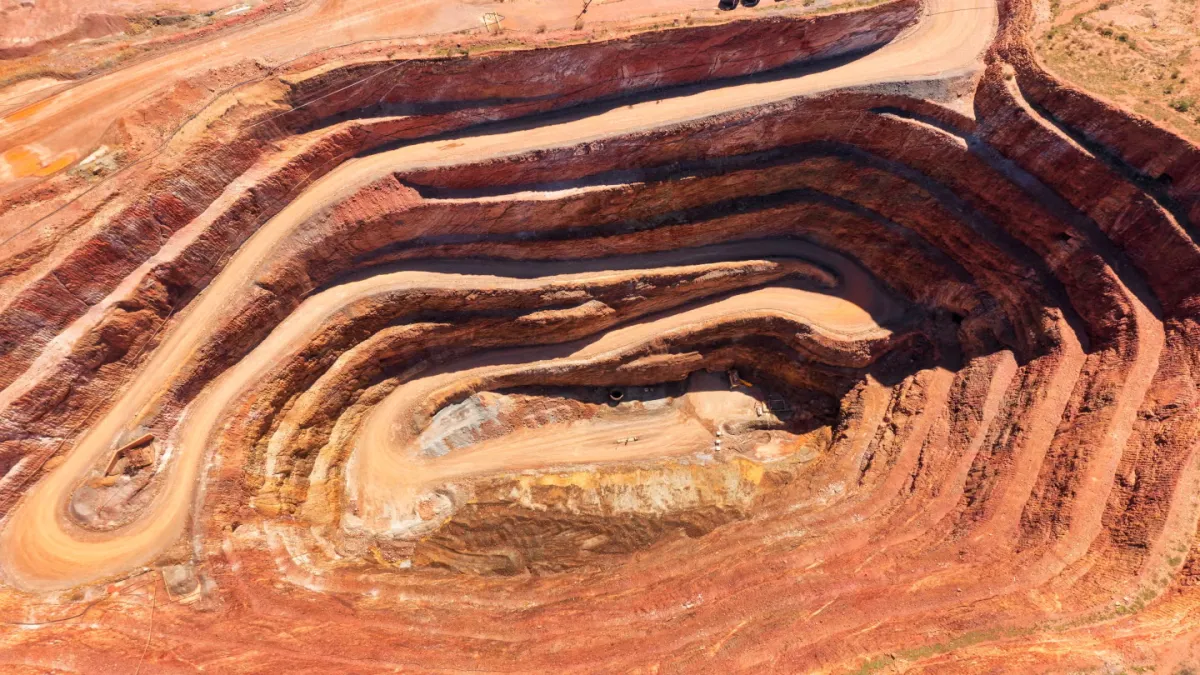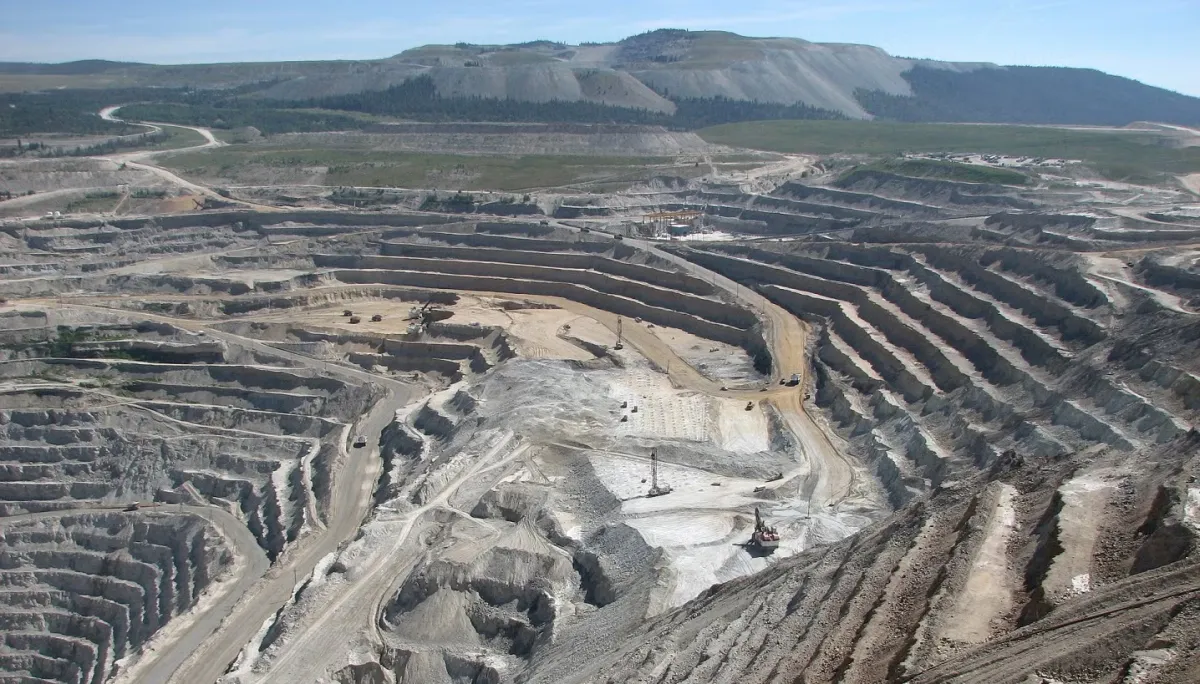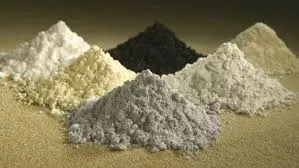
In April 2025, China imposed export restrictions on heavy and medium rare earth elements — including dysprosium, terbium, gadolinium, samarium, and scandium — instantly transforming Africa's rare earth projects from interesting exploration plays into strategically critical alternative supply sources for the West. Uganda's Makuutu deposit, South Africa's Phalaborwa carbonatite, Tanzania's Ngualla project, and Madagascar's Tantalus project are now among the most-watched mining developments globally.
This article maps Africa's rare earth opportunity, the China export ban context, the major projects, and what's at stake in the global REE supply contest.
What Are Rare Earth Elements?
Rare earth elements (REEs) are a group of 17 metallically similar elements: the 15 lanthanides (lanthanum through lutetium) plus scandium and yttrium. Despite the name, most REEs are not actually rare in the Earth's crust — but they are rarely concentrated in commercial deposits, and processing them is complex and environmentally demanding.
REEs are categorised by atomic weight:
Light Rare Earth Elements (LREEs): Lanthanum (La), Cerium (Ce), Praseodymium (Pr), Neodymium (Nd), Promethium (Pm), Samarium (Sm) Heavy Rare Earth Elements (HREEs): Europium (Eu), Gadolinium (Gd), Terbium (Tb), Dysprosium (Dy), Holmium (Ho), Erbium (Er), Thulium (Tm), Ytterbium (Yb), Lutetium (Lu) + Yttrium (Y), Scandium (Sc)
HREEs are significantly rarer and more valuable. Dysprosium, terbium, and yttrium in particular are critical for high-performance permanent magnets used in EV motors, wind turbines, and military systems.
What REEs Are Used For
| REEPrimary use | |
| Neodymium (Nd) | Permanent magnets (EV motors, wind turbines, hard drives) |
| Praseodymium (Pr) | Permanent magnets (with Nd) |
| Dysprosium (Dy) | High-temperature stability in Nd magnets (EV motors) |
| Terbium (Tb) | Same as Dy — high-temperature magnet stability |
| Samarium (Sm) | SmCo permanent magnets (defence, aerospace) |
| Yttrium (Y) | Phosphors (LEDs, lasers), aerospace alloys |
| Scandium (Sc) | Aluminium alloys (aerospace), solid oxide fuel cells |
| Europium (Eu) | Red phosphors (displays, lighting) |
| Cerium (Ce) | Catalytic converters, glass polishing |
| Lanthanum (La) | Catalysts, optics, NiMH batteries |
The most strategically critical REEs are Nd, Pr, Dy, Tb, Sc — collectively essential for permanent magnets and aerospace applications.
China's REE Dominance
China's control of the rare earth supply chain is even more extreme than its position in cobalt or lithium:
- Mining: China produces ~70% of global REE concentrate
- Refining: China processes ~85% of global REEs to oxides
- Magnets: China produces ~90% of global Nd-Fe-B permanent magnets
- HREE separation: China processes >98% of global heavy REEs
This dominance was built deliberately through:
- The 1980s–1990s industrial policy under Deng Xiaoping ("the Middle East has oil, China has rare earths" — Deng's reportedly stated view)
- Aggressive subsidisation of Chinese REE producers, with environmental costs externalised
- Vertical integration into magnet manufacturing
- Strategic acquisition of overseas REE assets
In 2010, China imposed REE export restrictions on Japan during a territorial dispute — a moment that crystallised global concern about REE supply concentration. Western countries committed to building alternative supply chains, but progress has been slow.
The April 2025 Export Restrictions
In April 2025, China expanded its export control regime to cover medium and heavy rare earths — specifically:
- Dysprosium (Dy)
- Terbium (Tb)
- Gadolinium (Gd)
- Samarium (Sm)
- Scandium (Sc)
- Yttrium (Y)
- Lutetium (Lu)
The restrictions require Chinese exporters to obtain individual export licences for shipments to designated jurisdictions, with explicit prohibitions on export to certain end-uses (military, semiconductor manufacturing). The mechanism gives Beijing discretionary control over global heavy REE supply.
The immediate effects:
- Spot prices for Dy, Tb, and Sm increased 40–80% within weeks
- Western magnet manufacturers reported supply contract renegotiations
- Defence supply chains scrambled to identify alternative sources
- Multiple Western governments accelerated REE project financing
For African REE projects, the April 2025 ban was transformational — particularly for Makuutu (Uganda), which has unusually high heavy REE content.
Uganda: Makuutu — Africa's Premier Heavy REE Project
The Makuutu Heavy Rare Earths Project in eastern Uganda is one of the world's largest ionic adsorption clay (IAC) REE deposits and is uniquely positioned among Western-aligned REE projects for its high heavy REE content.
Key Project Facts
- Location: Busoga region, eastern Uganda, 120 km east of Kampala
- Operator: Rwenzori Rare Metals Limited (RRM); Ionic Rare Earths (ASX: IXR) holds 60%, increasing to 94%
- Resource: 532 million tonnes at 640 ppm TREO (one of the world's largest IAC deposits)
- Mining licence: Granted January 2024 — Uganda's first ever large-scale mining licence under the new Mining and Minerals Act 2022
- Demonstration plant: Producing Mixed Rare Earth Carbonate (MREC) on-site since Q1 2024
Why Makuutu Matters
The Makuutu deposit's REE basket is uniquely valuable: it contains a near-perfect mix of magnet rare earths (Nd, Pr, Dy, Tb) plus scandium — exactly the elements targeted by China's April 2025 export restrictions.
Most large REE deposits globally are dominated by light REEs (cerium, lanthanum) which are abundant and lower-value. Heavy REEs are typically present only in small fractions. Makuutu's heavy REE content makes it strategically valuable beyond its scale.
DFS Economics
The Stage 1 Definitive Feasibility Study published by Ionic Rare Earths showed:
- Pre-production capital: US$120.8 million
- Post-tax IRR: 32.7%
- After-tax NPV (8% discount): US$885 million
- Mine life: 35 years
- Annual MREC output: ~3,500 tonnes
The relatively low capital cost reflects the simple hydrometallurgy required for ionic clay deposits — significantly cheaper than processing hard rock REE deposits.
Mineral Security Partnership Inclusion
Makuutu has been added to the US-led Mineral Security Partnership (MSP) project list, providing access to Western financing, offtake commitments, and political support. This is the most significant Western strategic alignment for any African REE project.
Ionic Rare Earths Makuutu profile →
South Africa: Phalaborwa — Yttrium and Heavy REEs
Rainbow Rare Earths' Phalaborwa Project in Limpopo Province, South Africa, is developing rare earth recovery from the historic Phalaborwa carbonatite — a deposit historically mined for phosphate and copper, with rare earth potential only recently quantified.
Key Project Facts
- Location: Phalaborwa, Limpopo Province
- Operator: Rainbow Rare Earths (LSE: RBW)
- Approach: Recovery from existing phosphogypsum stack and historic tailings
- Differentiator: Includes yttrium, dysprosium, terbium, and other heavy REEs
In 2024–2025, Rainbow Rare Earths upgraded its resource estimate to include yttrium — one of the heavy REEs specifically targeted by China's April 2025 export ban. Yttrium is critical for LEDs, lasers, camera lenses, and cancer treatment, with China previously supplying over 90% of global demand.
The Phalaborwa project benefits from:
- Existing infrastructure (the historic Foskor and Palabora Mining Company operations)
- A pre-processed phosphogypsum stack with concentrated REE content (no new mining required)
- Established power, water, and transport links
- South Africa's investor-friendly mining jurisdiction
Rainbow Rare Earths profile →
Tanzania: Ngualla — Light REE-Dominated
Ngualla Rare Earth Project in southern Tanzania (operated by Peak Rare Earths, ASX: PEK) is one of the world's largest known LREE deposits — approximately 18.5 million tonnes of contained REE oxides at 4.8% TREO.
The project is in the late stage of development with feasibility studies advanced and offtake discussions in progress. As a primarily LREE deposit, Ngualla's strategic value is somewhat lower than Makuutu's heavy REE position — but Ngualla's scale and grade make it commercially viable independent of HREE prices.
Madagascar: Tantalus and Other Projects
Madagascar hosts several REE deposits, including the Tantalus REE Project (operated by ISR Capital). Madagascar's deposits are similar to Makuutu in geological style (ionic adsorption clay) and have heavy REE potential. Madagascar has experienced governance and political volatility that has slowed project development relative to Uganda.
Other Africa REE Activity
- Burundi: Gakara Rare Earth Project (Rainbow Rare Earths' historic asset; suspended)
- Mozambique: Several REE-bearing carbonatites under exploration
- Malawi: Songwe Hill REE deposit (Mkango Resources)
- Egypt: Limited REE production from phosphate processing
- Algeria: REE potential in carbonatites
The Strategic Stakes
The control of REE supply will shape:
Electric vehicle production capacity. Every EV motor uses 1–2 kg of Nd-Fe-B magnets containing dysprosium and terbium. China's HREE export controls directly constrain Western EV production scaling.
Wind turbine deployment. Each offshore wind turbine uses 200–600 kg of permanent magnets. Western wind energy targets depend on REE supply.
Defence systems. Modern military systems (F-35 fighter jets, missile guidance, radar, communications) all require REEs. The US Department of Defense has actively financed multiple REE projects to reduce supply chain dependence.
Semiconductor manufacturing. Specialty REEs are required for advanced chip manufacturing — a sector where China-US technological competition is most intense.
Western Government Response
Several Western government initiatives directly support African REE projects:
US Department of Energy and Defense: Both have provided grants and loan guarantees for REE projects with strategic value, including investments in Australian and US deposits and offtake agreements with allied African projects.
Mineral Security Partnership: The 14-country coalition has shortlisted African REE projects (including Makuutu) for joint financing.
EU Critical Raw Materials Act: Sets binding 2030 targets for non-Chinese REE supply share, with associated financing instruments.
US International Development Finance Corporation: Direct project financing for selected African REE projects.
These mechanisms collectively represent multi-billion-dollar capital availability for non-Chinese REE supply development — a significant change from the 2010s when REE projects struggled to attract capital.
Frequently Asked Questions
Why did China restrict rare earth exports? China's April 2025 export restrictions on heavy and medium REEs were imposed amid escalating US-China trade tensions, including US semiconductor export controls. The restrictions give Beijing discretionary control over critical industrial inputs and serve as economic leverage in broader strategic competition. Earlier Chinese REE export restrictions (notably 2010) similarly followed geopolitical disputes.
What are the most important rare earth elements? The most strategically important REEs are neodymium, praseodymium, dysprosium, and terbium — all used in high-performance permanent magnets for EV motors, wind turbines, and defence applications. Yttrium and scandium are also strategically critical for specialised applications.
Which African country has the most rare earths? Uganda's Makuutu deposit is one of the largest ionic adsorption clay REE deposits in the world (532 million tonnes resource) and is uniquely valuable for its heavy REE content. South Africa, Tanzania, Madagascar, and Malawi also have significant REE deposits.
Is Africa a major REE producer? Not yet, but it is rapidly emerging. African REE production today is small (<5% of global). With Makuutu and Phalaborwa moving toward production, Africa's share is projected to grow to 10–15% by 2030, becoming the most significant non-Chinese REE supply source globally.
What is the Mineral Security Partnership? The MSP is a 14-country coalition (US, EU, UK, Japan, Australia, Canada, India, others) that coordinates investment in critical mineral supply chains outside China. It provides project financing, technical support, and offtake guarantees for selected mineral projects. Makuutu is one of the African projects on the MSP shortlist.
How long until African REE projects reach full production? Makuutu (Uganda) has been producing MREC from its demonstration plant since Q1 2024 and is targeting full-scale production in 2026. Phalaborwa (South Africa) is progressing toward commercial production. Most other African REE projects are still at feasibility study or earlier stage and will not reach production until 2027–2030.
Sources: USGS Minerals Yearbook 2024; IEA Critical Minerals Market Review 2024; Adamas Intelligence Rare Earth Market Outlook 2025; Ionic Rare Earths ASX disclosures 2024–2026; Rainbow Rare Earths LSE disclosures; Peak Rare Earths ASX disclosures; US Mineral Security Partnership project announcements; Argus Media REE price reports.