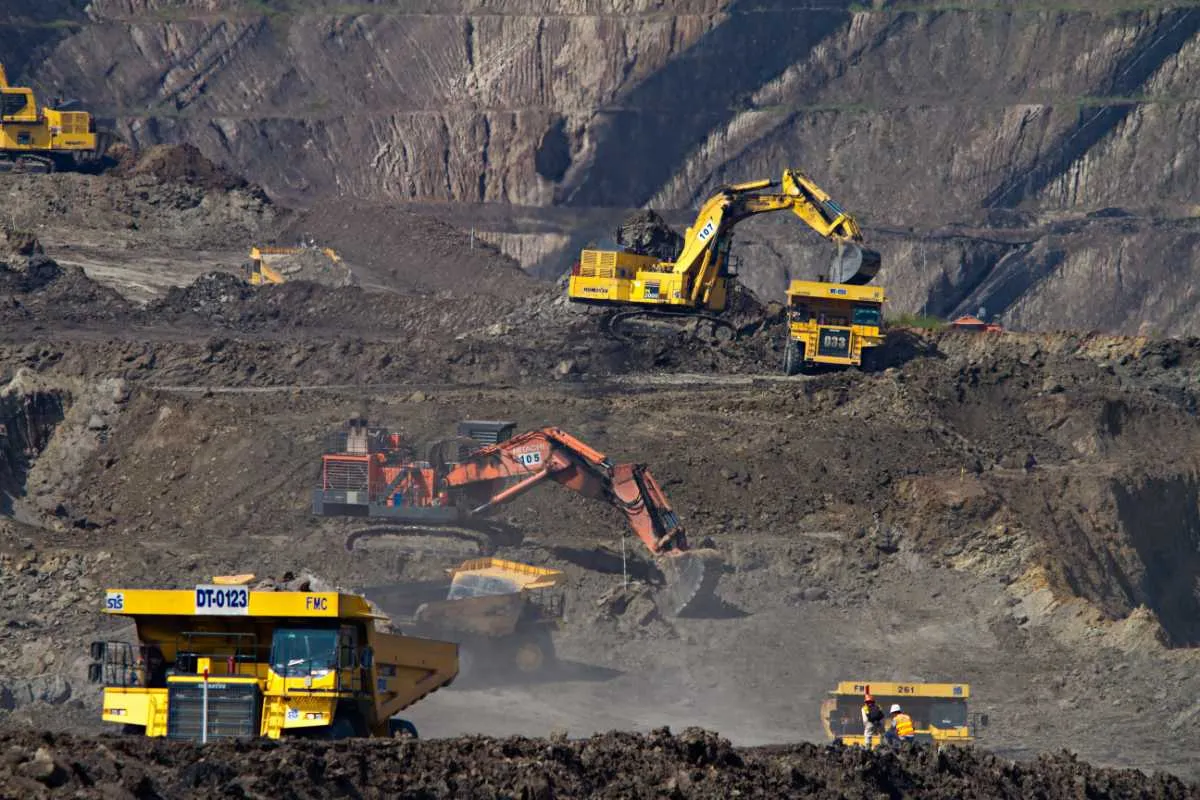
The haul truck is the workhorse of the modern mine. Whether carrying blasted ore from an open-pit copper mine in Zambia, transporting waste rock from a gold mine in Ghana, or hauling coal through an underground decline in South Africa, mining trucks move the material that makes extraction economically viable. Understanding the range of options — from medium-duty models to the largest machines on earth — is essential for any mining procurement professional.
What makes a mining haul truck different
Mining haul trucks are not construction dump trucks. They are purpose-engineered machines designed to carry the heaviest possible payloads over rough terrain, continuously, for years — with minimal downtime. A well-managed mining truck may accumulate 20,000–30,000 operating hours over its life, the equivalent of driving around the earth multiple times.
The key differences from construction trucks are payload capacity (mining trucks start at around 40 tonnes and go up to 400+ tonnes), tyre size (ultra-class trucks run on tyres over four metres in diameter), powertrain design (most large surface trucks use diesel-electric drive with electric wheel motors), and structural engineering that allows them to handle constant abuse from loaded haul cycles.
Surface haul trucks: from medium to ultra class
Medium and large trucks (40–150 tonnes)
Medium-duty mining trucks in the 40–100 tonne range are used at smaller open-pit operations and in underground decline haulage. They are more versatile than ultra-class machines and can operate on tighter turning radii, making them suitable for smaller mine footprints. Leading models include the Caterpillar 775, Komatsu HD785, and Bell B50E articulated dump truck.
The 100–150 tonne class is a sweet spot for many mid-sized open-pit mines. These trucks offer a balance of payload, fuel efficiency and maintenance manageability. Caterpillar's 789 series and Komatsu's HD1500 are well-established in this range, with strong service networks in Africa.
Large trucks (150–250 tonnes)
In this class, Caterpillar's 793 series and Komatsu's 730E are workhorses at major copper, iron ore and gold operations globally. These trucks are defined by their diesel-electric drive systems, which deliver power to each rear wheel motor independently, improving traction and efficiency on steep grades.
Ultra-class trucks (300–400+ tonnes)
The ultra-class represents the pinnacle of surface mining haulage. The Caterpillar 797F carries a 400-tonne payload and is powered by a 4,000-horsepower engine. The Komatsu 980E-5 and Liebherr T 282C operate in the same category. At this scale, a single truck represents a capital investment of several million dollars — and the tyres alone can cost $50,000 each.
Ultra-class trucks are used exclusively at the world's largest open-pit mines: giant copper operations in Chile and Peru, iron ore mines in Australia's Pilbara region, and oil sands operations in Canada. Increasingly, autonomous versions of these trucks — requiring no human driver — are operating at scale, particularly in Australia where autonomous fleets have demonstrated 10–15% productivity improvements and significant safety benefits.
Underground haul trucks
Underground trucks operate in a fundamentally different environment. They must navigate confined declines and tunnels, manage diesel exhaust in enclosed spaces, and handle extreme gradients. The leading suppliers — Epiroc, Sandvik and Caterpillar — produce a range of underground haulers from 20 to 65 tonnes capacity.
Battery-electric underground trucks are a rapidly growing category. The elimination of diesel exhaust dramatically reduces ventilation requirements, lowering one of the largest operating cost components in deep underground mines. Epiroc's Minetruck MT65 E and Sandvik's TH665B are among the leading electric models currently in production.
What African mine operators need to consider
For procurement teams at African mining operations, several factors beyond technical specifications influence truck selection:
Service network: A truck that cannot be serviced quickly when it breaks down costs far more than any price difference between brands. Caterpillar and Komatsu have the broadest African dealer networks, while Liebherr and Bell also maintain strong regional presences.
Local content requirements: Several African countries require a percentage of mining expenditure to be sourced locally. Understanding which OEMs have local assembly, distribution or service partnerships matters for regulatory compliance.
Total cost of ownership: Tyre costs, fuel consumption, scheduled maintenance intervals and mean time between failures are as important as purchase price. Requesting total cost of ownership projections from suppliers — and verifying them with reference sites — is essential due diligence.