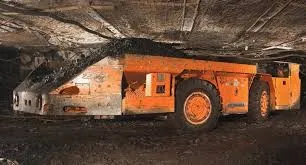
Komatsu Mining India has signed a new supply contract with TMC Mineral Resources Private Ltd for Joy Shuttle Cars — a deal that brings the Japanese equipment giant's total shuttle car fleet deployed in India to more than 50 units, cementing its position as a leading underground equipment supplier in one of the world's fastest-growing mining markets.
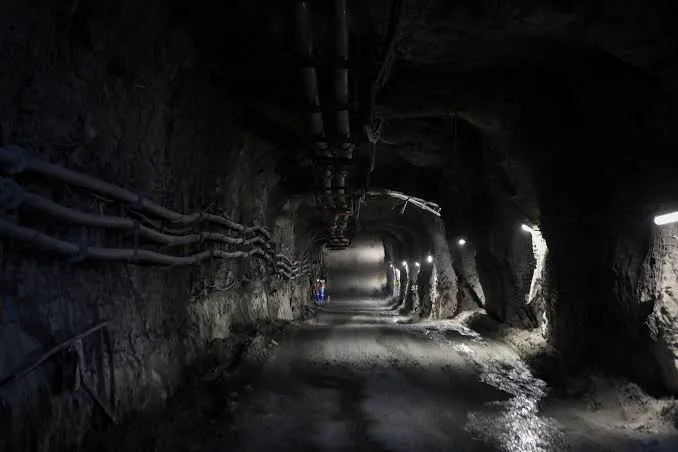
The agreement, announced in late April 2026, sees TMC Group — a well-established Indian contract mining company based in Saddu, Raipur — add two additional Joy Shuttle Cars to its underground coal mining operations. The deal reflects confidence in Komatsu's equipment in India's demanding underground conditions, which are characterised by challenging coal seam variability, high moisture environments and the need for consistent high throughput.
TMC Group: experience at scale
TMC Mineral Resources is no newcomer to underground mining. The company holds ISO 9001:2015, ISO 14001:2015 and OHSMS 45001:2018 certifications, and its operational track record includes over 172 kilometres of mine development and 13.76 million tonnes of coal production. Its client roster spans Jindal Steel & Power, MOIL Ltd, HIRA Group, SAIL, SECL, Hindalco, and other major Indian industrial names.
For a company operating at that scale, equipment reliability is not negotiable. The decision to continue expanding its Komatsu fleet — rather than diversifying to alternative suppliers — is a strong endorsement of Joy Shuttle Car performance in Indian conditions.
What makes the Joy Shuttle Car significant
The Joy Shuttle Car is a foundational piece of underground coal mining equipment. Used in room-and-pillar and continuous mining systems, it bridges the gap between the continuous miner cutting coal at the face and the conveyor system transporting material to the surface. Speed, manoeuvrability and payload capacity are the critical metrics — and Joy Shuttle Cars have consistently delivered on all three in India's underground operations.
Komatsu's own data from one Indian mechanised coal mine tells a compelling story. Through a structured programme combining Joy equipment, Smart Solutions software, application engineering, training and lifecycle management, the mine achieved a 187% increase in productivity. Machine utilisation improved by 25%, system availability rose by 18%, and peak rated capacity was successfully reached — all in a greenfield operation where both the mine owner and operator were new to mechanised underground mining.
India's underground mining boom
India's coal sector is the third largest in the world, and the country's underground mines are under increasing pressure to modernise. Surface coal deposits are becoming increasingly depleted, pushing operations deeper underground where room-and-pillar and longwall systems dominate. The Indian government has also been pushing for productivity improvements to reduce coal import dependency — a goal that requires equipment capable of operating continuously at high output levels.
This creates a compelling long-term market for underground equipment suppliers. Komatsu's investment in building a substantial installed base — 50+ shuttle cars, alongside drills, longwall systems and digital solutions — positions it strongly as Indian coal mining scales up through the late 2020s.
Lessons for Africa's underground mining sector
India's experience with underground coal equipment modernisation holds direct relevance for African mining operations facing similar challenges. Across the DRC, Zambia, Zimbabwe and South Africa, underground mines grapple with the same fundamental tension: how to increase output while managing costs, workforce safety and equipment reliability in difficult ground conditions.
The 187% productivity gain achieved at the Indian mine is not simply a product of better machines — it reflects a holistic approach combining equipment, software, training and lifecycle support. This model, which Komatsu describes as a Continuous Improvement Plan, is increasingly being offered by all major OEMs and is particularly valuable for mines in developing markets where in-house technical capacity may be limited.
For African procurement teams evaluating underground equipment suppliers, the Komatsu-TMC partnership offers a useful reference point: deep OEM involvement, integrated digital tools and structured performance benchmarking can deliver measurable productivity improvements that extend well beyond the initial equipment purchase.