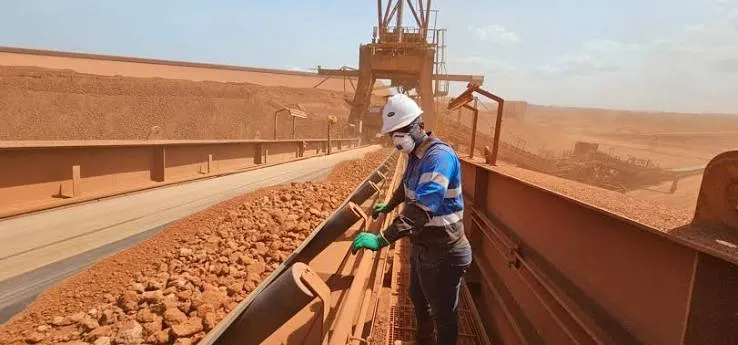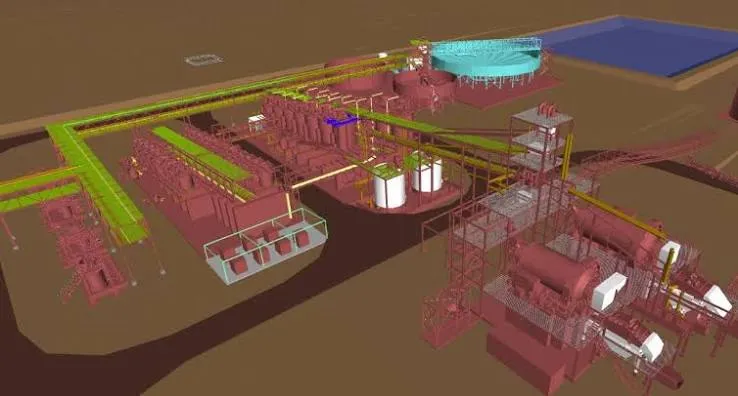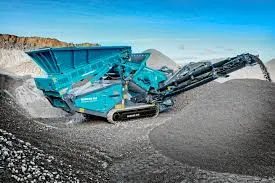
Before the minerals locked inside mined ore can be extracted and sold, the rock must be broken down from the large, irregular fragments produced by blasting into fine particles suitable for processing. This is the job of crushing and screening equipment — one of the most capital-intensive and operationally critical elements of any mineral processing facility.
Understanding how crushing and screening works, what types of equipment are involved, and how to evaluate suppliers is essential for mine managers, metallurgists and procurement teams.
Why crushing and screening is necessary
When rock is blasted in a mine, the resulting fragments range from fine dust to boulders several metres across. For a downstream processing plant to efficiently extract the target mineral — whether through flotation, leaching, gravity separation or smelting — the ore must be reduced to a consistent, fine particle size, typically below a few millimetres.
Crushing achieves this reduction through multiple stages, each breaking ore progressively finer. Screening separates material by size at each stage, allowing correctly sized product to move forward while oversized material is returned for further crushing.
The three stages of crushing
Primary crushing
Primary crushing handles the coarsest feed directly from the mine — blast-fragmented rock that may range up to one metre or more in size. The standard equipment for primary crushing is the gyratory crusher, which uses a conical mantle rotating within a concave outer shell to compress and fracture rock. Gyratory crushers are characterised by their high throughput — up to 2,000 tonnes per hour — and continuous feed capability.
Jaw crushers are also common in primary crushing, particularly at smaller operations. They use two opposing plates, one fixed and one reciprocating, to break rock in a crushing chamber. Jaw crushers are simpler, lower-cost and more portable than gyratories, making them preferred for smaller mines and mobile crushing applications.
Secondary crushing
Secondary crushing reduces primary-crushed product from 150–300mm down to 30–75mm. Cone crushers dominate this stage. A cone crusher uses a rotating conical head within a bowl-shaped outer shell, crushing rock through a combination of compression and impact. Cone crushers are highly efficient, produce a well-shaped product, and are available in standard, short-head and high-pressure configurations for different applications.
Tertiary and quaternary crushing
For processes requiring very fine particle sizes — including many gold and copper concentrators — tertiary and quaternary crushing stages reduce material to 10–25mm or finer. High-pressure grinding rolls (HPGRs), vertical shaft impactors (VSIs) and additional cone crushers are all used at this stage, depending on the ore characteristics and downstream processing requirements.
Screening equipment
Between each crushing stage — and often after the final stage — vibrating screens separate material by size. A vibrating screen is essentially a large, inclined surface covered with screen panels (wire mesh or polyurethane panels with specific aperture sizes), which vibrate to stratify material and pass correctly sized particles through while retaining oversized material for recirculation.
Modern screens incorporate features including multi-deck configurations (allowing separation into multiple size fractions simultaneously), high-frequency vibration for fine screening, and wear-resistant panels for handling abrasive ores.
Leading suppliers
Metso is the global market leader in crushing and screening equipment, with its HP and GP cone crusher series and Superior gyratory crushers widely used at major operations globally, including Africa's largest copper and gold mines.
Sandvik competes closely with Metso, particularly in cone crushers and jaw crushers. Sandvik's modular crushing and screening systems are popular at African mining and quarry operations.
Weir Minerals (Trio and Enduron brands) has a strong presence in African crushing and screening, with a broad product range and well-established service network across the continent.
FLSmidth is a significant player particularly in larger mineral processing applications, with strong capabilities in primary crushing and comminution circuit design.
Maintenance and operational considerations for African mines
Crushing and screening equipment is subject to extreme wear from abrasive rock. Wear liners in crushers and screen panels are consumable items requiring regular replacement — and the cost and availability of these consumables in your location should be factored into total cost of ownership calculations.
For mines in the DRC, Zambia and other remote African locations, securing reliable access to wear parts — through local stockpiling, supplier warehousing agreements or fast-track import arrangements — is often as important as the equipment selection itself.