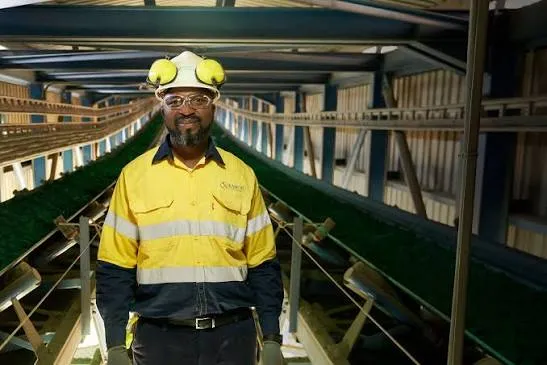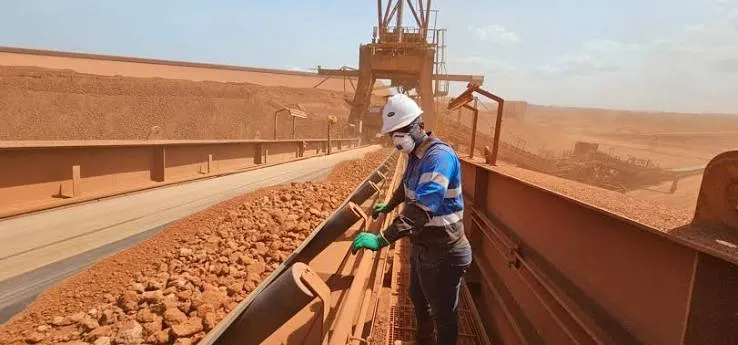
A conveyor belt may be one of the longest components in a processing operation, but much of its damage begins within a comparatively small area: the point where material lands on it.
At a poorly designed transfer point, ore can strike the belt with high vertical velocity, load away from the centreline or move in a direction inconsistent with belt travel. The result is impact damage, abrasion, mistracking and spillage. Over time, these effects shorten belt life and increase cleaning and maintenance work.
The objective of chute design is therefore not simply to move material from one conveyor to another. It is to control the material stream so that it reaches the receiving belt centrally, in the direction of travel and as close as practicable to belt speed.
Discrete element modelling allows engineers to simulate how particles behave inside different chute geometries. It can identify zones of high impact, unstable flow or excessive liner wear before steel is fabricated. The model’s usefulness still depends on realistic material properties and operating assumptions; it is an engineering tool, not a substitute for commissioning measurements.
Curved chutes can reduce the vertical component of impact and guide material towards the belt’s direction of movement. Rock boxes may protect chute liners but can create turbulent flow and high impact on the belt. A design choice that saves a relatively inexpensive liner may therefore transfer wear to the more valuable conveyor.
Loading damage is only part of the system. Belt sag can create gaps at the skirting, allowing material to escape. Carryback that remains attached after discharge can accumulate around return idlers and structures. Frozen or seized idlers then increase friction and further damage the belt.
Belt cleaners also require correct selection and tension. Insufficient contact leaves carryback; excessive pressure accelerates wear without necessarily improving cleaning. Inspection should therefore cover cleaners, idlers, skirting, tracking and the condition of the belt surface as one interacting system.
For African mines operating far from replacement-belt suppliers, transfer-point performance is also a supply-chain issue. A catastrophic belt failure can require specialised splicing teams and imported material. The economic value of good chute design lies in avoiding that interruption—not simply reducing annual rubber consumption.
A reliable assessment should use operating evidence. Engineers can compare belt thickness, splice condition, carryback and component wear before and after modifying a transfer point. Production rate, moisture and particle-size distribution must be recorded because changes in the material can otherwise be mistaken for design improvement.
Maintenance access belongs in the original design. Liners, cleaners and impact components are consumables; if inspection or replacement requires long isolation and difficult lifting, routine work will be postponed until performance deteriorates. Safe access can therefore extend equipment life indirectly by making correct maintenance practical.
The strongest business case combines avoided belt expenditure with recovered production time. A chute redesign may look expensive when charged only to maintenance, yet become economical when the analysis includes reduced cleanup, fewer stoppages and lower exposure to a catastrophic belt replacement.
Management should assign ownership of the entire transfer point rather than dividing responsibility so narrowly that no team controls overall performance. Operations, maintenance and engineering need shared measures covering tonnes handled, spillage, belt damage and intervention time.