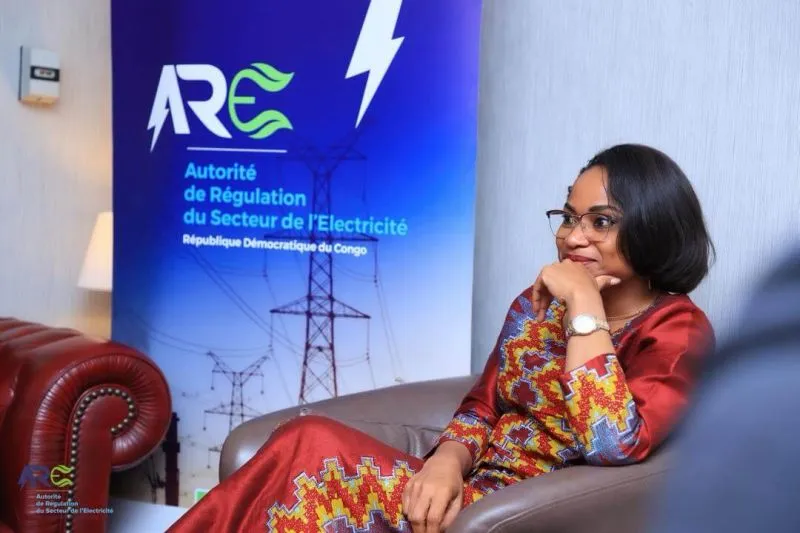
For investors new to DRC's energy landscape, ARE's role needs explanation — because what it does is far more consequential than its name suggests, and far more relevant to mining operations than most operators realise until they're already deep into a project.
Created under the Electricity Law n°14/011 of 17 June 2014, ARE — the Autorité de Régulation du Secteur de l'Électricité — is the DRC government's independent electricity sector regulator. It does not generate power, own transmission lines, or supply electricity to anyone. It does not build dams or install solar panels. What it does is decide who is legally allowed to do those things — and on what terms.
ARE does not produce electricity. It licenses the companies that produce it, controls the tariffs they charge, resolves the disputes that arise, and serves as the institutional guarantor that the private capital entering DRC's energy sector operates within a framework that protects both investors and consumers.
Think of it as the referee in a market that is still learning how to compete. For most of DRC's history, SNEL — the state utility — was the only player on the field. ARE's job is to manage the transition from that monopoly to a sector where independent power producers, mini-grid operators, solar developers, and industrial self-producers can all participate alongside SNEL, under rules that are consistent, enforceable, and credible to international capital.
For a mining company, this is what ARE means in practice: if you want to build a captive hydro plant on a river near your operation, ARE issues the concession. If you want to buy power from an independent producer under a long-term agreement, that producer needs an ARE licence before the contract is bankable. If you consume enough electricity to qualify as an "eligible client" — allowing you to negotiate directly with producers and bypass SNEL's distribution system entirely — ARE grants that status. Every one of those pathways runs through the same institution, the same regulatory framework, the same DG.
Led since July 2020 by Professor Dr. Sandrine Ngalula Mubenga — an electrical engineer with a PhD from the University of Toledo, Ohio, who also holds a faculty position there — ARE is among the few DRC regulatory bodies that international investors consistently describe as functional, responsive, and professionally run. When Ituri Energy applied for licences to electrify three towns in conflict-affected Ituri Province, ARE issued three favourable opinions — two production licences and one distribution concession — in a single process. The investor's public response: gratitude for "the professionalism and speed" of handling. For a DRC regulatory interaction, that sentence is unusual enough to be worth quoting.
ARE is not the solution to DRC's energy deficit. The deficit is structural, vast, and will take decades and hundreds of billions of dollars to close. But it is the institution that determines whether private capital can enter the sector at all — and right now, with energy representing the single largest category of ANAPI-approved investment in DRC, the answer to that question matters more than it ever has.