For businesses across the underground mining engineering, equipment, and construction ecosystem — continuous miner manufacturers and dealers, ventilation shaft specialists, underground development contractors, box-cut and portal construction firms, mining electrical and infrastructure contractors, and the procurement and project-management services that sit around all of them — Exxaro Resources' completion of the Matla Life of Mine Project in May 2026 is a data point worth reading carefully. A R5.236 billion underground coal infrastructure programme, launched in August 2020, delivered on scope and within budget at its May 2026 opening. For an underground mine-development programme of this scale, that outcome is not routine.
What was built
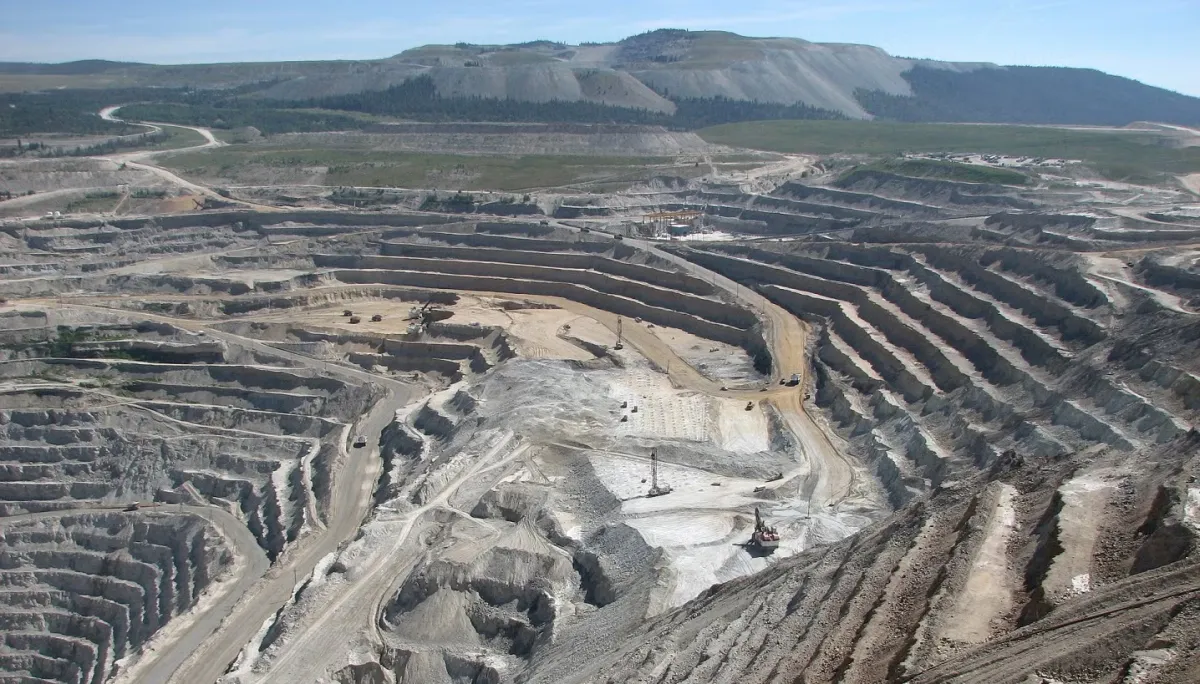
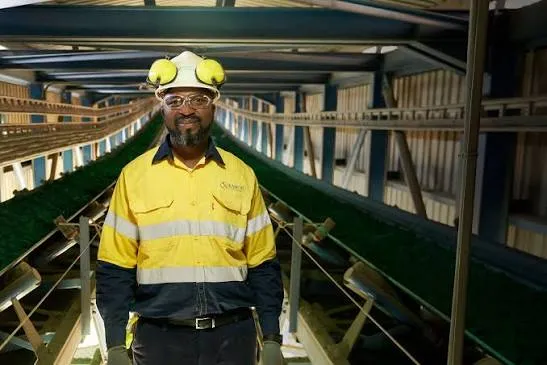
The Matla Life of Mine Project is a multi-component programme at Exxaro's Matla colliery in Mpumalanga, South Africa, designed to extend the operational life of a mine that supplies approximately 4.2 million tonnes of coal annually to Eskom's adjacent Matla Power Station under a long-term, recently extended Coal Supply Agreement. The original Mine 1 had been taken out of production in 2016 following the identification of deteriorating safety pillar conditions near shaft infrastructure — a recognised underground failure mode that carries significant regulatory weight under South Africa's Mine Health and Safety Act. The programme components include the construction of a new box cut and all supporting infrastructure for the relocated Mine 1; procurement of complete suites of underground Continuous Miner section equipment; construction of incline and decline tunnels for Mines 2 and 3 with associated infrastructure; and development of a new ventilation shaft for Mine 3. Minister of Minerals and Petroleum Resources Gwede Mantashe attended the official opening on 15 May 2026 and went underground with workers — a signal of the project's national-energy-security significance.
The cost-plus context that makes this unusual
Understanding the Matla programme's commercial architecture is essential for interpreting what it means as a market signal. Matla operates under a cost-plus contractual model between Exxaro and Eskom: Eskom as the offtaker carries contractual responsibility for funding the mine's operating costs, while Exxaro carries the execution risk of delivering the contracted coal tonnes. The R5.236 billion capital programme flows through Eskom's primary energy procurement budget rather than Exxaro's capital expenditure in the conventional investor sense. This risk-allocation model is relatively uncommon in global mining — most coal operations carry commodity-price exposure. At Matla, revenue visibility is contractually guaranteed, which is what justified deploying capital over a six-year development horizon. For the supply chain behind the programme, this model means procurement decisions were driven by delivery certainty and technical specification rather than price volatility — a different commercial environment from a conventional mining CapEx cycle.
Five demand segments the programme illustrates
Continuous miner equipment procurement and support. The MLOMP procurement of complete CM section suites represents one of the most substantial underground coal equipment orders in South Africa in the current cycle. Continuous miner section procurement covers not just the machines themselves but the full section complement — shuttle cars or battery haulers, feeder-breakers, roof bolters, mobile belt structures, and the associated electrical infrastructure. For equipment manufacturers, dealers, and the aftermarket and rebuild ecosystem that follows, a programme of this size creates a defined procurement event followed by years of parts, service, and maintenance contracts.
Ventilation shaft construction. The Mine 3 ventilation shaft development is a specialist procurement in its own right. Underground ventilation shaft sinking requires specific expertise — shaft sinking contractors, winder and headgear installation, lining and concrete work, ventilation-fan procurement and installation — that sits in a narrow pool of specialist contractors in Southern Africa. As the continent's mining industry extends mine lives and develops deeper ore bodies, ventilation shaft work is one of the structural growth segments in the underground construction market. Matla's Mine 3 shaft is a live project reference for the contractors and suppliers in that pool.
Underground civil and portal construction. Box cut construction, incline and decline tunnelling, and portal development for Mines 2 and 3 represent the civil-engineering backbone of the MLOMP. These are brownfield underground construction works in an active mining environment — technically more demanding than greenfield development, requiring ground control expertise, coordination with operating sections, and the ability to manage construction progress without disrupting production. Specialist underground civil contractors, ground-support suppliers, concrete and shotcrete specialists, and underground construction equipment providers are all represented in the programme's procurement chain.
Electrical, infrastructure, and auxiliary services. A programme of this scope requires extensive electrical infrastructure — substation upgrades, underground power distribution, conveyor drives, pump stations, compressed-air systems — alongside surface infrastructure including lamp rooms, change houses, offices, and materials-handling facilities. For the electrical and mechanical contractors serving the South African mining industry, the MLOMP represents a multi-year, multi-contract procurement environment within a single project boundary.
Project management, engineering, and technical advisory. The on-scope, on-budget delivery of a R5.2 billion underground programme over six years is not an accident. It reflects disciplined project management, front-end engineering design, procurement strategy, and contract management. The firms that delivered that outcome — EPC contractors, EPCM advisors, quantity surveyors, geotechnical consultants — have a live reference project that speaks directly to the capability that every large mine-owner wants to see demonstrated before awarding a similar programme.
The broader African underground development market
Matla's MLOMP is a South African coal story in its specific context, but the procurement categories it represents are directly applicable across the broader African underground mining market. The Copperbelt's underground mines — Kipushi, Kamoa-Kakula's underground development, Étoile-Mutoshi's restart, and the next generation of deep underground projects that the resource base will require — all need the same engineering, equipment, ventilation, civil, and infrastructure services. The firms and suppliers that have built their technical credentials and reference project lists on South African programmes like Matla are the ones best positioned to win work as the Copperbelt's underground development pipeline accelerates.
Two specific parallels stand out. First, the ventilation challenge. Underground Copperbelt mines face the same ventilation intensity as deep underground coal — high temperatures, dust, diesel emissions, and in some cases elevated natural temperatures at depth. The ventilation shaft expertise demonstrated at Matla Mine 3 is directly transferable to underground base-metal projects in Lualaba and Haut-Katanga. Second, the continuous miner relevance. While continuous miners are primarily associated with coal, the section-equipment procurement model — complete operational suites, fully supported aftermarket, OEM-backed maintenance — is the template for equipping any mechanised underground development operation. Procurement of complete section suites, as executed at Matla, is the right model for the Copperbelt's mine-development teams.
The on-budget delivery signal
The most commercially important aspect of the Matla MLOMP is the one that gets least attention: it was delivered on scope and within budget. For a six-year, R5.236 billion underground infrastructure programme, that is a meaningful outcome. Multi-year underground mine-development projects face compounding execution risks — geological variability, ground control, ventilation management, workforce continuity — that surface construction does not. On-budget delivery at this scale demonstrates project-management and engineering-delivery capability that mine owners across the continent are actively looking for, and rarely finding enough of. The firms behind the MLOMP have a reference that speaks louder than a capabilities brochure.
The bottom line for the industry
Matla's MLOMP is the largest successfully completed underground mine-development programme in Southern Africa in the current cycle. Its procurement categories — continuous miner section equipment, ventilation shaft construction, underground civil development, electrical and infrastructure services, project management — define the capability set that the African underground mining market will increasingly need as the continent's base-metal mines go deeper, older operations require life extension, and new resource discoveries develop underground profiles. The suppliers and contractors who have delivered at Matla scale have the reference the next generation of African underground mine development will require. The firms still building that reference list have the market signal they need to understand what the standard looks like.