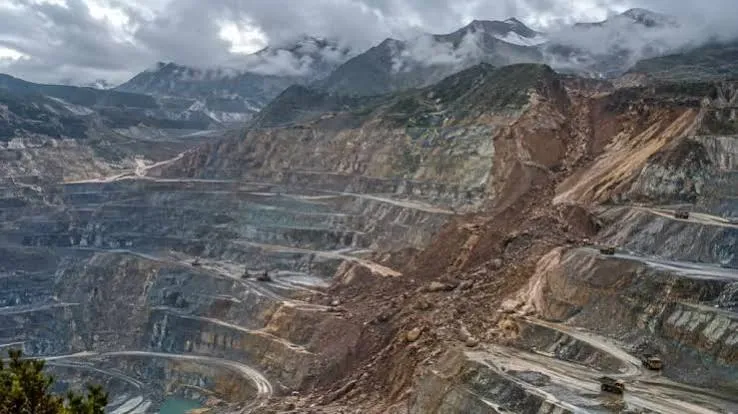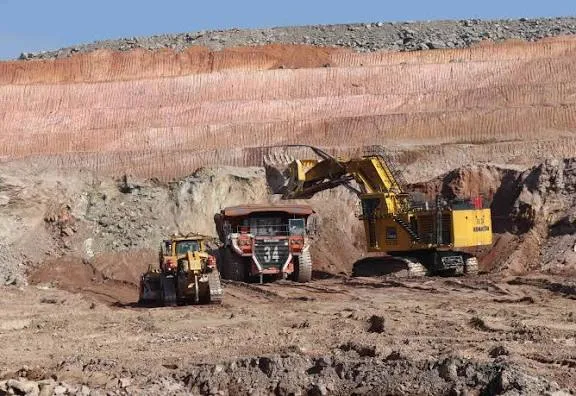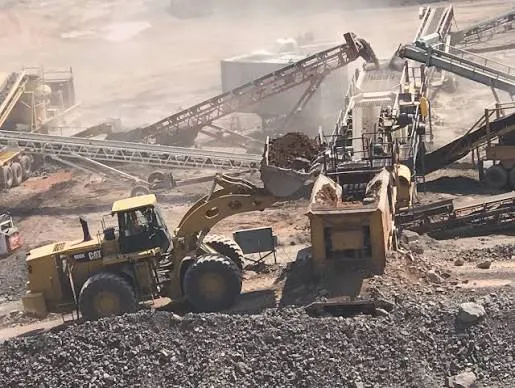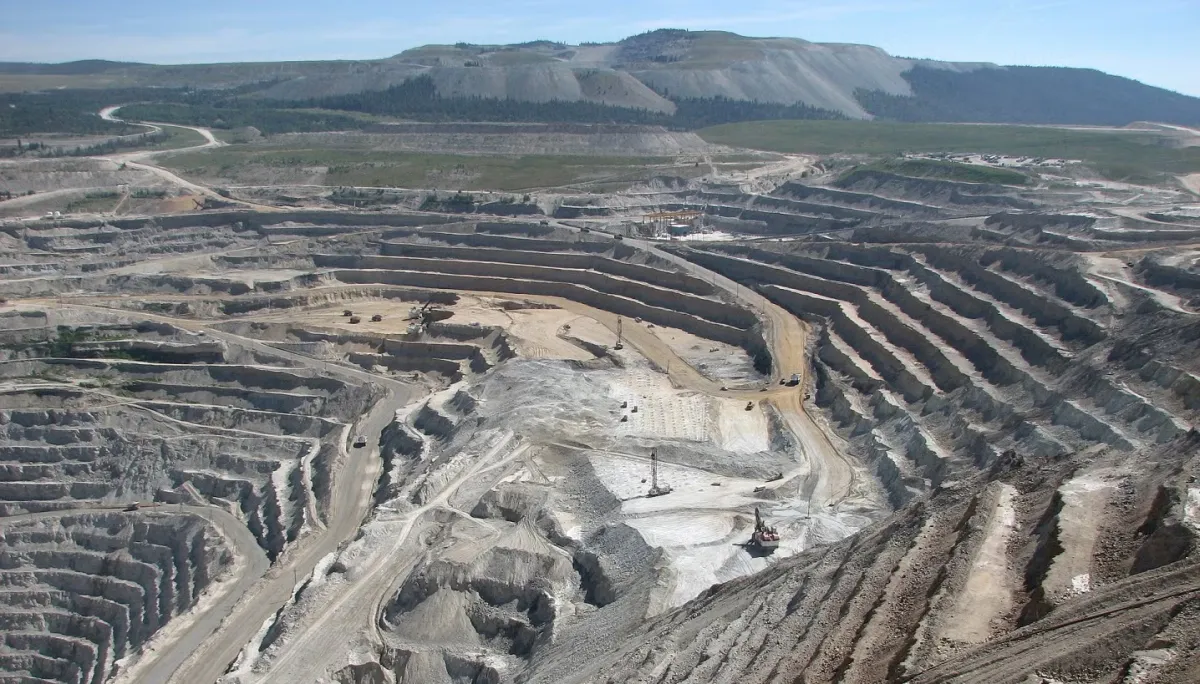
The Simandou iron ore project in Guinea is the largest greenfield iron ore development since the discovery of Western Australia's Pilbara region in the 1960s. The deposit hosts over 2 billion tonnes of high-grade hematite iron ore at average grades exceeding 65% iron — among the highest-grade iron ore reserves on Earth. The first cargo shipped in December 2025 after nearly 30 years of development delays, legal disputes, and infrastructure construction. At full ramp-up, Simandou is targeted to produce 60 million tonnes per year by 2027–2028, becoming one of the world's top five iron ore mines and structurally altering global iron ore supply.
This article maps Simandou's history, geology, ownership structure, infrastructure, and likely impact on global iron ore markets.
What Is Simandou?
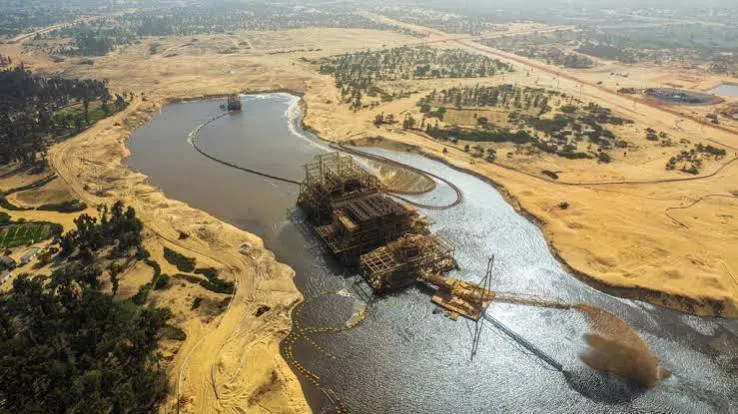
Simandou is an iron ore deposit located in the Simandou mountain range in southeastern Guinea, in the Nzérékoré Region near the borders with Liberia and Côte d'Ivoire. The deposit was discovered in the 1990s but has remained largely undeveloped due to a combination of geological remoteness (650 km inland from the coast), infrastructure costs (estimated $15–20 billion for full mine, rail, and port development), and prolonged legal disputes over ownership.
Geology
Simandou's iron ore is direct-shipping ore (DSO) — meaning it can be shipped without further beneficiation. The deposit consists of:
- Banded iron formation (BIF) of Proterozoic age (approximately 2.1 billion years old)
- Average grade of 65–66% iron — significantly above the 58–62% Pilbara average
- Total resource exceeds 2 billion tonnes
- Multiple mineralised peaks (Pic de Fon, Whegnia, Saliforni)
The deposit is divided into four numbered blocks running roughly north to south. Each block hosts world-class resources individually.
The Four Blocks: Ownership and History
Blocks 1 and 2 — Winning Consortium Simandou (WCS)
- Operators: Winning International Group (Singapore/China), Weiqiao Aluminium (China), United Mining Suppliers (Guinea), Government of Guinea
- Lead corporate entity: SMB-Winning Consortium (a Chinese-led aluminium and bauxite consortium that diversified into iron ore)
- First production: December 2025
Blocks 3 and 4 — SimFer SA
- Operators: Rio Tinto (45.05%) + Chinalco (39.95%) + Government of Guinea (15%)
- Lead corporate entity: SimFer SA
- First production: Q1 2026
The split-block ownership structure dates from the messy contractual history that delayed the project for decades. Rio Tinto first acquired exploration rights in 1997. Disputes over titles, expropriations, and re-allocations under successive Guinean governments resulted in the current configuration only being finalised in 2019, after years of arbitration including the BSGR-Vale-Steinmetz dispute (one of the longest-running mining legal sagas in modern history).
The Infrastructure Challenge
The defining feature of Simandou is not the ore body — Pilbara, Brazil's Carajás, and Australia's Robe River all have comparable deposits. The defining challenge has been infrastructure.
Guinea's coast is on the Atlantic. The Simandou range is 650 km inland. To export iron ore, the project required construction of:
- Railway: A new 670 km heavy-haul railway from Simandou through the rainforest of southeastern Guinea to a deepwater port on the Atlantic coast. This is one of the longest greenfield mining railways ever built
- Port: A new deepwater iron ore export terminal at Morebaya on the Atlantic coast, capable of handling Capesize and Valemax bulk carriers
- Power: New transmission infrastructure to the mine site, with potential future hydroelectric generation
- Road: Upgraded road network from the mine to the railhead and supporting communities
- Township: Worker housing and supporting infrastructure for thousands of operations and maintenance staff
Total infrastructure capital cost: estimated at $15–18 billion. This figure made Simandou economically marginal at iron ore prices below $80/tonne and explains why successive owners failed to develop it. The 2020s commodity price environment, sustained Chinese demand, and the strategic value of high-grade iron ore (lower carbon intensity in steelmaking) made the project economic.
The First Shipment: December 2025
The Winning Consortium Simandou (Blocks 1 and 2) shipped its first iron ore cargo in December 2025 from the Morebaya port — a milestone that ended nearly three decades of project development. The first cargo, approximately 80,000 tonnes of high-grade DSO, was loaded onto a Capesize bulk carrier bound for Chinese steelmaking customers.
SimFer SA (Blocks 3 and 4, Rio Tinto/Chinalco) announced its first cargo in Q1 2026.
Production Outlook
Combined Simandou production targets:
| YearProduction targetPhase | ||
| 2025–2026 | ~10–15 Mt/yr (combined) | First cargoes, ramp-up |
| 2027 | ~30–40 Mt/yr | WCS reaches steady state |
| 2028 | ~50–60 Mt/yr | SimFer reaches steady state |
| 2029+ | Up to 90–120 Mt/yr | Combined Phase 2 expansions possible |
If full production targets are achieved, Simandou will be one of the world's top five iron ore mines and the largest single source of high-grade iron ore additions to the global market in over a decade.
Why High-Grade Iron Ore Matters
Simandou's high-grade ore (65–66% iron) commands a premium over standard 62% iron ore products. The premium has structural drivers beyond commodity supply-demand:
Lower steelmaking emissions. Higher iron content means less ore is needed per tonne of steel, less coke is needed in the blast furnace, and fewer slag-forming impurities are produced. This lowers carbon emissions per tonne of steel — increasingly valuable as steel customers (auto manufacturers, construction firms) face Scope 3 emission accountability.
Compatibility with direct reduction iron (DRI) processes. DRI uses natural gas (and increasingly hydrogen) instead of coke to reduce iron ore. DRI requires higher-grade ore to be economic. As global steelmaking pivots toward DRI for emissions reduction, high-grade ore demand grows.
Productivity gains in existing blast furnaces. Steelmakers can increase blast furnace productivity by blending high-grade ore with their standard ore feedstock, reducing per-tonne operating costs.
For these reasons, Simandou's market entry is not a simple supply addition — it shifts the entire global iron ore quality curve and benefits steelmakers seeking lower-emission feedstocks.
Impact on Global Iron Ore Markets
Australia's Pilbara Position
The Pilbara region of Western Australia produces approximately 900 million tonnes per year of iron ore — over 50% of global seaborne supply. The major Pilbara producers (BHP, Rio Tinto, Fortescue, Hancock Prospecting/Atlas Iron) have benefited from structurally high prices since 2010. Simandou's market entry at scale (60 million tonnes per year by 2028) represents incremental supply equivalent to approximately 7% of Pilbara output — meaningful but not transformational.
The more significant Australian impact is on grade differentials: Simandou's 65–66% Fe production raises the average global grade and reduces the premium that Pilbara hematite earns over Brazilian Carajás and South African Sishen ore. Pilbara producers are responding by increasing their own beneficiation capacity to maintain grade competitiveness.
Vale's Brazilian Position
Brazil's Vale operates Carajás in the northern Amazon — the world's only existing high-grade iron ore deposit comparable to Simandou (Carajás averages 66–67% Fe). Vale produces approximately 400 million tonnes per year. Simandou is the first significant new high-grade competitor to Carajás in over 50 years.
Chinese Strategic Buying
Chinese steelmakers consume approximately 70% of seaborne iron ore. Simandou's Chinese ownership — both directly (WCS, Chinalco) and through long-term offtake agreements — gives China direct supply security from a high-grade source. This is a long-stated strategic objective of Chinese industrial policy: reducing dependence on the Australian "Big Three" (BHP, Rio Tinto, Fortescue).
Carbon Pricing Implications
EU Carbon Border Adjustment Mechanism (CBAM) — fully implemented from 2026 — penalises imported steel based on its embedded carbon content. Steel produced from high-grade iron ore (Simandou, Carajás) will face lower CBAM charges than steel from standard ore. This is increasingly an economic driver for steelmakers' iron ore purchasing.
The Guinea Government Stake
The Government of Guinea holds significant interests in Simandou:
- 15% in SimFer SA (Blocks 3&4, with Rio Tinto and Chinalco)
- Indirect interest in WCS (Blocks 1&2) through royalty, tax, and free-carried interest mechanisms
- Free-carried interest in the Trans-Guinean Railway (the 670km Simandou-Morebaya line) and Morebaya Port
Guinea's mining royalties on iron ore are 3.5% of gross revenue. Combined with corporate income tax and the government equity, Guinea's fiscal take from Simandou is estimated at $3–5 billion per year at full production — transformative for a country with current GDP of approximately $20 billion.
The Junta Era and Project Continuation
Guinea's September 2021 military coup (Col. Mamady Doumbouya) created uncertainty about Simandou's future. The junta initially threatened to renegotiate all mining contracts. In practice, the junta has worked with Simandou's operators to bring the project to first production — recognising that mining revenues are essential to government finances and political stability.
The junta's relationship with Simandou's Chinese-aligned operators has been broadly cooperative. Chinese state diplomatic engagement and infrastructure financing have helped maintain project momentum through the political transition.
Frequently Asked Questions
Where is the Simandou iron ore mine? Simandou is located in southeastern Guinea, in the Nzérékoré Region near the borders with Liberia and Côte d'Ivoire. The mine site is approximately 650 km inland from the Atlantic coast.
Who owns Simandou? Simandou is divided into four blocks. Blocks 1 and 2 are operated by the Winning Consortium Simandou (a Chinese-led group including Winning International, Weiqiao Aluminium, and United Mining Suppliers). Blocks 3 and 4 are operated by SimFer SA — a joint venture between Rio Tinto (45.05%), Chinalco (39.95%), and the Government of Guinea (15%).
When did Simandou start producing iron ore? The Winning Consortium Simandou (Blocks 1 and 2) shipped its first iron ore cargo from the Morebaya port in December 2025. SimFer SA (Rio Tinto + Chinalco, Blocks 3 and 4) began first production in Q1 2026.
How much iron ore will Simandou produce? Combined Simandou production is targeted at approximately 60 million tonnes per year by 2027–2028, with potential expansion to 90–120 million tonnes per year in subsequent phases. This would make Simandou one of the world's top five iron ore mines.
Why did Simandou take so long to develop? Three reasons: (1) infrastructure complexity — building a 670 km railway and deepwater port through Guinea's rainforest at a cost of $15–18 billion; (2) protracted legal disputes over ownership, including the BSGR-Vale dispute that ran through international arbitration for over a decade; (3) periods when iron ore prices were too low to justify the capital investment.
Will Simandou affect global iron ore prices? Simandou's full production (60 Mt/yr) represents approximately 4% of total global iron ore supply — meaningful but not large enough to crash prices. The more significant impact will be on grade differentials, with high-grade ore premiums likely to compress as Simandou ramps up.
Sources: Rio Tinto Annual Report 2024 and 2025; Rio Tinto Simandou Project disclosures 2024–2026; Guinea Ministry of Mines and Geology; SMB-Winning Consortium press releases 2025–2026; USGS Minerals Yearbook 2024; Wood Mackenzie Iron Ore Market Outlook 2025; Bloomberg Simandou coverage 2024–2026.
Last updated: May 2026.