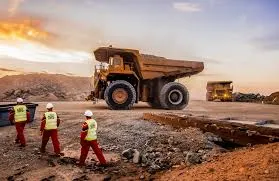
Zimbabwe is the most mineralogically diverse country in Africa and holds the continent's largest lithium resource — the sixth largest in the world. Since 2021, Chinese companies have invested over $1.4 billion in Zimbabwe's lithium sector alone, transforming the country into Africa's leading lithium producer almost overnight. Beyond lithium, Zimbabwe holds world-class deposits of platinum group metals (the world's second-largest PGM resource after South Africa's Bushveld Complex), chromite, gold, diamonds, nickel, and coal — making it one of the most compelling multi-commodity mining destinations on the continent.
Zimbabwe Mining: Key Statistics (2024)
| MetricFigure | |
| Annual gold production | ~35–40 tonnes |
| Annual lithium exports (H1 2025) | 586,197 tonnes spodumene concentrate |
| Annual PGM production (Great Dyke) | ~400,000–450,000 oz |
| Annual chrome production | ~2.0–2.5 million tonnes |
| Annual diamond production | ~4–5 million carats |
| Mining's share of exports | ~60–65% |
| Mining's contribution to GDP | ~12–15% |
| Primary mining regulator | Zimbabwe Mining Development Corporation (ZMDC) + Ministry of Mines |
| State mining company | ZMDC, Zimbabwe Consolidated Diamond Company (ZCDC) |
| Key mining legislation | Mines and Minerals Act (Chapter 21:05), amended 2023 |
| Primary mining regions | Midlands (chrome, nickel), Mashonaland (gold, lithium), Masvingo (lithium), Matabeleland (platinum) |
Overview: The Great Dyke and the Birimian Belt
Zimbabwe's mineral wealth is rooted in two world-class geological formations:
The Great Dyke — a 550 km linear intrusion of ultramafic and mafic rocks running north-northeast through the centre of Zimbabwe — is the world's second-largest platinum group metal (PGM) deposit outside of South Africa's Bushveld Igneous Complex. It also hosts the world's most significant chromite deposits outside of South Africa, as well as nickel and gold mineralisation. The Great Dyke has been mined for PGMs and chromite since the 1920s.
The Zimbabwe Craton — the ancient basement rock of the country — hosts world-class gold deposits (including the prolific Midlands and Mashonaland gold belts), lithium pegmatites concentrated in the Masvingo, Mashonaland West, and Matabeleland North Provinces, and diamond-bearing kimberlites (Marange).
Lithium: Zimbabwe's Critical Minerals Transformation
The Scale of the Opportunity
Zimbabwe holds Africa's largest lithium resource and the world's sixth-largest lithium endowment. The country's lithium pegmatites — concentrated in the Masvingo, Mashonaland West, and Bikita districts — contain deposits of spodumene, petalite, lepidolite, and amblygonite. Since 2021, Chinese battery materials companies have invested over $1.4 billion to transform Zimbabwe from a minor petalite producer into one of the world's most significant lithium concentrate exporters.
In H1 2025, Zimbabwe exported 586,197 tonnes of spodumene concentrate — a 30% increase year-on-year — making it the largest lithium exporter in Africa and among the top five globally.
Bikita Minerals (Sinomine Resource Group)
Location: Masvingo Province, ~325 km south of Harare Ownership: Sinomine Resource Group (Shenzhen: 002738), acquired January 2022 for $180 million Capacity: 480,000 t/yr petalite + 300,000 t/yr spodumene concentrate Status: Full production; $500 million lithium sulphate processing plant under construction
Bikita is Zimbabwe's largest and oldest lithium mine, in continuous production since 1950. Sinomine's acquisition triggered a massive expansion — from 50,000 tonnes per year to 780,000 tonnes per year combined capacity, a 15-fold increase. Sinomine is also constructing a lithium sulphate processing plant at Bikita, in compliance with Zimbabwe's 2027 lithium export ban on unprocessed concentrates. At full production, Bikita will be among the world's largest lithium operations.
Arcadia Lithium / Prospect Lithium Zimbabwe (Zhejiang Huayou Cobalt)
Location: Goromonzi District, ~38 km east of Harare Ownership: Zhejiang Huayou Cobalt (Shanghai: 603799), acquired April 2022 for $422 million Capacity: 450,000 t/yr lithium concentrate processing Status: Processing plant commissioned June 2023; downstream lithium sulphate facility under construction
Huayou Cobalt — one of China's largest battery materials companies — acquired the Arcadia lithium project from ASX-listed Prospect Resources and Zimbabwean minority shareholders for $422 million in 2022. A further $300 million was invested in a processing plant commissioned in June 2023. In July 2025, President Mnangagwa officially commissioned the Huayou processing facility. Huayou is also constructing a 50,000 tonne per year lithium sulphate facility at Arcadia to comply with the 2027 export ban. Total Huayou investment in Zimbabwe: approximately $722 million.
Zimbabwe's 2027 Lithium Export Ban
In June 2023, President Mnangagwa announced a ban on the export of unprocessed lithium ore and concentrate, effective from 2027. All lithium produced in Zimbabwe will be required to undergo at minimum first-stage processing (lithium hydroxide or lithium sulphate) before export. This policy mirrors similar value-addition mandates in Indonesia (nickel) and Chile (lithium), and is designed to capture a greater share of the lithium value chain in-country. Both Sinomine (Bikita) and Huayou (Arcadia) have committed to processing plants to comply.
Platinum Group Metals: The Great Dyke
Zimplats Holdings (Implats)
Location: Ngezi, Mashonaland West Province Ownership: Implats (86.9%) Production: ~430,000–470,000 oz PGMs/year (4E: Pt + Pd + Rh + Au) Type: Underground, concentrating + smelting Mine life: Through 2050+
Zimplats is Zimbabwe's largest platinum producer and one of the largest PGM operations in the world outside of South Africa. Operating in the Ngezi area on the southern portion of the Great Dyke, Zimplats produces from multiple underground portals and processes ore through concentrators and a smelter at Selous Metallurgical Complex. Zimplats also operates a Tailings Retreatment Plant and a chrome recovery circuit (recovering chrome from PGM tailings). Zimplats is listed on the ASX and JSE and has been operating in Zimbabwe for over 25 years — making it one of the most enduring foreign mining investments in the country.
Mimosa Mining (Sibanye-Stillwater + Sumitomo)
Location: Zvishavane, Midlands Province Ownership: Sibanye-Stillwater (50%) + Sumitomo Corporation (50%) Production: ~115,000–130,000 oz PGMs/year Type: Underground, concentrating
Mimosa operates in the southern Great Dyke at Zvishavane, producing PGM concentrate that is toll-smelted externally. The 50/50 partnership between Sibanye-Stillwater (South Africa/USA listed) and Sumitomo (Japan) is one of Zimbabwe's more stable mining joint ventures.
Unki Platinum Mine (Anglo American Platinum)
Location: Shurugwi District, Midlands Province Ownership: Anglo American Platinum (Amplats, 100%) Production: ~90,000–100,000 oz PGMs/year Type: Underground, concentrating
Unki is Anglo American Platinum's only Zimbabwe operation, producing PGM concentrate from the central Great Dyke. Amplats has operated Unki since 2010 and the mine contributes to its diversified Great Dyke exposure alongside Zimplats and Mimosa.
Gold: Zimbabwe's Historic Backbone
Blanket Mine (Caledonia Mining)
Location: Gwanda District, Matabeleland South Ownership: Caledonia Mining Corporation (64%) + local shareholders + NIEEF (Zimbabwe) Production: ~65,000–75,000 oz/year Type: Underground, CIL processing Mine life: Through 2034+
Blanket Mine is Zimbabwe's most productive private-sector gold mine, operated by Caledonia Mining (TSX/NYSE: CMCL). The mine has been in continuous production since the 1900s and Caledonia has invested consistently in underground development to access deeper, higher-grade ore. Blanket serves as the benchmark for junior gold mining in Zimbabwe and has consistently returned dividends to shareholders.
Freda Rebecca Gold Mine (RioZim)
Location: Bindura District, Mashonaland Central Ownership: RioZim Limited (ZSE listed) Production: ~35,000–50,000 oz/year Type: Open pit + underground, CIL processing
Freda Rebecca is operated by RioZim — one of the few Zimbabwe-listed and locally controlled mining companies. RioZim also holds the Cam & Motor gold mine and is developing the Murowa diamonds project. The company serves as a proxy for Zimbabwe investor sentiment in the local stock market.
Chrome: The Great Dyke's Industrial Backbone
Zimbabwe produces approximately 2.0–2.5 million tonnes of chrome ore per year, making it the world's third-largest chromite producer after South Africa and Kazakhstan. Chrome production has grown significantly since 2015 as small-scale and artisanal chrome mining expanded rapidly along the Great Dyke.
African Chrome Fields — one of Zimbabwe's largest chrome producers — operates multiple open-cast and underground chrome operations along the Great Dyke, primarily in the Midlands Province.
Chrome is exported primarily to China for ferrochrome and stainless steel production. Zimbabwe's government has been considering a chrome processing beneficiation policy similar to the lithium export ban — requiring ferrochrome production rather than chrome ore exports — but has not yet implemented one.
Diamonds: Marange and the ZCDC
The Marange diamond fields in Manicaland Province — discovered in 2006 — are among the most prolific alluvial diamond fields in the world by volume, producing an estimated 4–5 million carats per year. However, Marange diamonds are of relatively low quality (predominantly industrial and near-gem grade) compared to Botswana's Jwaneng or Russia's Yakutia production.
Zimbabwe Consolidated Diamond Company (ZCDC) — a state entity formed in 2016 — consolidated the previous private concessions at Marange and now operates as the primary diamond producer. International transparency concerns over Marange's revenue flows to the government led to Zimbabwe's suspension from the Kimberley Process Certification Scheme in 2008–2011.
Coal: Hwange
Hwange Colliery Company (ZSE listed) operates the Hwange Colliery in Matabeleland North Province — Zimbabwe's primary coal mine and one of the oldest continuously operating mines in the country, in production since 1903. Hwange coal fires the Hwange Power Station — Zimbabwe's largest thermal power plant (920 MW) — and exports coking coal to regional steel producers.
Nickel: Bindura
Bindura Nickel Corporation (BNC) operates the Trojan Nickel Mine in Mashonaland Central — one of Zimbabwe's most important base metal operations and a supplier to global nickel markets. Bindura Nickel is majority-owned by Kuvimba Mining House, a Zimbabwean state-linked mining entity.
Zimbabwe's Investment Climate: Challenges and Improvements
Challenges
- Currency instability: Zimbabwe has experienced prolonged currency crises, hyperinflation episodes (most severely 2007–2009 and 2019–2020), and multiple currency reforms. The Zimbabwe Gold (ZiG) currency introduced in April 2024 is the latest attempt at monetary stabilisation
- Indigenisation legacy: The 2008 Indigenisation and Economic Empowerment Act (requiring 51% Zimbabwean ownership) was amended in 2018 to apply only to diamonds and platinum. Most sectors, including gold, lithium, and chrome, are now open to 100% foreign ownership
- Power supply: Zimbabwe's electricity grid is severely undersupplied — load shedding of 12–18 hours per day has been common in 2023–2025. Major mines maintain backup generation but power costs are a significant operational burden
- Sanctions: Some US and EU sanctions remain on specific Zimbabwean entities and individuals, creating banking and correspondent banking challenges for mining companies
Improvements
- Open for business: President Mnangagwa's "Open for Business" policy since 2017 has actively courted foreign mining investment, with notable success in attracting Chinese lithium capital
- Fiscal terms: Zimbabwe's mining royalties are broadly competitive: gold 5%, platinum 2.5%, chrome 2%, lithium 2%
- New Mines and Minerals Amendment Act (2023): Updated the mining code with improved investor protections, clearer licensing timelines, and provisions for special economic zones for mineral processing
- Victoria Falls Stock Exchange: A USD-denominated stock exchange launched in 2020 to attract international listings and reduce currency risk for foreign investors
All Zimbabwe Mining Companies in the AMN Directory
- Zimplats (Implats) →
- Mimosa Mining →
- Caledonia Mining (Blanket) →
- Bikita Minerals (Sinomine) →
- Prospect Lithium Zimbabwe (Huayou) →
- African Chrome Fields →
- RioZim →
- Hwange Colliery →
- Bindura Nickel →
- Chamber of Mines of Zimbabwe →
- Stanbic Bank Zimbabwe →
- CBZ Bank →
- Kuvimba Mining House →
View all Zimbabwe companies →
Frequently Asked Questions
Does Zimbabwe have the most lithium in Africa? Yes. Zimbabwe holds Africa's largest lithium resource and the world's sixth-largest lithium endowment. The primary deposits are located in Masvingo Province (Bikita), Mashonaland West (Arcadia/Goromonzi), and several other pegmatite districts. Chinese companies Sinomine and Huayou Cobalt have collectively invested over $1.4 billion since 2021.
What is Zimbabwe's most valuable mineral? Historically gold has been Zimbabwe's most valuable mineral export. In 2024–2025, lithium has surged to compete closely with gold as the highest-value export commodity, driven by Chinese-funded expansion. PGMs (platinum, palladium, rhodium) from the Great Dyke are also a major contributor.
What is the Great Dyke in Zimbabwe? The Great Dyke is a 550 km linear geological intrusion running through the centre of Zimbabwe. It is the world's second-largest platinum group metal deposit outside South Africa and hosts major PGM operations (Zimplats, Mimosa, Unki), significant chromite production, and nickel mineralisation.
Is Zimbabwe open to foreign mining investment? Yes, since the 2018 amendment of the Indigenisation Act. Zimbabwe is now open to 100% foreign ownership in most mining sectors, including gold, lithium, chrome, and base metals. Only diamonds and platinum retain special indigenisation requirements. The government has actively attracted Chinese investment in lithium and is courting Western investment in gold and PGMs.
What happened to Zimbabwe's diamonds? Zimbabwe's Marange diamond fields — discovered in 2006 — produce approximately 4–5 million carats per year, primarily through the state-owned Zimbabwe Consolidated Diamond Company (ZCDC). Zimbabwe was suspended from the Kimberley Process in 2008 over human rights concerns in the early Marange period; it was reinstated in 2011. Revenue transparency from Marange remains an ongoing concern for international observers.
What is Zimbabwe's lithium export ban? In June 2023, Zimbabwe announced a ban on the export of unprocessed lithium ore and concentrate, effective from 2027. All lithium must undergo minimum first-stage processing (to lithium hydroxide or lithium sulphate) before export. Both Sinomine (Bikita) and Huayou Cobalt (Arcadia) are investing in processing plants to comply.
Sources: Zimbabwe Ministry of Mines and Mining Development Annual Report 2024; Zimplats Annual Report 2024; Caledonia Mining Annual Report 2024; Sinomine Resource Group Annual Report 2024; Zhejiang Huayou Cobalt Annual Report 2024; USGS Minerals Yearbook 2024; Zimbabwe Chamber of Mines Annual Report 2024; World Bank Zimbabwe Economic Update 2025.
Last updated: May 2026. Africa Mining Network updates all country guides annually.