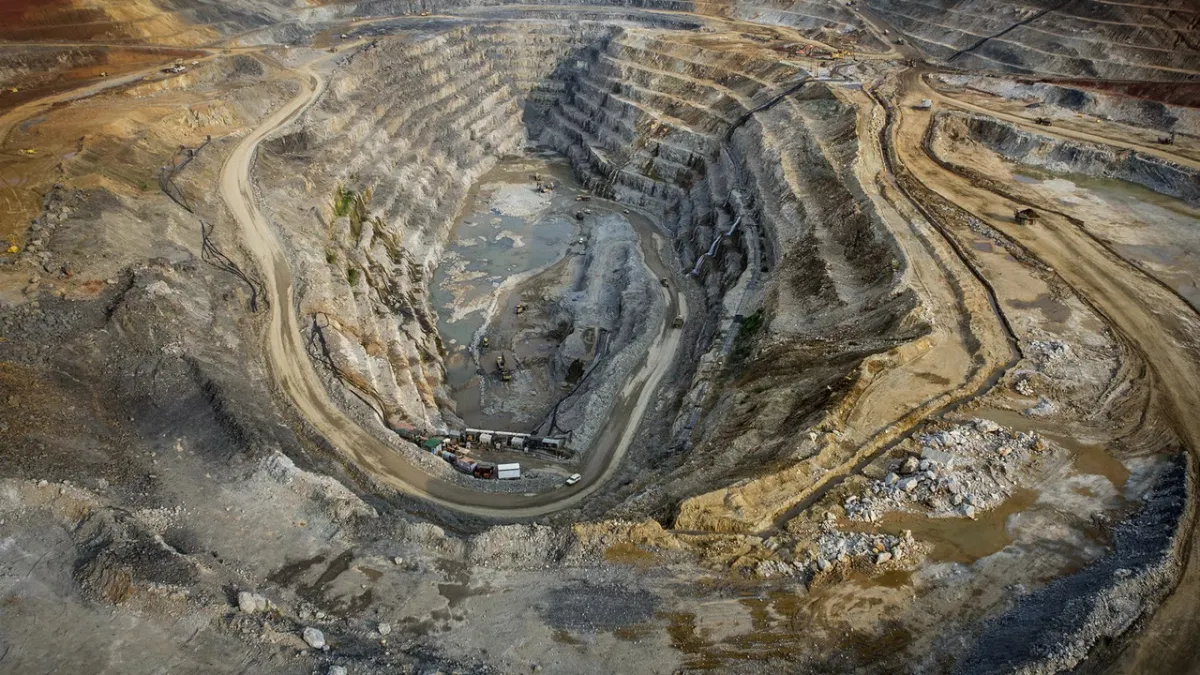
Zambia is Africa's second-largest copper producer, mining approximately 750,000 tonnes of copper per year from the world-famous Central African Copperbelt. The country holds an estimated 6% of global copper reserves and has been a major copper producer since the 1930s. Under President Hakainde Hichilema's administration (2021–present), Zambia has become one of Africa's most actively investor-courted mining destinations, with a stated ambition to triple copper production to 3 million tonnes per year by 2031 — a target that would make it one of the world's top three copper producers.
In May 2026, BHP — the world's largest mining company — confirmed active exploration discussions with Zambia's Ministry of Mines, marking the first serious engagement of a global major in Zambia since the privatisation era of the 1990s. The global copper supply gap, driven by EV and renewable energy demand, has put Zambia's copperbelt firmly back at the centre of the world's mining investment map.
Zambia Mining: Key Statistics (2024)
| MetricFigure | |
| Annual copper production | ~750,000 tonnes |
| Rank in Africa | #2 copper producer (after DRC) |
| Share of global copper supply | ~3.5% |
| Cobalt production | ~4,000–5,000 tonnes/year (by-product) |
| Mining's share of exports | ~70–75% |
| Mining's contribution to GDP | ~12–15% |
| Government copper production target | 3 million tonnes/year by 2031 |
| Primary mining regulator | Mining and Minerals Commission (MMAZ) |
| State mining company | ZCCM-IH (ZCCM Investments Holdings) |
| Key mining legislation | Mines and Minerals Development Act 2015 (amended 2023) |
| Primary mining regions | Copperbelt Province, North-Western Province |
The Central African Copperbelt: Zambia's Geological Foundation
The Central African Copperbelt is a 500 km arc of copper-cobalt deposits stretching from Zambia's Copperbelt and North-Western Provinces into the DRC's Lualaba and Haut-Katanga Provinces. It is one of the two most significant copper-producing regions in the world — alongside Chile's Atacama Desert — and contains an estimated 150+ million tonnes of copper in reserves and resources.
Zambia's portion of the Copperbelt was first mined commercially in the 1920s and 1930s, with major production established by Anglo American and Rhodesian Selection Trust by the 1940s. After independence in 1964, President Kenneth Kaunda nationalised the mines in 1969–1970, creating the Zambia Consolidated Copper Mines (ZCCM). Decades of under-investment, falling copper prices, and management challenges reduced output from a peak of approximately 700,000 tonnes per year in 1969 to just 250,000 tonnes by the late 1990s.
Privatisation between 1997 and 2000 attracted international investment — First Quantum Minerals, Vedanta Resources, CNMC, and others — and production gradually recovered. Today, Zambia's North-Western Province is increasingly recognised as a new frontier beyond the historic Copperbelt, with First Quantum's Kansanshi and Sentinel mines established as world-class operations.
Major Mines in Zambia
Kansanshi Copper-Gold Mine (First Quantum Minerals)
Location: Solwezi District, North-Western Province Ownership: First Quantum Minerals (80%) + ZCCM-IH (20%) Production: ~230,000 tonnes copper/year + ~150,000 oz gold/year Type: Open pit + underground, SX-EW + flotation Mine life: Through 2047+
Kansanshi is Africa's largest copper mine in Zambia and First Quantum Minerals' flagship operation. It has been in production since 2005 and is also a significant gold producer — making it one of only a few copper mines globally with material gold by-product credits. The Kansanshi S3 Expansion Project (approved 2023, capital expenditure ~$1.5 billion) will add a new concentrator and increase annual copper output to approximately 250,000–280,000 tonnes. The S3 expansion is the largest single mining investment in Zambia since the Sentinel project.
Sentinel Copper Mine (First Quantum Minerals)
Location: Kalumbila District, North-Western Province Ownership: First Quantum Minerals (100%) Production: ~200,000 tonnes copper/year Type: Open pit, flotation concentrator Mine life: Through 2040+
Sentinel is one of the newest large-scale copper mines in Africa, commissioned in 2016 at a capital cost of approximately $2 billion. It is a bulk, low-grade, open-pit operation processing approximately 55 million tonnes of ore per year. The mine township — Kalumbila — was purpose-built by First Quantum and now functions as a full town with schools, hospitals, and commercial infrastructure.
Chambishi Copper Complex (CNMC / NFC Africa Mining)
Location: Chambishi, Copperbelt Province Ownership: NFC Africa Mining PLC — NFCA (85% CNMC + 15% ZCCM-IH) Production: ~70,000 tonnes copper/year Type: Underground, flotation + SX-EW Mine life: Through 2040+
Chambishi is China's oldest and most established mining investment in Africa, dating to 1998 when CNMC acquired the mine from the privatising ZCCM. The complex includes Chambishi Main, Chambishi West, and the Chambishi South-East mine (commissioned 2018, $832 million capital, extending mine life 20 years). The nearby Chambishi Copper Smelter — 150,000 tonnes blister copper capacity per year — is one of Zambia's three major copper smelters.
In March 2025, a subsidiary of CNMC — Sino-Metals Leach Zambia — caused a significant acid spill into the Kafue River, Zambia's most important waterway. Approximately 50 million litres of acid mine drainage were released, prompting government intervention, fines, and a remediation programme. The incident highlighted the environmental management challenges in Zambia's copper sector.
Mopani Copper Mines (ZCCM-IH)
Location: Kitwe + Mufulira, Copperbelt Province Ownership: ZCCM-IH (majority, following Glencore divestment 2021) Production: ~40,000–50,000 tonnes copper/year Type: Underground, smelting + refining
Mopani is one of Zambia's oldest copper operations — the Nkana and Mufulira underground mines date to the 1930s. After Glencore transferred ownership to ZCCM-IH in 2021, Mopani became a flagship of the government's ambition to directly manage strategic mining assets. The operation includes the Mufulira Smelter — one of Zambia's three copper smelters — and the Nkana Cobalt Plant, which recovers cobalt hydroxide as a by-product. Restoring Mopani to its full historical production capacity of over 100,000 tonnes per year is a key government priority.
Konkola Copper Mines (KCM) — Under Restructuring
Location: Chingola, Copperbelt Province Ownership: Under legal restructuring (previously Vedanta Resources 79.4% + ZCCM-IH 20.6%) Production: Reduced / intermittent Type: Underground (Konkola Deep) + open pit (Nchanga)
Konkola Copper Mines — home to the Konkola Deep underground mine (one of the world's deepest copper mines at 1,500m) and the Nchanga open pit — has been entangled in one of Africa's most protracted mining legal disputes. Vedanta Resources was placed in provisional liquidation by the Zambian government in 2019 over alleged under-investment and tax disputes. The mine was subsequently subject to court battles between Vedanta and the government. By 2026, a restructured investment framework is being finalised. At full capacity, KCM has the potential to produce 200,000+ tonnes per year, making its resolution a significant variable in Zambia's 3-million-tonne target.
Kitumba Copper Mine (Sinomine Resource Group) — Development Stage
Location: Mumbwa District, Central Province Ownership: Sinomine Resource Group (65%) + Junction Mining (35%) Production: First production targeted September 2026 Capacity: 60,000 tonnes copper cathode/year + 110,000 tonnes sulphuric acid/year Capital: ~$560 million
Kitumba is the most significant new copper project entering production in Zambia in 2026. Sinomine — China's Shenzhen-listed mining conglomerate (also owner of Bikita Lithium in Zimbabwe) — acquired its stake in 2024 for $58.5 million. Construction commenced with stripping operations in April 2025. At full capacity, the integrated mine-smelter complex will produce 60,000 tonnes per year of copper cathode. A 100MW solar plant is integrated into the project. President Hichilema officially launched the project at a ceremony in Mumbwa.
Luanshya / Baluba Mine (CNMC Luanshya Copper Mines)
Location: Luanshya, Copperbelt Province Ownership: CNMC Luanshya Copper Mines (CLM) — CNMC subsidiary Production: ~30,000 tonnes copper/year Type: Underground (Baluba) + open pit (Mulyashi)
Zambia's 3 Million Tonne Vision: Is It Achievable?
President Hichilema's administration set the 3 million tonne per year copper target publicly and repeatedly since 2021. Achieving it from 750,000 tonnes today requires approximately $15 billion in new investment and multiple new mines reaching production simultaneously. The pipeline includes:
Projects under construction or in development (2026):
- Kitumba (Sinomine) — 60,000 t/yr, first production September 2026
- Kansanshi S3 Expansion (First Quantum) — +50,000 t/yr, commissioning 2026–2027
- Konkola restructuring — potential +150,000 t/yr if resolved
Projects in exploration / prefeasibility:
- BHP Zambia exploration programme — scope undefined but potentially transformative
- Barrick Gold's Lumwana expansion (Super Pit) — +30,000–50,000 t/yr
- Multiple junior explorer projects in North-Western Province
Structural requirements:
- Power: Zambia's grid (approximately 3,200 MW installed capacity, predominantly hydro) is insufficient for 3 million tonnes per year of copper production without major new generation. Droughts in 2023–2024 reduced hydro output severely; the government is promoting solar and new hydro projects
- Smelter capacity: Three existing smelters (Chambishi, Mufulira, Nkana) with combined capacity of approximately 750,000 tonnes of blister copper per year — well short of 3 million tonnes per year requirement
- Rail and logistics: The Tazara Railway (Tanzania-Zambia), the Benguela Corridor (Angola), and road links to Durban are all under-capacity; logistics is a binding constraint
The 2031 target is widely regarded as aspirational rather than achievable on current timelines. However, even reaching 1.5 million tonnes per year would represent a major investment success and transformative fiscal impact for Zambia.
Zambia's Regulatory Framework
ZCCM-IH
ZCCM Investments Holdings plc (LSE: ZCCM) is the successor to the state-owned Zambia Consolidated Copper Mines, holding government equity stakes in all major Zambian mining operations. It holds 20% of Kansanshi (First Quantum), 15% of Chambishi (CNMC), 20.6% of KCM (Vedanta), and 100% of Mopani. ZCCM-IH is listed on the London Stock Exchange and the Lusaka Securities Exchange.
Mining and Minerals Development Act (2015, amended 2023)
Key provisions:
- Royalties: Variable rate: 4% (open pit, base metals at low prices) to 6% (underground); a 10% royalty applies when copper price exceeds $9,000/tonne (a "super-royalty" that was controversial and partially revised in 2023)
- Corporate income tax: 30%
- Development agreements: Large-scale projects can negotiate stability agreements with the government
- Local content: Requirements for local employment, procurement, and community development contributions
The Kafue Environmental Context
The Kafue River — Zambia's most important waterway, providing water to approximately 40% of the population including Lusaka — flows through the Copperbelt. Copper mine acid drainage and tailings leakage have historically contaminated the river. The 2025 CNMC acid spill reignited debate over environmental enforcement in the sector.
Financial Institutions Supporting Zambia Mining
- Zanaco (Zambia National Commercial Bank) — largest Zambian-owned bank; mining sector lending
- First National Bank Zambia — subsidiary of FirstRand Group; project finance
- Absa Zambia — subsidiary of Absa Group; trade finance and mining banking
- Development Bank of Zambia (DBZ) — government development finance institution
Frequently Asked Questions
Is Zambia a good country for copper mining investment? Yes — Zambia is one of Africa's most investment-friendly mining jurisdictions. Under President Hichilema (since 2021), a punitive copper export levy was removed, new licence processing was accelerated, and government dialogue with investors improved substantially. The country's geological endowment, established infrastructure, and stable democracy make it an attractive destination despite power challenges and royalty uncertainty.
What is the largest copper mine in Zambia? Kansanshi, operated by First Quantum Minerals in the North-Western Province, is Zambia's largest copper mine, producing approximately 230,000 tonnes per year. It is also a significant gold producer.
What is ZCCM-IH? ZCCM Investments Holdings plc is Zambia's state mining investment company, successor to the nationalised Zambia Consolidated Copper Mines. It holds minority equity stakes in all major Zambian copper mines and is listed on the London Stock Exchange and Lusaka Securities Exchange.
Can Zambia reach 3 million tonnes of copper per year? Zambia's government has set a 3 million tonne target by 2031. Most analysts consider this aspirational given infrastructure constraints, particularly power and smelting capacity. A more achievable intermediate target of 1.2–1.5 million tonnes by 2031 is broadly accepted as realistic with committed investment.
What happened with Konkola Copper Mines? KCM was placed in provisional liquidation by the Zambian government in 2019 following disputes with majority owner Vedanta Resources over capital investment and tax compliance. The asset has been subject to lengthy legal proceedings. A restructured framework was under negotiation as of 2026.
Does Zambia produce cobalt? Yes, as a minor by-product of copper mining. Zambia produces approximately 4,000–5,000 tonnes of cobalt per year, primarily from Mopani's Nkana Cobalt Plant. This is significantly less than the DRC, which dominates global cobalt production.
Sources: First Quantum Minerals Annual Report 2024; Zambia Ministry of Mines Statistical Bulletin 2024; ZCCM-IH Annual Report 2024; USGS Minerals Yearbook 2024; World Bank Zambia Economic Update 2025; IEA Critical Minerals Market Review 2024; Zambia Chamber of Mines Annual Report 2024.
Last updated: May 2026. Africa Mining Network updates all country guides annually.