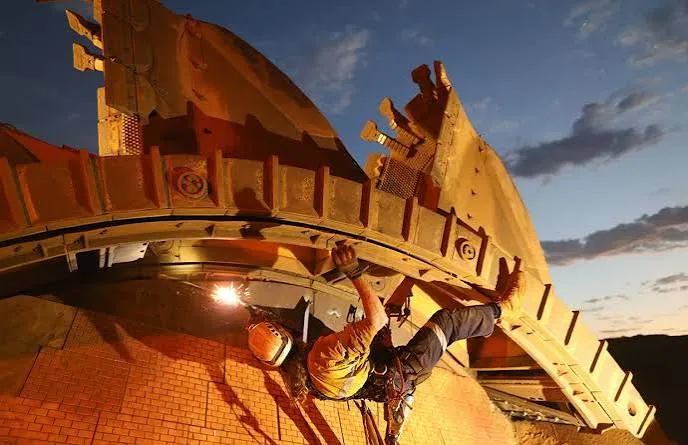
Grinding circuits convert large quantities of electricity and mechanical work into correctly sized material for mineral recovery. When a large mill stops, the processing plant can lose its principal route to production.
ABB launched Grinding Connect in June 2026 as a global digital-service environment for mines using its gearless mill drives. The platform combines condition monitoring, diagnostic tools, service history, support requests and an AI-assisted service function.
ABB says the platform draws on experience from more than 160 gearless mill-drive projects. It monitors more than 180 trend signals and can identify anomalies, frozen signals and relationships among alarms and operating events.
The operational value lies in context. A vibration, temperature or electrical reading means little in isolation. When it is compared with historical behaviour, load and maintenance records, it may indicate a developing condition before protection systems force a shutdown.
Early detection does not automatically prevent failure. A mine still needs someone to validate the warning, plan the intervention, obtain parts and schedule access. Digital monitoring creates decision time; maintenance execution determines whether that time is used.
Cloud connectivity also introduces governance requirements. Mines should establish where information is stored, which employees and suppliers can access it, how long records are retained and how the system operates during a communications interruption. ABB states that Grinding Connect was developed under its cybersecurity standards and IEC 62443-related practices, including penetration testing.
The platform is specific to ABB gearless drives, which may offer deeper OEM knowledge but also creates dependency on a vendor environment. Operators should understand data portability and the integration available with their wider plant-maintenance systems.
For remote African mines, centralised expert access can reduce the delay before specialist analysis begins. It cannot eliminate the physical distance separating the mine from technicians and replacement components. Digital service should therefore be paired with local capability and critical-spares planning.
The strongest case for connected maintenance is not the volume of data collected. It is whether the system changes a decision early enough to protect throughput.
False alarms and missed detections are operational concerns. If a system produces too many low-value warnings, teams may stop treating alerts as urgent. Mines should therefore track which notifications led to confirmed defects, maintenance action or avoided downtime rather than accepting the number of signals as proof of value.
The commercial relationship also changes when an OEM receives continuous operating data. Contracts should define access, cybersecurity responsibilities, retention, permitted use and the process for transferring records if the service changes. These questions are part of asset governance, not merely information technology.
A credible performance review would compare planned and unplanned downtime before and after implementation while accounting for production changes. The platform succeeds when it improves maintenance decisions and mill availability. A dashboard, regardless of sophistication, is only the interface through which that result must be produced.
Mines should also decide who is accountable for responding to each class of alert. Clear escalation thresholds help prevent warnings from remaining inside a digital platform while the physical condition continues to deteriorate. Technology must be connected to authority and work planning.