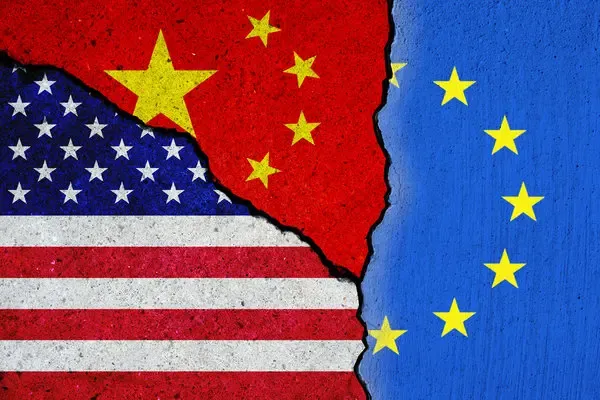
The most consequential geopolitical contest of the 21st century is not happening in the South China Sea or in Eastern Europe — it is happening in the cobalt belts of the Democratic Republic of Congo, the lithium pegmatites of Zimbabwe, the manganese mines of Gabon, and the rare earth deposits of Uganda. The minerals that will power the global energy transition — cobalt, lithium, copper, nickel, manganese, graphite, and rare earth elements — are concentrated to an extraordinary degree in Africa. China spent two decades building a dominant position in these supply chains. The United States, the European Union, and their allies are now scrambling to catch up. The outcome will shape the global economy for the next generation.
This article maps the structure of the contest, the assets at stake, and the major moves of 2024–2026.
The Stakes: Why Africa, Why Now
The energy transition has fundamentally changed the strategic calculus of mineral supply. The shift from fossil fuels to electric vehicles, renewable energy, and battery storage requires raw materials in volumes that bear no resemblance to historic patterns:
- Copper: A typical EV uses 4× the copper of a conventional vehicle. Offshore wind uses 8–15 tonnes per turbine. Global demand is projected to grow from 26 million tonnes today to ~36–40 million tonnes per year by 2035
- Cobalt: Lithium-ion battery cathodes (NMC and NCA chemistries) require cobalt for thermal stability. Demand is expected to grow from ~175,000 tonnes per year to ~250,000–300,000 tonnes by 2030
- Lithium: Battery anode and electrolyte demand is projected to grow ~3–4× by 2030
- Rare earth elements: Permanent magnets in EV motors and wind turbines require neodymium, praseodymium, dysprosium, and terbium
Africa holds disproportionate shares of these commodities — 72% of cobalt production, the largest lithium resource on the continent (Zimbabwe), the world's largest manganese reserves (South Africa, Gabon), and untapped rare earth potential (Uganda, South Africa, Tanzania). The country (or coalition of countries) that controls these supply chains controls the energy transition.
How China Built Its Position: 2008–2024
China's African critical minerals dominance was not an accident — it was the result of two decades of patient, state-backed investment that no Western competitor has matched.
The Sicomines Deal: The Template (2008)
The "deal of the century" between China (Sinohydro + China Railway Group) and the DRC government, signed in 2008, established the template for Chinese resource investment in Africa. The original $9 billion deal exchanged DRC mining rights (copper-cobalt) for $3 billion in Chinese-built infrastructure — roads, hospitals, hydroelectric plants. The deal was renegotiated in January 2024, raising the infrastructure commitment to $7 billion after findings that Chinese partners had earned approximately $10 billion in profits while delivering only $822 million in infrastructure.
The Sicomines model — minerals for infrastructure, with Chinese companies operating the mines and Chinese SOEs financing the build-out — was replicated across Africa: Angola, Zambia, Zimbabwe, Mali, Guinea, and beyond.
The Cobalt Acquisitions (2016–2020)
A series of Chinese acquisitions consolidated control over the DRC cobalt sector:
- 2016: China Molybdenum (now CMOC Group) acquired Tenke Fungurume from Freeport-McMoRan for $2.65 billion — the world's second-largest cobalt mine
- 2017: GEM Co. acquired offtake agreements with Glencore for one-third of KCC cobalt output for five years
- 2019: Huayou Cobalt expanded its DRC operations and signed offtake agreements with Tesla and BMW
- 2020: China Molybdenum acquired Kisanfu (adjacent to TFM) from Freeport-McMoRan
- 2020 onwards: CNMC Deziwa (51% stake) reached commercial production in DRC
By 2020, Chinese companies controlled approximately 70–80% of DRC cobalt production by value.
The Zimbabwe Lithium Boom (2021–2024)
When the lithium price surge of 2021–2022 made Zimbabwe's lithium pegmatites economically viable, Chinese companies moved within months — while Western companies were still studying the opportunity:
- January 2022: Sinomine acquired Bikita Minerals for $180 million
- April 2022: Huayou Cobalt acquired Arcadia for $422 million
- 2022–2024: Chengxin, Zhejiang Yongchang, and others made smaller acquisitions
- Total Chinese investment in Zimbabwe lithium since 2021: over $1.4 billion
By 2024, Chinese companies controlled over 80% of Zimbabwe's lithium production.
The Processing Monopoly
Chinese dominance is not just at the mine — it extends through the entire value chain:
- Cobalt refining: ~80% of global capacity in China (Zhejiang, Jiangsu, Guangdong)
- Lithium refining: ~65% of global capacity in China
- Battery cell manufacturing: ~75% of global capacity in China
- Cathode active materials (CAM): ~70% of global capacity in China
This means even when Africa exports raw concentrate or hydroxide, the value-added processing happens in China. African producers are price-takers in markets dominated by Chinese refiners.
The Western Counter-Strategy (2022–2026)
The Western response began in earnest in 2022, accelerated through 2024, and entered an active deal-making phase in 2025–2026.
Mineral Security Partnership (MSP)
Launched in June 2022, the MSP is a coalition of 14 governments — the United States, EU members, UK, Japan, Australia, Canada, South Korea, and others — committed to financing critical mineral projects that meet ESG and transparency standards. By 2025, the MSP had identified over 30 priority projects globally for joint financing support, including several in Africa:
- Makuutu (Uganda) — Ionic Rare Earths
- Lobito Atlantic Railway — connecting DRC and Zambia mines to Angola's Lobito port for Western export
- Projects in Tanzania (graphite), Madagascar (REE), and Mozambique (graphite)
The Lobito Corridor
Perhaps the single most important infrastructure investment by the West in African critical minerals is the Lobito Atlantic Railway — a refurbishment of the Benguela Railway connecting the DRC's copper-cobalt belt and Zambia's Copperbelt to Angola's Atlantic port of Lobito. The corridor is funded by the US (Development Finance Corporation), the European Union, and the African Development Bank. When fully operational, it will provide an alternative export route for DRC and Zambian minerals that bypasses the long Tanzania-via-Tazara railway and Durban-via-truck routes typically dominated by Chinese trade flows.
US-DRC Minerals-for-Security Framework
In May 2025, preliminary US-DRC talks produced a framework for American companies to gain preferential access to DRC minerals in exchange for security assistance, infrastructure financing, and diplomatic support. Key elements:
- US right of first refusal on certain DRC mineral exports
- US security assistance to the FARDC (DRC armed forces)
- DFC financing for DRC infrastructure
- US support for DRC sovereignty in the eastern conflict (M23)
Gécamines-Mercuria-DFC Joint Venture (2026)
In May 2026, a joint venture between Gécamines (DRC state miner), Mercuria Energy (Swiss commodity trader), and the US Development Finance Corporation (DFC) was announced. The JV will market 500,000 tonnes per year of DRC copper cathodes and significant cobalt volumes — explicitly targeting Western buyers. The DFC takes an equity stake, marking the first significant US government direct investment in DRC mining.
EU Critical Raw Materials Act (2024)
The EU's CRMA, adopted in 2024, sets binding targets for the EU to source 10% of its critical raw materials from EU-mined production, 40% from EU-processed sources, and 25% from recycling — and, critically, no more than 65% from any single third country (a clear reference to China). The Act provides project finance support and streamlined permitting for "Strategic Projects" in third countries — including several in Africa.
IRA Domestic Content Rules (US)
The US Inflation Reduction Act of 2022 ties EV consumer subsidies to battery sourcing requirements: by 2027, no battery components can be sourced from "Foreign Entities of Concern" (effectively, Chinese-owned). This creates an enormous incentive for US automakers to develop alternative supply chains — including African mineral sources processed outside China.
The Battle by Mineral
Cobalt: China Controls, US Pushes Back
- Chinese share of DRC cobalt production: ~80% by value
- Chinese share of global cobalt refining: ~80%
- US response: Gécamines-Mercuria-DFC JV; Lobito Corridor; minerals-for-security framework
- Outlook: Chinese dominance entrenched in the medium term; Western share growing slowly from a low base
Lithium: China Builds, US Just Starting
- Chinese share of Zimbabwe lithium: ~80%
- Chinese share of African lithium overall: ~70% (Zimbabwe + Mali + DRC Manono)
- US response: Limited; Albemarle, Livent, and Piedmont Lithium are the only Western companies with material African exposure; Atlantic Lithium's Ewoyaa (Ghana) backed by Piedmont with US offtake interest
- Outlook: Chinese dominance growing; this is the area where the West has done least
Rare Earth Elements: The Battleground
- Chinese share of global REE production: ~70%
- Chinese share of global REE refining: ~90%
- April 2025 China REE export ban: Restrictions on dysprosium, terbium, gadolinium, scandium — heavy REEs critical for EV motors and defence
- US response: Makuutu (Uganda) added to MSP; Mountain Pass (USA) processing investment; Phalaborwa (South Africa) Western interest
- Outlook: This is the most active battleground; Western companies are racing to develop non-Chinese REE supply
Copper: Less Concentrated, More Competitive
- Chinese share of African copper production: ~30–35%
- Western majors: First Quantum, Glencore, BHP (returning to Zambia)
- Outlook: Africa's copper sector is the most competitive — Western and Chinese majors operate side by side
Graphite: China Dominant, Africa Emerging
- Chinese share of global natural graphite production: ~65%
- Chinese share of battery anode graphite: ~90%
- December 2023 China graphite export controls: Tightened licensing requirements
- African projects: Syrah Resources (Balama, Mozambique), multiple Tanzania and Madagascar projects
- Outlook: Africa is the West's primary alternative; Syrah's Balama is the cornerstone
Key Players in the Contest
Chinese State and Private Companies in Africa
- Sicomines / China Railway / Sinohydro — DRC copper-cobalt
- CMOC Group (3993.HK) — DRC cobalt-copper (Tenke Fungurume + Kisanfu)
- Zijin Mining — DRC (Kamoa-Kakula partner, Manono lithium), Serbia, Tibet
- MMG Limited (1208.HK) — DRC (Kinsevere copper)
- CNMC / NFCA (1258.HK) — Zambia, DRC copper-cobalt
- Sinomine Resource Group — Zimbabwe lithium, Zambia copper, Namibia smelter
- Zhejiang Huayou Cobalt — Zimbabwe lithium, DRC cobalt supply chain
- Ganfeng Lithium — Mali (Goulamina), Argentina, Australia
- Jinchuan Group / Metorex — DRC copper-cobalt (Ruashi)
Western Mining Majors with Africa Exposure
- Glencore — DRC, Zambia copper-cobalt; world's largest cobalt trader
- Anglo American — South Africa PGMs, iron ore, diamonds
- Barrick Gold — DRC, Mali, Tanzania gold
- Newmont — Ghana gold
- Rio Tinto — Guinea (Simandou iron ore + bauxite, Madagascar ilmenite)
- BHP — returning to Africa (Zambia copper exploration, May 2026)
- First Quantum Minerals — Zambia, Mauritania copper
- Ivanhoe Mines — DRC copper-cobalt, South Africa palladium-platinum-nickel
- Endeavour Mining — West African gold
Western Government Tools
- US DFC — equity, debt, and political risk insurance for African mining projects
- US EXIM Bank — export finance for US equipment to African mines
- EXIM-style facilities in EU, UK, Japan, Korea, Australia
- MSP (14-government coalition) — coordinated project finance and offtake support
- Lobito Corridor — multilateral infrastructure investment
What Africa Wants
It is easy to frame the contest as a binary choice between China and the West. But Africa's mining nations are not passive observers — they are increasingly skilled at playing both sides for maximum benefit.
The DRC under President Tshisekedi has been the most explicit example:
- Used the threat of US engagement to renegotiate the Sicomines deal (raising infrastructure commitment from $3B to $7B)
- Used Chinese investment competition to drive up royalties on Western miners (the 2018 Mining Code revisions)
- Imposed cobalt export quotas (October 2025) to assert market control rather than accept Chinese-driven oversupply
Zambia under President Hichilema has done the same in copper:
- Removed the punitive copper export levy (2022) to attract Western investment
- Hosted BHP's first major Africa engagement in a decade (May 2026)
- Continues to host major Chinese investments (CNMC, Sinomine Kitumba)
Zimbabwe's 2027 lithium export ban is another example of African policy assertiveness — telling Chinese investors that they may operate the mines, but processing must happen on Zimbabwean soil.
The clearest African strategy of 2024–2026 is value addition: refusing to be a mere raw materials exporter, demanding in-country processing, equity participation, and infrastructure benefits in exchange for resource access.
What Comes Next: The Outlook to 2030
The contest is not zero-sum, but it will be unevenly distributed:
Areas where China will retain dominance:
- DRC cobalt production (entrenched ownership of TFM, KCC, Sicomines, Deziwa)
- Lithium refining (China's 65% global capacity is hard to displace quickly)
- Battery cell manufacturing (China's 75% capacity advantage)
Areas where the West will catch up:
- Cobalt marketing (Mercuria-Gécamines JV; Western-aligned offtake channels)
- Lithium mining outside Zimbabwe (Atlantic Lithium / Piedmont in Ghana, KoBold in DRC)
- Rare earth elements (Makuutu, Phalaborwa, Mountain Pass)
- Copper (BHP, First Quantum, Ivanhoe in Zambia and DRC)
The wild card: African agency. As African governments grow more sophisticated in negotiating with both China and the West, they may extract terms that benefit them disproportionately — value addition, infrastructure, fiscal share — making the contest less about who supplies the West vs China and more about who provides the best deal to African states.
Frequently Asked Questions
How much African cobalt does China control? Chinese state-owned and private companies control approximately 80% of DRC cobalt production by value. This includes ownership of major producing mines (Tenke Fungurume, Sicomines, Deziwa, KCC offtake) and approximately 80% of global cobalt refining capacity.
What is the Lobito Corridor? The Lobito Atlantic Railway is a Western-funded refurbishment of the Benguela Railway connecting the DRC's copper-cobalt belt and Zambia's Copperbelt to Angola's Atlantic port of Lobito. It is funded by the US Development Finance Corporation, the European Union, and the African Development Bank, providing an alternative export route from Western-aligned Atlantic ports.
Why is the US suddenly interested in DRC minerals? The US realised in 2022–2023 that meeting its EV and clean energy targets required cobalt, lithium, copper, and rare earth supply chains independent of China — and that virtually all the relevant minerals were either in China or in Africa where China had built dominant positions. The US response, including the Inflation Reduction Act, Mineral Security Partnership, and the US-DRC minerals-for-security framework, is the result.
Can the West catch up to China in African mining? Partially. In some areas (cobalt marketing, lithium mining outside Zimbabwe, REE) the West can build alternative supply chains. In others (cobalt mine ownership in DRC, lithium refining capacity in China, battery cell manufacturing) Chinese dominance is entrenched and difficult to displace in the medium term.
What does Africa get out of this competition? Stronger negotiating position. African governments — particularly the DRC, Zambia, and Zimbabwe — are using competition between Chinese and Western investors to secure better fiscal terms, infrastructure investment, value addition (in-country processing), and strategic flexibility.
Sources: USGS Minerals Yearbook 2024; IEA Critical Minerals Market Review 2024; US Geological Survey Critical Minerals List; EU Critical Raw Materials Act (2024); Center for Strategic and International Studies; Mineral Security Partnership Annual Report 2024; African Development Bank reports; individual company annual reports; Africa Mining Network research.
Last updated: May 2026. Africa Mining Network publishes quarterly updates on the China-West contest.