China has suspended exports of critical minerals and rare earth magnets, disrupting global supply chains for industries ranging from electric vehicles to defense systems, in what appears to be retaliation for the Trump administration’s recent tariff increases.
The export freeze, first reported by The New York Times on Sunday, expands upon Beijing’s earlier announcement this month restricting shipments of six heavy rare earth metals that China almost exclusively refines. These materials are essential components in specialized magnets used in electric motors for vehicles, drones, robotics and military equipment.
While rare earth magnets represent a relatively small portion of China’s export portfolio, their strategic importance far outweighs their commercial value. China controls approximately 90% of global magnet production, giving Beijing significant leverage in the escalating trade dispute.
“Does the export control or ban potentially have severe effects in the U.S.? Yes,” Daniel Pickard, chairman of the critical minerals advisory committee for the Office of the United States Trade Representative and Department of Commerce, told The New York Times. “Drones and robotics are widely considered the future of warfare, and based on everything we are seeing, the critical inputs for our future supply chain are shut down.”
According to industry sources, Chinese ports have halted rare earth shipments pending implementation of a new regulatory framework, which could permanently restrict access for certain companies, particularly U.S. military contractors. The licensing delays are expected to last at least 45 days, potentially depleting global inventory reserves.
The disruption comes at a particularly challenging time for U.S. manufacturers. Despite the Biden administration’s recent tariff exemptions for many electronics, rare earth components remain subject to import duties. This double constraint—Chinese export controls and U.S. tariffs—has sent prices soaring in commodity markets.
Dysprosium oxide, a key material now under export controls, has surged to approximately $204 per kilogram in Shanghai trading, with prices significantly higher in markets outside China, according to data from Shanghai Metals Market. These price increases will particularly impact manufacturers in the U.S., Japan and Germany—countries specifically targeted by China’s export restrictions.
The supply vulnerability stems from divergent inventory management strategies. While Japanese firms typically maintain over a year’s worth of rare earth reserves, American companies have generally optimized for cash flow by keeping minimal stockpiles, according to a recent analysis by Benchmark Mineral Intelligence, which tracks critical mineral supply chains.
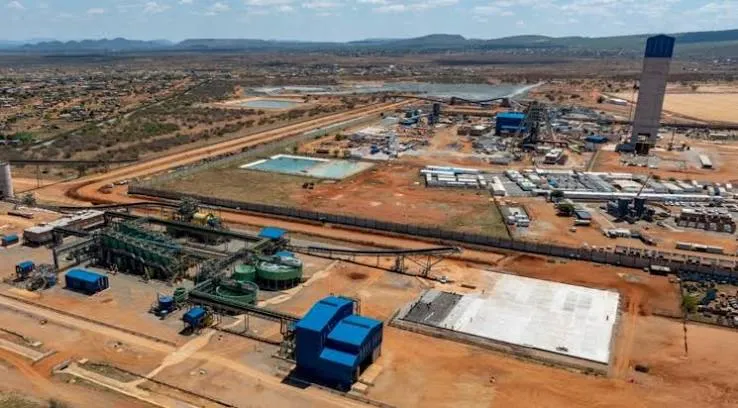
“This is the culmination of decades of industrial policy mistakes,” said James Litinsky, chief executive of MP Materials, which operates Mountain Pass—the only rare earth mine and processing facility in the United States. “We’ve allowed a near-monopoly on these critical materials to develop, and now we’re seeing the consequences.”
Implementation of the restrictions appears inconsistent across Chinese ports, according to logistics industry sources. Some customs officials allow magnets containing trace amounts of heavy rare earths to leave the country, while others have implemented rigorous testing protocols to ensure compliance with the new directives.
China’s dominance in the rare earth sector derives from both its geological advantage—controlling significant mineral deposits in Jiangxi province—and its manufacturing ecosystem centered in Ganzhou, home to major producers like JL Mag Rare-Earth, which supplies automotive manufacturers including Tesla and BYD.
The Biden administration has been working to develop alternative supply chains through initiatives like the Critical Minerals Security Partnership, a multinational effort launched in 2022. However, industry analysts estimate it could take five to seven years to establish viable production capacity outside China’s sphere of influence.
“This is fundamentally about leverage,” said Mary Lovely, senior fellow at the Peterson Institute for International Economics. “Beijing is using its monopoly position in a sector where alternatives are years away to signal its displeasure with U.S. trade policy. The question now is whether this becomes a temporary pressure tactic or a permanent realignment of critical mineral flows.”