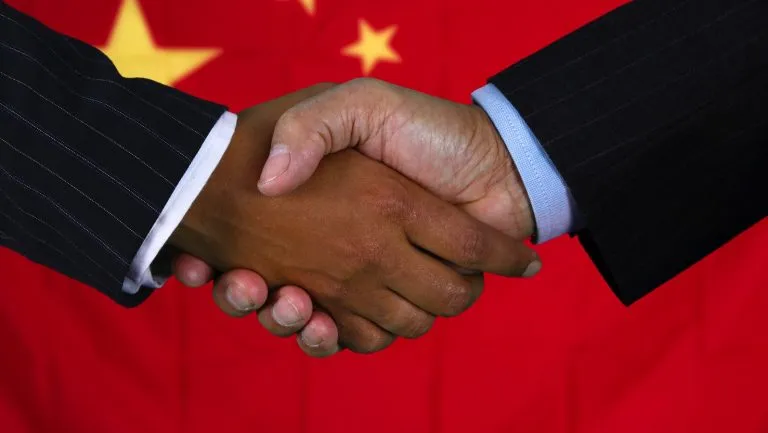
China's expanded zero-tariff regime for African imports took effect on Friday, applying preferential duty-free treatment to goods from the 20 largest non-least-developed economies on the continent, including South Africa, Egypt, Nigeria, Algeria and Kenya.
The measure, announced by President Xi Jinping at the African Union Summit in February and formalised by the State Council Customs Tariff Commission in late April, runs through April 30, 2028. It extends to non-LDC trading partners the same in-principle access already granted to 33 African least-developed countries since December 2024, raising the total number of eligible nations to 53 of 54. Eswatini, which maintains diplomatic ties with Taiwan rather than Beijing, is the sole exclusion. For products subject to tariff-rate quotas, only the in-quota rate falls to zero; the out-of-quota rate is unchanged.
The market impact is concentrated in processed agricultural and light-manufactured goods. China's tariffs on the principal raw-materials exports of sub-Saharan Africa's three largest mining economies — copper and cobalt from the Democratic Republic of Congo, copper from Zambia, and platinum-group metals and iron ore from South Africa — were already at zero. The new measure therefore does not alter the trade economics of the bulk commodity flows that dominate those countries' export receipts to China.
Early data from the LDC programme suggest a meaningful but selective demand response. Chinese imports from the 33 least-developed African countries rose 15.2% year-on-year in the first three months after the December 2024 implementation, reaching $21.42 billion. Total China-Africa trade exceeded $90 billion in the first quarter of 2026, up 23.7% year-on-year, with Chinese imports from Africa up 14.6%.
Beijing has positioned the expansion as an early deliverable under the China-Africa Economic Partnership Agreement (CADEPA) framework, which covers trade, supply chains, green development and the digital economy. Analysts and the African Union Commission have noted that tariff preferences alone are unlikely to rebalance trade flows: Chinese exports to Africa continue to exceed African exports to China by a widening margin, and non-tariff barriers — logistics costs, quality standards, certification requirements — remain the binding constraints on African industrial exports.