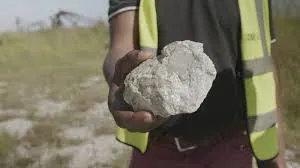
Africa is on track to become one of the world's most important lithium-producing regions by 2030. Already in 2025, four African countries — Zimbabwe, Mali, the DRC (commissioning), and Côte d'Ivoire (first export May 2026) — are producing or about to produce lithium concentrate at commercial scale. With Uganda's Makuutu (ionic clay), Namibia's lithium pegmatite projects, and Ghana's Ewoyaa under development, the African lithium belt is taking shape as a coherent supply region — concentrated in pegmatite belts spanning the Birimian Greenstone Belt of West Africa and the Archean cratons of southern and central Africa.
This is the complete map of Africa's lithium belt, the producers, and what it means for the global EV battery supply chain.
Why Africa Is the New Lithium Frontier
For most of the 21st century, lithium production was concentrated in three regions: Australia (hard-rock spodumene), Chile (brine), and Argentina (brine). Together they accounted for over 90% of global supply. Africa was an afterthought — Bikita in Zimbabwe was a small petalite producer, but no large-scale African lithium mine existed.
The lithium price surge of 2021–2022 (lithium carbonate spiked from $7,000/tonne in early 2021 to $80,000/tonne in late 2022) made hard-rock pegmatite deposits across Africa economically viable for the first time. Chinese battery materials companies — facing potential US tariffs on Australian lithium and seeking strategic supply diversification — moved quickly. Within 18 months, $1.5 billion+ in Chinese capital had been deployed into African lithium projects.
The result: in 2024, Africa produced approximately 8% of global lithium. By 2028, that share is projected to reach 15–20%, making Africa the fourth-largest lithium-producing region globally after Australia, Latin America, and China.
The Geological Story: Pegmatites Across Africa
Africa's lithium belt is not a single coherent formation like the DRC-Zambia Copperbelt — it is a series of pegmatite-bearing geological terranes spread across the continent, each formed during specific tectonic events:
- The Kibara Belt (DRC, Zambia, Tanzania): Hosts the Manono pegmatite — one of the world's largest spodumene deposits. Formed approximately 1 billion years ago.
- The Bikita-Masvingo Belt (Zimbabwe): Archean greenstone belt hosts Bikita, Arcadia, Sabi Star, Zulu, and other lithium-cesium-tantalum (LCT) pegmatites.
- The Birimian Greenstone Belt (Mali, Côte d'Ivoire, Ghana, Burkina Faso, Senegal, Guinea): Proterozoic formation hosts Goulamina (Mali), Bougouni (Mali/Côte d'Ivoire export), Ewoyaa (Ghana), and multiple exploration-stage projects.
- The Damara Belt (Namibia): Hosts the Lithium Project Namibia and Karibib pegmatite field.
- The Eastern Branch of the East African Rift (Uganda, Tanzania, Kenya): Hosts ionic adsorption clay deposits (Makuutu) — a different lithium ore type than pegmatite.
These pegmatite fields formed during distinct geological events but share the same magmatic processes that produce LCT (lithium-cesium-tantalum) mineralisation — making them all viable hard-rock lithium sources.
Country-by-Country: The Producers and Developers
Zimbabwe — Africa's Largest Lithium Producer
Status: Production Annual exports (H1 2025): 586,197 tonnes spodumene concentrate (+30% year-on-year) Resources: Africa's largest lithium endowment
Bikita Minerals
Operator: Sinomine Resource Group (acquired 2022 for $180M, additional $300M invested) Capacity: 480,000 t/yr petalite + 300,000 t/yr spodumene concentrate Location: Masvingo Province Status: Full production; downstream lithium sulphate plant under construction ($500M)
Arcadia Lithium / Prospect Lithium Zimbabwe
Operator: Zhejiang Huayou Cobalt (acquired 2022 for $422M, additional $300M invested) Capacity: 450,000 t/yr lithium concentrate Location: Goromonzi District Status: Production since June 2023
Total Chinese investment in Zimbabwe lithium since 2021: over $1.4 billion 2027 export ban: Unprocessed lithium concentrate exports banned from 2027 — driving downstream investment
Mali — Africa's First Major Hard-Rock Lithium Producer
Status: Production (since 2024) Project: Goulamina Operator: Ganfeng Lithium (50%) + Leo Lithium (50%) — Mali government 20% free-carry Capacity: ~500,000 t/yr lithium concentrate (Phase 1); Phase 2 to double capacity Location: Sikasso Region, southern Mali
Goulamina is the largest hard-rock lithium mine in Africa by Phase 1 capacity. Ganfeng Lithium — one of the world's largest lithium producers — funded the development through a partnership with Leo Lithium (ASX/AIM). First production was achieved in late 2024. The project has navigated Mali's challenging post-coup political environment, with the Mali government asserting its 20% free-carried interest under the 2023 Mining Code revisions.
DRC — Manono: Africa's Sleeping Giant
Status: Construction; commissioning June 2026 Project: Manono Lithium Operator: Manono Lithium SAS (Zijin Mining 61% via Jinxiang Lithium + Cominière 39%) Capacity: 500,000 t/yr spodumene concentrate + 95,170 t/yr crude lithium sulphate (planned) Location: Manono, Tanganyika Province Resource: One of the world's largest spodumene pegmatite deposits
Manono is among the largest known undeveloped lithium deposits in the world. The project's path to production has been complicated by an ongoing legal dispute — Australian company AVZ Minerals, which previously held a 75% interest, initiated ICSID arbitration against the DRC government and Zijin claiming its permit was unlawfully revoked in February 2023. KoBold Metals (a US-backed exploration company funded by Bill Gates and Jeff Bezos) announced a potential deal to acquire AVZ's stake in May 2025, though no final agreement had been reached as of late 2025.
The mining licence was granted to Zijin in September 2024. Construction is now well advanced. The project is targeted for commissioning by 30 June 2026, with first lithium exports expected immediately after.
Côte d'Ivoire — West Africa's Newest Lithium Story
Status: First production May 2026 (historic first for the country) Project: Bougouni Lithium Project Operator: Kodal Minerals (90%) + Mali government (10%, partial — project straddles southern Mali / northern Côte d'Ivoire borders) Capacity: ~125,000 t/yr lithium concentrate (Phase 1) Location: Bougouni, southern Mali / northern Côte d'Ivoire Status: First shipment loaded at Port of San Pedro, Côte d'Ivoire — May 2026
Although Bougouni is administratively in Mali, the project's first export was shipped through the Port of San Pedro in Côte d'Ivoire — making this the first ever lithium concentrate export from a West African country. Kodal Minerals (AIM: KOD) is partnered with Hainan Mining (China) which holds a 51% interest in the operating company.
Ghana — West Africa's Most Strategic Lithium Project
Status: Feasibility / development Project: Ewoyaa Lithium Project Operator: Atlantic Lithium (50%) + Piedmont Lithium (50%, option) — Ghana government 13% free-carry Resource: 35.3 million tonnes at 1.26% Li₂O (JORC compliant) Location: Cape Coast area, Central Region Status: Targeting first production 2027–2028
Ewoyaa is positioned to become the only large-scale lithium mine in West Africa with significant Western investor involvement. Piedmont Lithium (NASDAQ: PLL) holds an option to acquire 50% in exchange for funding development; Piedmont in turn has offtake agreements with Tesla and LG Chem, providing a clear pathway from Ghanaian mine to Western EV battery without Chinese intermediation. This makes Ewoyaa one of the few African lithium projects with a defensible Western supply chain.
Uganda — Different Ore Type, Same Strategic Importance
Status: Demonstration plant in production since Q1 2024 Project: Makuutu Heavy Rare Earths Project (also produces lithium credits) Operator: Ionic Rare Earths (60%, increasing to 94%) — Uganda government participation through licensing Resource: 532 million tonnes at 640 ppm TREO (rare earths primary; lithium secondary) Location: Busoga region, eastern Uganda
Makuutu is technically a rare earth project but also recovers lithium as a by-product from its ionic adsorption clay deposit. The deposit is geochemically distinct from pegmatites — and is one of the few non-Chinese ionic adsorption clay deposits in the world.
Namibia — Emerging Lithium Frontier
Namibia hosts multiple lithium pegmatite exploration projects in the Karibib district and the Damara Belt. Andrada Mining (formerly Afritin Mining, AIM: ATM) has reported significant lithium intersections at its Uis Mine (historically a tin operation). Several junior explorers are actively drilling; first production is at least 3–5 years away.
Ghana, Burkina Faso, Senegal, Guinea — Exploration Stage
Multiple junior explorers (ASX, TSX-V, AIM listed) hold lithium exploration permits across the West African Birimian Greenstone Belt. With Goulamina (Mali) and Bougouni (Mali/Côte d'Ivoire) now producing and Ewoyaa (Ghana) advancing, the entire West African pegmatite province has been reclassified as a credible lithium exploration target. Discovery activity is expected to accelerate through 2026–2028.
Africa's Lithium Production Outlook
| Country2024 production2028 projectedNotes | |||
| Zimbabwe | ~600,000 t spodumene + 480,000 t petalite | ~1.5–2.0 Mt combined | Existing producers expanding |
| Mali | ~500,000 t spodumene (ramp) | ~1.0 Mt | Phase 2 doubling capacity |
| DRC | 0 | ~500,000 t (commissioning 2026) | Manono ramping up |
| Côte d'Ivoire | First shipment 2026 | ~125,000 t | Phase 1 only |
| Ghana | 0 | ~365,000 t (Ewoyaa 2028) | Western-aligned supply chain |
| Africa total | ~1.5 Mt concentrate | ~3.5–4.0 Mt concentrate | ~15–20% of global supply |
By 2028, Africa is projected to produce 15–20% of global lithium concentrate — a remarkable shift from less than 5% in 2022.
The Strategic Question: Who Controls the Lithium Belt?
The geographic distribution of African lithium production maps almost perfectly onto the China-West contest for critical minerals:
Chinese-controlled: Bikita (Sinomine), Arcadia (Huayou), Goulamina (Ganfeng), Manono (Zijin), Bougouni (Hainan + Kodal)
Western-aligned (or mixed): Ewoyaa (Atlantic Lithium / Piedmont), KoBold's pursuit of Manono, several Namibian and Ghanaian junior explorers
Africa's leverage: Value addition policies — Zimbabwe's 2027 export ban being the most aggressive — are pushing Chinese investors to build downstream lithium hydroxide and lithium sulphate plants in-country, capturing more of the value chain in Africa rather than China.
The lithium belt is currently China's most successful African resource-acquisition story. Whether it remains so by 2030 depends on:
- Whether Western lithium projects (Ewoyaa, KoBold's Manono effort) reach production successfully
- Whether African governments enforce value-addition policies effectively
- Whether the lithium price environment supports new Western project development
Frequently Asked Questions
Where is Africa's largest lithium mine? Goulamina in Mali (operated by Ganfeng Lithium) is currently Africa's largest hard-rock lithium mine by Phase 1 capacity (~500,000 t/yr spodumene). Bikita Minerals in Zimbabwe (operated by Sinomine) has higher total capacity when combining petalite and spodumene production.
Does Africa have more lithium than Australia? No — Australia is currently the world's largest lithium producer with approximately 50% of global supply. However, Africa's reserve base (especially Manono and Zimbabwe's combined endowment) is substantial and Africa is the fastest-growing lithium-producing region.
Why is China dominating African lithium? Chinese battery materials companies moved quickly during the 2021–2022 lithium price spike, deploying $1.4+ billion in Zimbabwe and significant capital in Mali and DRC before Western competitors were ready to invest. Chinese state-backed financing, vertical integration, and strategic urgency (offtake security for Chinese battery cell manufacturers) gave them a decisive first-mover advantage.
What is Zimbabwe's lithium export ban? Effective from 2027, Zimbabwe is banning the export of unprocessed lithium ore and concentrate. All lithium produced in Zimbabwe must undergo at minimum first-stage processing (lithium hydroxide or lithium sulphate) before export. This policy has driven Sinomine and Huayou to invest in Zimbabwean processing plants.
Will Africa's lithium go to Western EV manufacturers? Partially. Most Chinese-controlled African lithium production goes to Chinese refineries and Chinese battery manufacturers. Ewoyaa (Ghana) is the most prominent counter-example — Atlantic Lithium / Piedmont have offtake agreements with Tesla and LG Chem, providing a non-Chinese supply chain path.
Sources: USGS Minerals Yearbook 2024; IEA Critical Minerals Market Review 2024; Sinomine Resource Group Annual Report 2024; Zhejiang Huayou Cobalt Annual Report 2024; Ganfeng Lithium Annual Report 2024; Atlantic Lithium ASX announcements 2025; Kodal Minerals AIM announcements 2026; Benchmark Mineral Intelligence Lithium Market Report 2025.
Last updated: May 2026. Africa Mining Network updates this article quarterly.