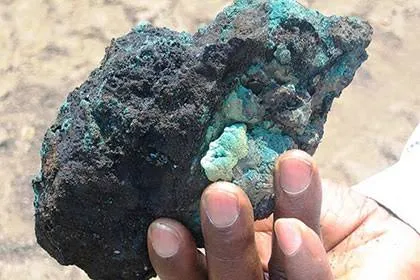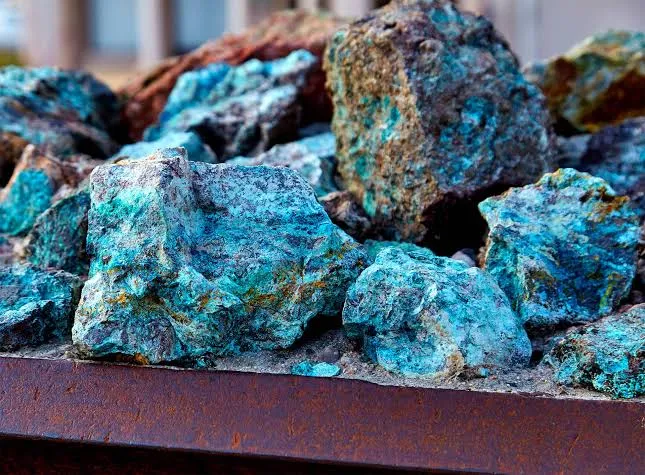
Six mineral specimens and a copper cathode donated by Tenke Fungurume Mining will give students and visitors a physical record of the geology behind Lualaba’s copper industry.
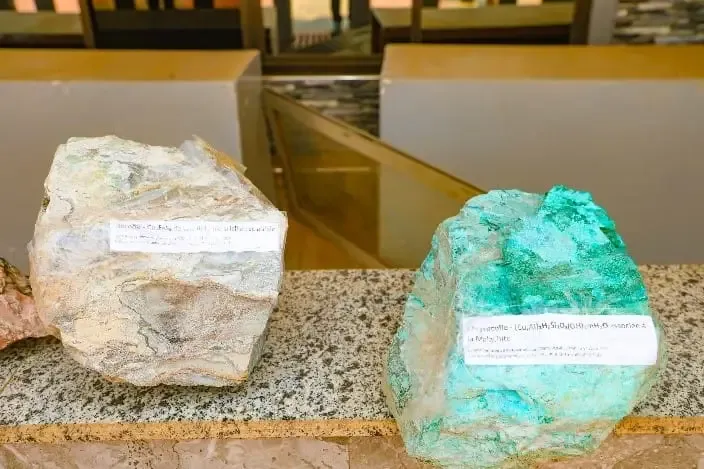
Tenke Fungurume Mining has donated six mineral samples and a copper cathode to the National Museum of Kolwezi as the institution develops its geological and cultural collection.
The specimens were formally handed to the museum’s provincial director, Yolaine Kazadi Mbayo, on August 28.
The collection includes chalcocite, bornite, chalcopyrite, malachite, chrysocolla and dolomitic limestone. According to information presented during the handover, the samples originated from the Fwaulu, Fungurume-1, Pumpi and Mofya West areas within TFM’s concession. Mines.cd
Moving geological knowledge beyond mine sites
The donation is modest in physical scale, but it addresses an important separation within the Democratic Republic of Congo’s mining economy: much of the country’s geological information and material remains concentrated within mining companies, government services and specialist institutions.
Publicly accessible specimens can help students distinguish between copper-bearing minerals and understand the geological stages preceding concentrate or cathode production.
The samples also give the museum a material record connected to operating areas within the Lualaba Copperbelt. This is particularly relevant in Kolwezi, where the mining industry shapes employment, infrastructure and the city’s physical development but is not always documented through accessible scientific collections.
The donation should not be overstated as a research programme. No associated funding, laboratory equipment, academic partnership or catalogue digitisation initiative was announced. Its immediate value lies in giving the museum identifiable specimens that can be preserved, displayed and used for basic geological education.
Visitors to the Kolwezi museum will now be able to see several of the minerals from which the region’s copper industry begins—not only the cathode in which that industrial process ends.
Ending used: tangible educational outcome. It closes with what the donation changes for museum users instead of making a generic statement about corporate responsibility.