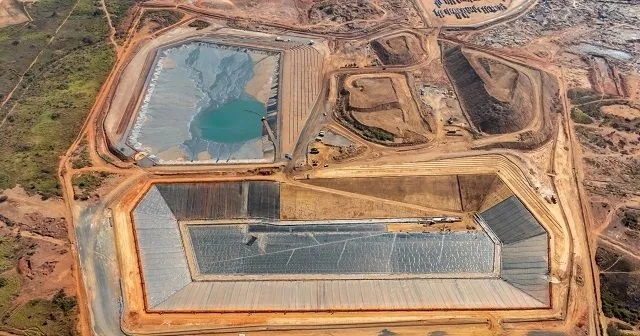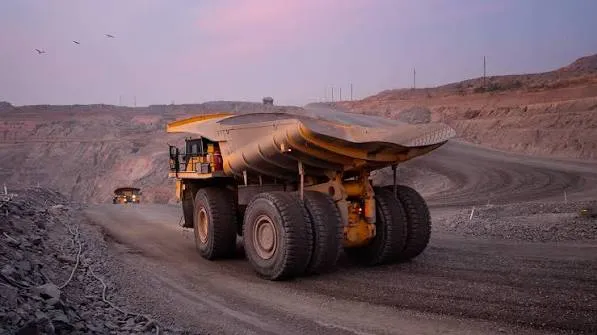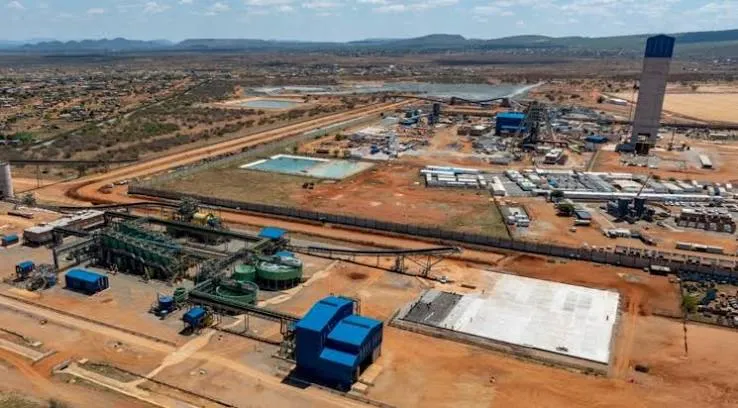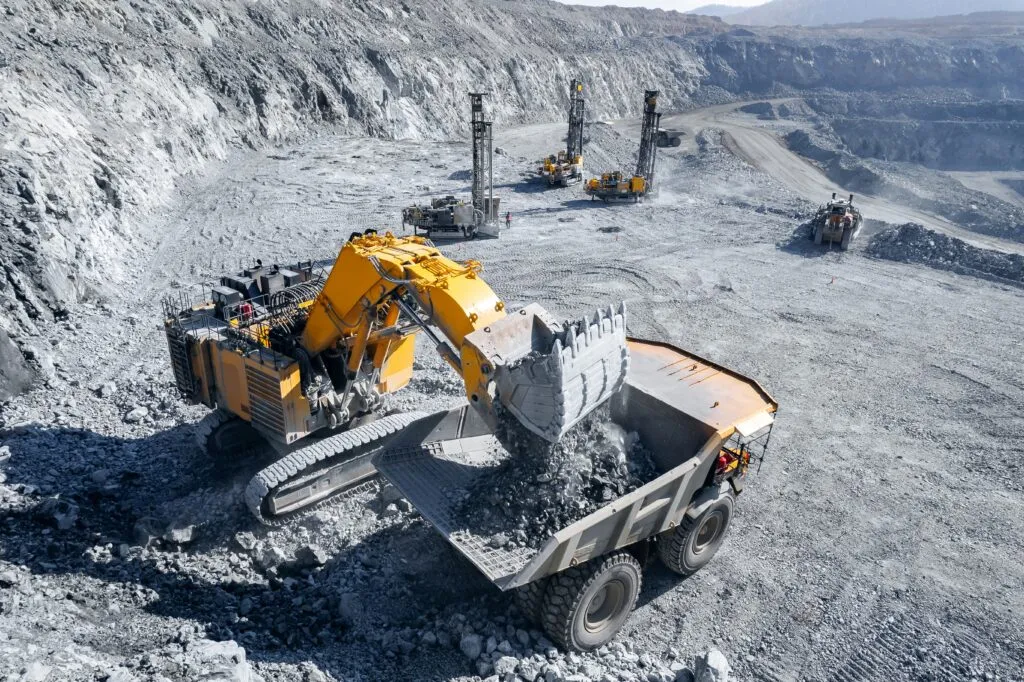
The DRC produces a wide range of minerals, but copper, cobalt, and gold account for the dominant share of export value. Secondary production includes cassiterite (tin ore), coltan (tantalum ore), wolframite (tungsten ore), zinc, diamonds, and manganese. Copper and cobalt together have consistently represented more than 80 percent of the country's annual mineral export earnings since 2015.
Main export minerals
Copper is the DRC's highest-value mineral export. The country produced approximately 2.0 million tonnes of copper in 2023, according to Banque Centrale du Congo figures, placing it third globally after Chile and Peru. Production is almost entirely from Lualaba and Haut-Katanga provinces.
Cobalt is the commodity that most distinguishes the DRC from other mineral producers. The DRC accounts for more than 70 percent of global mined cobalt supply. The mineral occurs in the same copper deposits of the Copperbelt and is produced as a co-product or by-product of copper mining.
The Cobalt Institute estimated DRC output at approximately 170,000 tonnes of cobalt equivalent in 2023.
That market share is high enough that production reports from Lualaba directly influence global cobalt prices.
Gold is the dominant mineral in the eastern provinces, produced primarily by one large industrial mine — Kibali — and a diffuse artisanal sector across North Kivu, South Kivu, Maniema, Ituri, and Tanganyika. Kibali produced approximately 750,000 ounces
in 2023 and is operated by Barrick Gold. Artisanal gold production in the east is substantial but poorly quantified; EITI reconciliation reports provide the best available partial data.
Cassiterite, coltan, and wolframite — the 3T minerals — are mined almost entirely by artisanal and small-scale miners in eastern DRC.
The 3T designation comes from the metals they contain: tin (cassiterite), tantalum (coltan), and tungsten (wolframite). Cassiterite production was estimated at 9,000–11,000 tonnes per year in recent International Tin Association figures. These minerals are subject to supply-chain due diligence requirements under the EU Conflict Minerals Regulation and the US Dodd-Frank Act Section 1502 because of documented armed-group presence in parts of the eastern production zones.
Zinc returns to relevance with the restart of Kipushi in Haut-Katanga province. Kipushi, operated by Ivanhoe Mines, is a high-grade zinc mine that returned to production in 2023-2024 after nearly three decades on care and maintenance.
[Internal link: "Kipushi zinc" → Pillar: Kipushi, zinc and polymetallic mining in the DRC]
Diamonds are produced in Kasai province and historically carried significant export value, but their share of total mineral earnings has declined relative to the copper-cobalt sector. Gécamines subsidiary MIBA is the principal industrial diamond operator, with significant artisanal production alongside it.
Manganese and germanium appear in the DRC's strategic mineral designations under the 2018 Mining Code. Germanium, recovered as a by-product at some copper-cobalt and zinc operations, carries a 10 percent royalty as a strategic substance and has attracted specific attention from US and EU critical minerals programmes given its use in fibre-optic and semiconductor manufacturing.
Where they are mined
The DRC's mineral production is geographically concentrated. Copper and cobalt come almost entirely from two southern provinces: Lualaba (capital: Kolwezi) and Haut-Katanga (capital: Lubumbashi). The principal operating mines — Kamoa-Kakula, Tenke Fungurume, Mutanda, and KCC — all sit within this corridor.
[Internal link: "copper-cobalt belt provinces" → Pillar: Lualaba and Haut-Katanga: where the DRC's copper-cobalt belt works]
Gold and 3T production is concentrated in the northeast and east. Kibali sits in Haut-Uele province.
The 3T minerals come from a dispersed network of small sites across North Kivu, South Kivu, Maniema, Ituri, and Tanganyika. The logistics, governance, and due-diligence profiles of the eastern provinces differ materially from the southern Copperbelt. Zinc through Kipushi is in Haut-Katanga. Diamonds are in Kasai.
Which mines matter most
By output and market relevance, the operations that institutional analysts track most closely are:
Kamoa-Kakula (Lualaba): copper, approximately 437,000 tonnes in 2023. Joint venture between Ivanhoe Mines (39.6%), Zijin Mining (39.6%), Crystal River Global (0.8%), and the DRC government (20%). Expanding toward a target that would make it one of the world's largest copper operations.
Tenke Fungurume / KFM (Lualaba): copper approximately 450,000 tonnes and cobalt approximately 18,000 tonnes in 2023. Operated by CMOC Group (80%), with Gécamines (20%). One of the highest-volume copper-cobalt complexes in the country and the world's largest single mined-cobalt source.
Mutanda (Lualaba): copper approximately 300,000 tonnes plus cobalt. Glencore 100%. Returned to production in 2022 after a three-year care-and-maintenance period.
KCC — Kamoto Copper Company (Lualaba): copper and cobalt. Glencore 75%, with minority state interest.
Kibali (Haut-Uele): gold approximately 750,000 ounces per year. Barrick 45%, AngloGold Ashanti 45%, SOKIMO 10%. Managed by Barrick.
Kipushi (Haut-Katanga): zinc. Ivanhoe 68%, Gécamines 32%. Returned to production 2023-2024.
[Internal link: "full mine ownership table" → Pillar: Who owns the biggest mines in the DRC?] [Internal link: "sector overview" → Pillar: Mining in the DRC: the 2026 guide to minerals, laws and major projects]
The EITI DRC reconciliation reports at eiti.org/drc provide company-level payment data disaggregated by mine and commodity, which is the most systematic public source for tracking relative contributions to national mineral revenues.