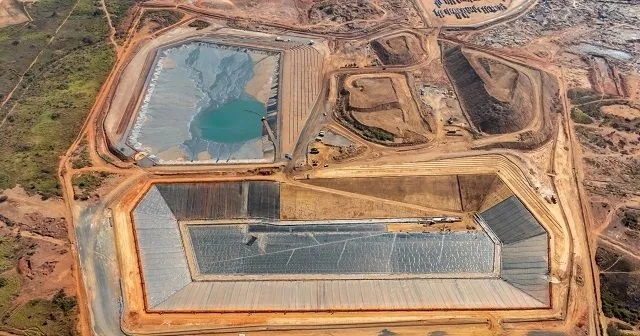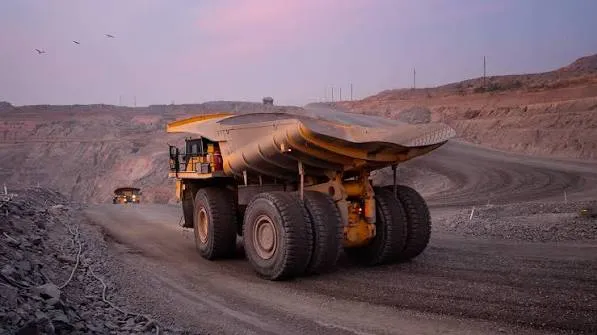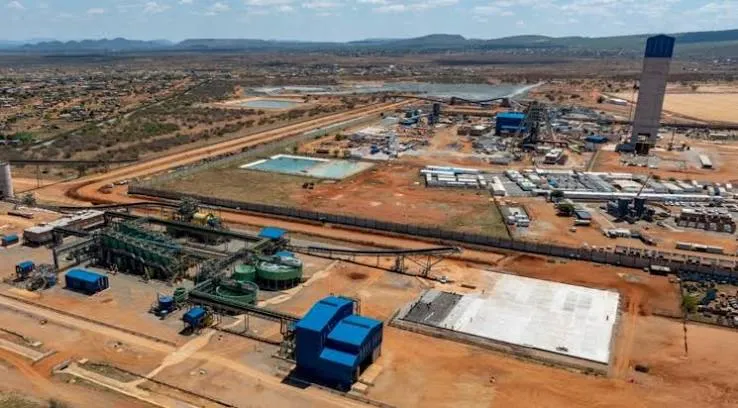
The largest gold mine in Africa is the Kibali Gold Mine in the Democratic Republic of Congo, producing approximately 750,000 ounces per year. It is followed closely by Newmont's Ahafo Complex in Ghana and Kinross Gold's Tasiast Mine in Mauritania. Africa as a whole produces approximately 21% of the world's annual gold output — across more than 20 producing countries — making it the world's second-largest gold-producing continent after Asia-Pacific.
This article ranks Africa's ten largest gold mines by annual production, with ownership details, location, and key facts for each. All operators are listed in the Africa Mining Network directory →
How Africa's Gold Mines Are Ranked
Rankings are based on reported annual production figures (troy ounces of gold) from the most recently published company annual reports and quarterly production disclosures (2024–2025). Where a mine forms part of a multi-asset complex, production is reported for the complex as a whole.
1. Kibali Gold Mine — Democratic Republic of Congo
Production: ~750,000 oz/year Operator: Barrick Gold (45%) + AngloGold Ashanti (45%) + SOKIMO — DRC state (10%) Location: Haut-Uélé Province, northeastern DRC Type: Open pit + underground, CIL processing Mine life: Through 2040+
Kibali is Africa's largest gold mine and one of the top five largest gold mines in the world by annual production. It is located in one of the most remote parts of the DRC — approximately 220 km north of Isiro in Haut-Uélé Province, close to the Ugandan border. The mine was developed from 2012 and reached commercial production in 2013, with capital investment exceeding $2.5 billion. Kibali operates its own 64MW hydroelectric power station (from three hydropower plants on the Kibali and Azambi rivers), making it energy self-sufficient and one of the lowest-carbon gold mines in the world. Kibali produced 743,000 oz in 2023 and has consistently ranked as Africa's #1 gold producer for over a decade. The underground Gorumbwa and KCD orebodies extend the mine's life well beyond 2040.
Barrick Gold profile on AMN →
2. Ahafo Complex — Ghana
Production: ~700,000–800,000 oz/year (at full Phase 2 capacity) Operator: Newmont Corporation (100%) Location: Brong-Ahafo Region, Ghana Type: Open pit (Ahafo South) + underground (Subika), CIL processing Mine life: Through 2038+
Newmont's Ahafo Complex in Ghana is the largest gold operation in West Africa.
The complex comprises two distinct mining areas — Ahafo North and Ahafo South — in the Brong-Ahafo Region, approximately 290 km northwest of Accra. The original Ahafo mine has been in production since 2006.
The Ahafo South expansion, which Newmont officially commissioned in Q1 2026, added a new open-pit mine and a second processing facility, lifting total complex capacity above 800,000 oz/year at steady state. In Q1 2026, Newmont reported Ahafo Q1 gold output rising 14% as the South expansion reached full throughput. The Subika Underground extends the underground component of the operation. Ahafo is Ghana's single largest gold mine and anchors Newmont's Africa portfolio.
Newmont profile on AMN →
3. Tasiast Gold Mine — Mauritania
Production: ~620,000 oz/year Operator: Kinross Gold Corporation (100%) Location: Inchiri Region, northwestern Mauritania Type: Open pit, heap leach + CIL processing Mine life: Through 2033+
Tasiast is West Africa's largest single gold mine and one of Kinross Gold's most profitable operations globally. Located approximately 300 km north of Nouakchott in the Mauritanian desert, Tasiast underwent a $1 billion Phase 2 expansion (completed 2023) that increased throughput to 24,000 tonnes per day and reduced all-in sustaining costs to below $900/oz — among the lowest in Africa. In 2024, Kinross paid approximately $1.5 billion to the Mauritanian government in taxes, royalties, and dividends — the largest single fiscal contribution by any mining company to any African government in that year. The mine operates in a stable investment environment and is a flagship example of responsible large-scale gold mining in the Sahel region.
Kinross profile on AMN →
4. Loulo-Gounkoto Gold Complex — Mali
Production: ~600,000–650,000 oz/year Operator: Barrick Gold (80%) + Government of Mali (20%) Location: Kayes Region, western Mali Type: Underground + open pit, CIL processing Mine life: Through 2034+
The Loulo-Gounkoto Complex is Mali's largest gold mining operation and Barrick Gold's most significant African asset outside of North America. It comprises two separate mines — Loulo (underground, with three underground orebodies) and Gounkoto (open pit), connected by a shared processing facility with 6.2 million tonne per year capacity. The complex consistently ranks among Barrick's lowest-cost operations globally. Mali's political environment has been challenging since the 2020 and 2021 military coups, with the transitional government renegotiating the mining code in 2023 to increase state royalty rates and the government's free-carried interest. Barrick continues to operate Loulo-Gounkoto under its existing mining convention, though ongoing negotiations with the government have created periods of operational uncertainty.
Barrick Gold Mali profile on AMN → | Mali mining directory →
5. Fekola Gold Mine — Mali
Production: ~550,000–600,000 oz/year Operator: B2Gold Corp (80%) + Government of Mali (20%) Location: Kayes Region, southwestern Mali Type: Open pit, CIL processing Mine life: Through 2030+ (Fekola Regional adds years)
Fekola is B2Gold's flagship operation and the cornerstone of Mali's growing gold sector. The open-pit mine began production in 2017 and reached nameplate capacity of 550,000 oz/year ahead of schedule. B2Gold is developing the Fekola Regional deposit (Cardinal and Anaconda satellite pits) to extend production beyond 2030 and maintain output above 600,000 oz/year. Like Loulo-Gounkoto, Fekola operates under the same pressured investment environment following Mali's military coups, with the government asserting its 20% free-carried interest and pushing for enhanced royalty terms. B2Gold has publicly acknowledged the challenging operating context while maintaining production.
B2Gold profile on AMN →
6. Tarkwa Gold Mine — Ghana
Production: ~480,000–500,000 oz/year Operator: Gold Fields (90%) + Government of Ghana (10%) Location: Western Region, Ghana Type: Open pit, heap leach + CIL processing Mine life: Through 2033
Tarkwa is one of Ghana's oldest and largest operating gold mines, located in the Western Region approximately 300 km west of Accra, in a historic mining district. Gold Fields has operated Tarkwa since 1997. The mine processes ore through both heap leach and CIL circuits, with a total processing capacity of approximately 15 million tonnes per year. Tarkwa's gold recovery is among the highest of any West African open-pit operation. In 2025, Gold Fields raised its feasibility study on the South Deep Phase 3 expansion in South Africa, but Tarkwa remains central to its Africa production base.
Gold Fields profile on AMN →
7. Sukari Gold Mine — Egypt
Production: ~450,000–480,000 oz/year Operator: Centamin plc (50%) + Egyptian Mineral Resources Authority / Sukari Gold Mines (50%) Location: Eastern Desert, Egypt Type: Open pit + underground, CIL processing Mine life: Through 2034+
Sukari is Egypt's only large-scale commercial gold mine and the first modern gold mine in Egypt. Located in the Eastern Desert, approximately 800 km southeast of Cairo near the Red Sea coast, Sukari exploits the ancient Sukari gold deposit in the Arabian-Nubian Shield — one of the world's most historically rich gold-bearing geological formations. Centamin plc (LSE/TSX: CEY) operates the mine under a concession agreement with the Egyptian government. Sukari has produced over 5 million ounces since commissioning in 2009. The mine features both an open pit (targeting oxide ore at surface) and an underground operation (Amun Underground) accessing higher-grade sulphide ore at depth.
8. Essakane Gold Mine — Burkina Faso
Production: ~400,000–430,000 oz/year Operator: IAMGOLD Corporation (90%) + Government of Burkina Faso (10%) Location: Sahel Region, northern Burkina Faso Type: Open pit, CIL processing Mine life: Through 2030
Essakane is Burkina Faso's largest gold mine and IAMGOLD's flagship West African operation. The mine is located in the Sahel Region, approximately 330 km northeast of Ouagadougou in an area increasingly affected by jihadist insurgency since 2019. Despite significant security challenges — including convoy attacks and the need for armed escorts for all supply movements — Essakane has maintained consistent production above 400,000 oz/year. The mine benefits from a large solar hybrid power system (15MW, commissioned 2018), which was one of the first utility-scale solar installations at an African gold mine. IAMGOLD has invested heavily in community development programmes including water infrastructure, schools, and health centres in the Essakane commune.
IAMGOLD Essakane profile on AMN → | Burkina Faso mining directory →
9. Obuasi Gold Mine — Ghana
Production: ~250,000–300,000 oz/year (growing toward 400,000 oz/year) Operator: AngloGold Ashanti (86%) + Government of Ghana (10%) + Adansi Asante (4%) Location: Ashanti Region, Ghana Type: Underground, CIL processing Mine life: Through 2050+
Obuasi is one of Africa's most historically significant gold mines — it has been in continuous operation since 1897 and has produced over 40 million ounces of gold over its lifetime. Located in the Ashanti Region of Ghana, approximately 270 km northwest of Accra, Obuasi was redeveloped by AngloGold Ashanti between 2019 and 2022 following a decade-long care-and-maintenance period. The redeveloped underground mine targets high-grade ore in the Obuasi deeps, with a declared resource of over 30 million ounces remaining. Production is expected to grow toward 400,000 oz/year as underground development deepens. Obuasi is considered one of the highest-quality undeveloped gold resources in the world and a multi-decade asset for AngloGold Ashanti.
AngloGold Ashanti profile on AMN →
10. Houndé Gold Mine — Burkina Faso
Production: ~250,000–280,000 oz/year Operator: Endeavour Mining (90%) + Government of Burkina Faso (10%) Location: Tuy Province, western Burkina Faso Type: Open pit, CIL processing Mine life: Through 2030+
Houndé is Endeavour Mining's flagship Burkina Faso operation and one of the highest-quality open-pit gold mines in West Africa by ore grade. Commissioned in 2017, the mine processes approximately 3 million tonnes of ore per year. Endeavour Mining — Africa's largest primary gold producer by portfolio — also operates the Ity mine in Côte d'Ivoire and previously operated Mana, Karma, Wahgnion, and Boungou in Burkina Faso, several of which were nationalised by the military junta in 2023–2024. Houndé has maintained production amid the security challenges affecting the broader Sahel region.
Endeavour Mining profile on AMN →
Honourable Mentions
The following mines narrowly missed the top 10 and are worth noting:
- North Mara (Tanzania) — Barrick (84%) + Tanzania government (16%); ~300,000 oz/year
- Bonikro / Agbaou (Côte d'Ivoire) — Allied Gold; ~200,000 oz/year combined
- Chirano (Ghana) — Kinross Gold; ~200,000 oz/year
- Edikan (Ghana) — Perseus Mining; ~175,000 oz/year
- Geita (Tanzania) — AngloGold Ashanti; ~500,000 oz/year (would rank #6 — omitted as editor's note as some sources classify Tanzania separately)
Africa's Gold Production by Country (2024)
| CountryEst. productionKey mines | ||
| Ghana | ~130 tonnes | Ahafo, Tarkwa, Obuasi, Chirano |
| South Africa | ~100 tonnes | South Deep, Driefontein, Kloof, Mponeng |
| Mali | ~70 tonnes | Loulo-Gounkoto, Fekola, Sadiola |
| Sudan | ~70 tonnes | Largely artisanal |
| Mauritania | ~25 tonnes | Tasiast |
| Tanzania | ~55 tonnes | Kibali (DRC), Geita, North Mara, New Luika |
| Burkina Faso | ~55 tonnes | Essakane, Houndé, Sanbrado |
| DRC | ~35 tonnes | Kibali, artisanal |
| Guinea | ~40 tonnes | SMB, Lero |
| Egypt | ~15 tonnes | Sukari |
Frequently Asked Questions
What is the largest gold mine in Africa?
The largest gold mine in Africa is the Kibali Gold Mine in the Democratic Republic of Congo, operated by Barrick Gold and AngloGold Ashanti, producing approximately 750,000 ounces per year.
Which country in Africa produces the most gold?
Ghana is Africa's largest gold producer, producing approximately 130 tonnes per year. It is followed by South Africa, Mali, and Sudan.
Is South Africa still Africa's top gold producer?
No. South Africa was historically the world's largest gold producer but has declined significantly since its peak of over 1,000 tonnes per year in the 1970s. It now produces approximately 100 tonnes per year and ranks second or third in Africa, behind Ghana and sometimes Mali.
Who owns Kibali Gold Mine?
Kibali Gold Mine is owned 45% by Barrick Gold, 45% by AngloGold Ashanti, and 10% by SOKIMO, a DRC state-owned entity. Barrick is the operator.
What is the oldest gold mine in Africa still operating? Obuasi Gold Mine in Ghana has been in continuous operation since 1897, making it one of the world's oldest continuously operating gold mines. It was redeveloped and recommissioned by AngloGold Ashanti in 2022.
Are African gold mines profitable at current gold prices?
At gold prices above $2,800/oz (as of 2025–2026), virtually all major African gold mines are highly profitable, with most reporting all-in sustaining costs (AISC) between $900 and $1,400 per ounce.
Sources: Barrick Gold Annual Report 2024; Newmont Annual Report 2024; Kinross Gold Annual Report 2024; B2Gold Annual Report 2024; Gold Fields Annual Report 2024; IAMGOLD Annual Report 2024; World Gold Council Gold Demand Trends 2024; USGS Minerals Yearbook 2024.
Last updated: May 2026. Africa Mining Network updates production rankings annually.