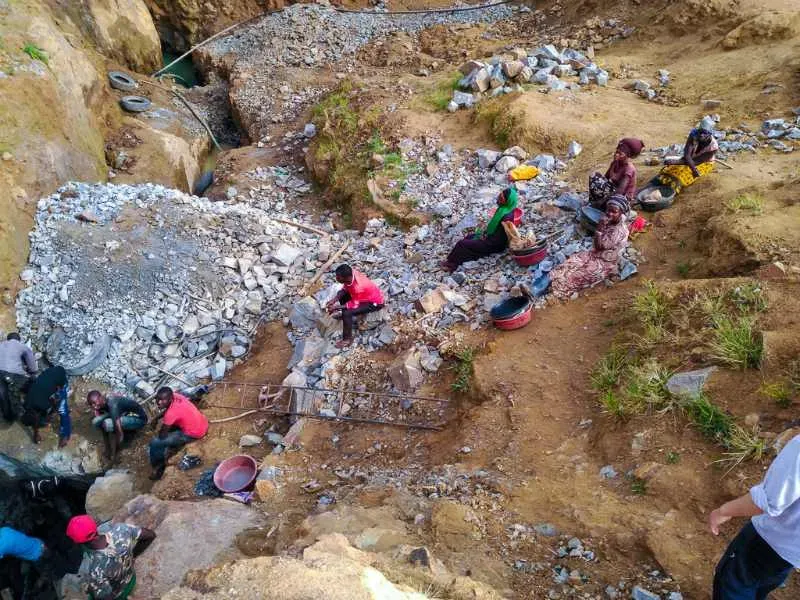
Artisanal and small-scale mining (ASM) and industrial mining in Congo differ fundamentally in scale, legal basis, operating method, traceability, and risk profile. Understanding the distinction is necessary for anyone sourcing DRC minerals, advising on supply-chain compliance, or analysing the sector for investment purposes.
Legal distinction
Under the DRC Mining Code, industrial mining requires an exploitation permit (Permis d'Exploitation) granted by CAMI to a formally constituted company. ASM operates in designated Zones d'Exploitation Artisanale (ZEA) without individual permits but under a collectively sanctioned zone designation. Outside ZEA, artisanal mining is illegal.
Industrial operators must satisfy financial capacity, technical capacity, environmental certificate, and state equity requirements under Article 71 of the Mining Code. ASM operators in legal ZEA are not subject to the same requirements and pay lower fiscal charges, though they are subject to a per-unit mineral tax on declared production.
Production model
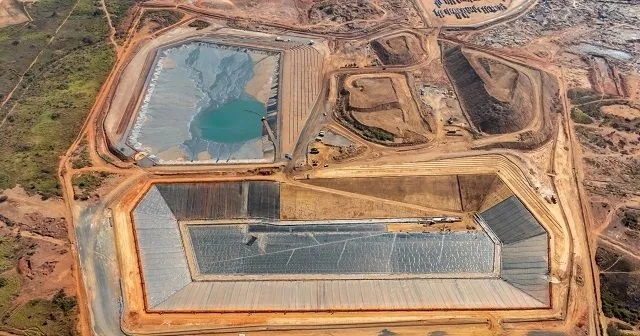
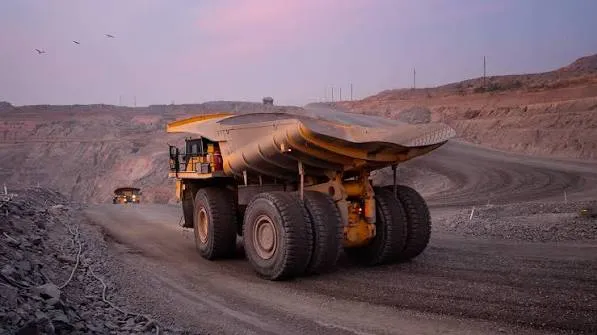
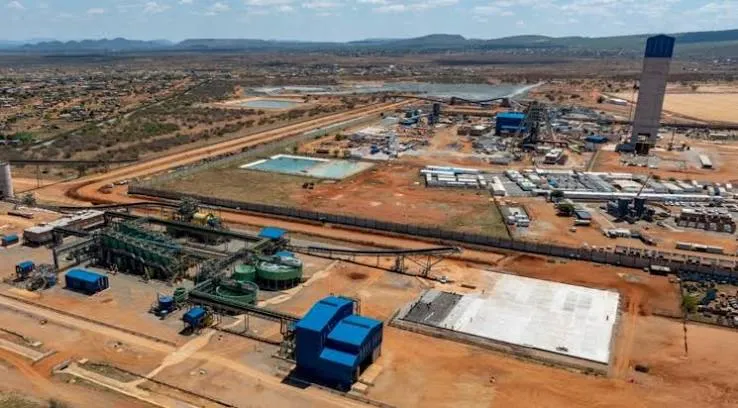
Industrial cobalt and copper mining in the DRC uses mechanised extraction — underground or open pit — with engineered ventilation, rock support, blasting circuits, and processing plants (flotation concentrators or SX-EW circuits). Output is measured continuously, declared to the DGI and Banque Centrale, and reported in operator quarterly and annual disclosures.
ASM production is manual. Artisanal miners dig with hand tools, often in unsupported pits, and sort ore by eye and hand at surface. Output is sold to local traders (negociants) in small lots and is not individually weighed or assayed at point of extraction in most cases.
The aggregate volume reaching processing intermediaries is partially tracked through trader declarations but is systematically understated.
Traceability and risk
Industrial cobalt and copper from listed operators has the highest traceability because company-level production data is audited under exchange listing requirements and is independently verified as part of environmental and social auditing processes. The OECD, RMI, and Copper Mark assurance schemes also apply to industrial operations.
ASM cobalt carries lower traceability by default. Physical tagging systems (iTSCi) and RMI cobalt schemes address part of the gap but have documented limitations.
The risk inventory for ASM cobalt includes: child labour at surface sorting; unsafe underground working conditions; armed-group presence at certain sites in provinces other than Lualaba; price manipulation in trader networks; and misreporting of production volumes.
Why buyers care
Downstream buyers — battery manufacturers, automotive OEMs, and their Tier 1 suppliers — care about the ASM-vs-industrial distinction because their regulatory obligations require them to. The EU Battery Regulation requires due diligence on cobalt supply chains as a condition of EU market access. US EV tax credit rules under the Inflation Reduction Act create financial incentives tied to supply-chain conditions. And reputational risk from documented child-labour or human-rights failures in supply chains is an ongoing governance exposure for listed companies.