While many will read Tanzania's latest graphite announcement as a mining story, the more useful read is as a trade, logistics, and industrialisation story. The signal hiding inside the May 28 deal is not the mine. It is what the mine's history reveals about which links in the value chain actually decide who captures the value.
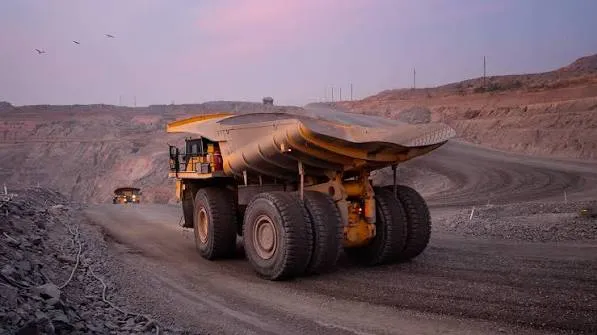
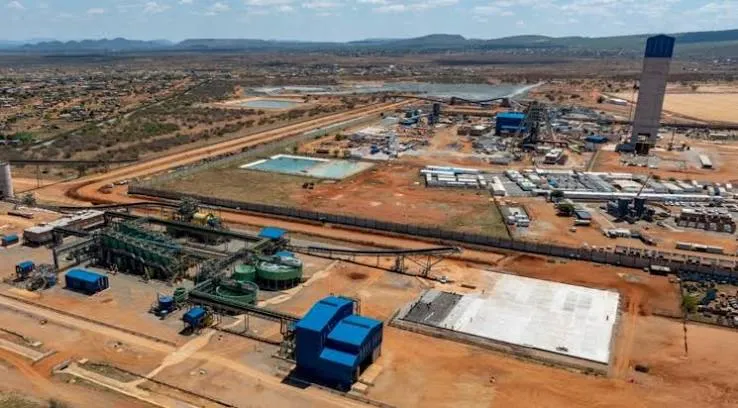
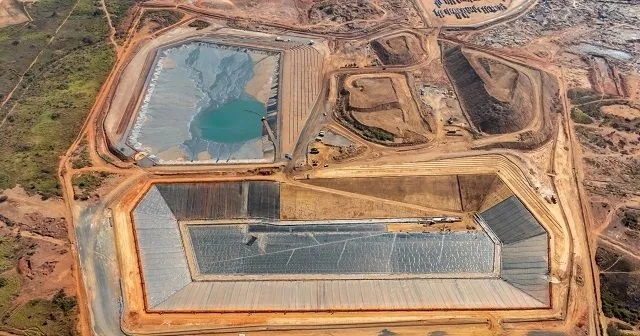
On 28 May 2026, Tanzania formalised its 16% non-dilutable free carried interest in the Lindi Jumbo Graphite Mine through the creation of Ndovu Graphite Limited, a joint venture with Lindi Jumbo Limited (retaining 84%) signed in Ruangwa District, Lindi Region, by Minister of Minerals Anthony Mavunde. The project is valued at over $82 million, has a 24-year mine life, an annual production capacity of 40,000 tonnes of graphite concentrate, and has generated more than 300 jobs. Lindi Jumbo's ore grade — 17.9% Total Graphitic Carbon — is among the highest in Africa, against confirmed reserves of 5.5 million tonnes. The mine sits approximately 200 km from the port of Mtwara.
The wider picture is what makes the announcement strategically meaningful. Tanzania ranks sixth globally in graphite production at 25,000 tonnes annually, with output doubling year-on-year in 2024 per the USGS. There are two large-scale operating mines — Lindi Jumbo in Ruangwa, and God Mwanga in Tanga. More than 30 companies hold medium and large-scale graphite licences, with 28 additional licence holders at various stages of commencing production. Graphite is a critical mineral in the global energy transition: a lithium-ion battery anode is up to 95% graphite by weight, and global demand is projected to grow nearly five-fold by 2050. China currently produces around 1.2 million tonnes annually and remains the global leader.
So far, so well-rehearsed. The detail that makes Tanzania's graphite trajectory a trade story, not just a mining story, is in the Lindi Jumbo backstory. Lindi Jumbo Limited was previously a wholly-owned subsidiary of Walkabout Resources, the ASX-listed Australian developer that took the project through scoping, feasibility, financing, and construction. Walkabout collapsed into voluntary administration in November 2024. The reasons publicly cited: cash flow problems linked to port delays at Dar es Salaam and cost overruns.
Read that again. The company that built one of Africa's highest-grade graphite mines did not go under because of the geology, or the political risk, or commodity prices, or extraction technology. It went under because it could not get its product reliably to the global market through the country's port. The deposit was world-class. The logistics chain around it was not. The corporate vehicle that owned the mine died, the mine was rescued under new arrangements, and now the Tanzanian state has formalised a stake in the asset — but the structural lesson sits there unaddressed in most of the coverage: world-class mineral resources do not generate value if they cannot move. The mine is now producing at 40,000 tonnes annual capacity, but India remains its principal export market, with China and Germany qualification still in progress. Every link of that journey — from Ruangwa to Mtwara to Mumbai or Hamburg — is a logistics decision.
This is where the announcement intersects with a larger reality across East Africa. As graphite production scales — and the 30 medium-and-large licence holders, plus the 28 in pre-production, suggest scaling that will be measured in multiples within five years — the region will need transport corridors, port capacity, warehousing, customs facilitation, project logistics, and regional supply-chain solutions that can carry product reliably to global buyers. EcoGraf's Epanko Graphite Project, also in Tanzania, has secured EU interest in financing infrastructure including road upgrades, substation expansion, and skilled-labour training, on top of the mining investment itself. The European Union has explicitly framed its interest as strengthening EU graphite supply chains, not just buying the metal. That signals that the infrastructure around the mine is, in some cases, more financeable than the mine itself.
For investors and operators looking at East Africa's critical-minerals story, the implication is clear. The long-term winners will not only be those extracting the minerals. They will also be those building the corridors, the port capacity, the processing, and the commercial structures that connect those resources reliably to global markets. The Walkabout collapse is a cautionary tale precisely because it shows that the extraction side can be solved while the logistics side remains the binding constraint — and that when logistics fails, mining capital simply moves elsewhere.
There is also a value-capture question that Tanzania, like the DRC and like every African producer of critical minerals, will eventually have to confront. Graphite leaves Lindi Jumbo as concentrate. The transformation steps that turn concentrate into anode material — spherical purification, coating, the high-margin processing that determines whether the country captures cents or dollars per kilogram of value — happen elsewhere. The current architecture sees Tanzania graduating to a sixth-place producer of raw material. The strategic question, identical to the one being asked about Congolese cobalt and copper, is whether the country can move up the chain — and whether the infrastructure being built around the mines will support that move or simply lock in the export-of-raw-concentrate model.
Tanzania's graphite story has been told mostly as a mineral discovery story. It is more usefully read as a test of whether African producers can build the infrastructure and commercial architecture around their critical-mineral endowments fast enough to capture the value before the global market consolidates around suppliers who have done so. The Lindi Jumbo deal is one small piece of that test. The corridors, the ports, the qualification programmes into Chinese and German buyer specifications, the EU infrastructure financing, and the processing decisions still to come — those are the larger story. East Africa's next growth chapter will be written through the intersection of critical minerals, industrialisation, trade corridors, and global supply chains. The Walkabout file is a reminder of what happens when the chain breaks.