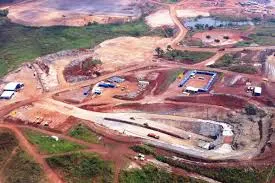
The Democratic Republic of Congo produces approximately 72% of the world's cobalt — the mineral that makes rechargeable batteries work. Without DRC cobalt, the global electric vehicle industry, smartphone supply chain, and grid-scale energy storage sector would not exist at their current scale. No other single country dominates a critical industrial mineral to the degree that the DRC dominates cobalt. This is the story of how that happened, who controls it, and why it is one of the most contested supply chains in the world.
What Is Cobalt and Why Does It Matter?
Cobalt is a hard, lustrous, silver-grey metal found in the Earth's crust primarily as a by-product of copper and nickel mining. Its most important modern application is as a cathode material in lithium-ion batteries — the same batteries that power electric vehicles, laptops, smartphones, power tools, and grid-scale energy storage systems.
In a lithium-ion battery, cobalt is used in the cathode — the positive electrode — in compounds such as:
- NMC (Nickel Manganese Cobalt): The dominant cathode chemistry in long-range EVs, typically containing 10–20% cobalt by weight
- NCA (Nickel Cobalt Aluminium): Used by Tesla in its cylindrical cells, approximately 9–15% cobalt
- LCO (Lithium Cobalt Oxide): Used in smartphones and laptops, approximately 60% cobalt — the highest cobalt intensity of any cathode chemistry
Cobalt's role is thermal stability — it prevents batteries from overheating and catching fire. As battery manufacturers have worked to reduce cobalt content (due to cost and supply concentration concerns), they have found that cobalt cannot be fully eliminated from NMC and NCA chemistries without significant trade-offs in energy density, cycle life, or safety.
Global cobalt consumption by sector (2024):
- Battery applications (EVs, consumer electronics, energy storage): ~75%
- Superalloys (jet engines, gas turbines): ~12%
- Hard metals and cutting tools: ~5%
- Other industrial uses: ~8%
The DRC's Cobalt Dominance: The Numbers
| MetricFigure | |
| DRC share of global cobalt production | ~72% (USGS 2024) |
| DRC cobalt production (2024) | ~160,000–180,000 tonnes |
| DRC cobalt reserves | ~4 million tonnes (~50% of global reserves) |
| Next largest producer | Australia (~5%) |
| Next largest reserve holder | Australia (~17%) |
| Global cobalt production (2024) | ~230,000–250,000 tonnes |
The scale of the DRC's dominance is without precedent for any major industrial commodity. Saudi Arabia produces approximately 12% of global oil — a figure considered dangerously concentrated. The DRC produces over 70% of cobalt. By any measure of supply concentration, cobalt is the world's most strategically exposed critical mineral.
How the DRC Came to Dominate Cobalt
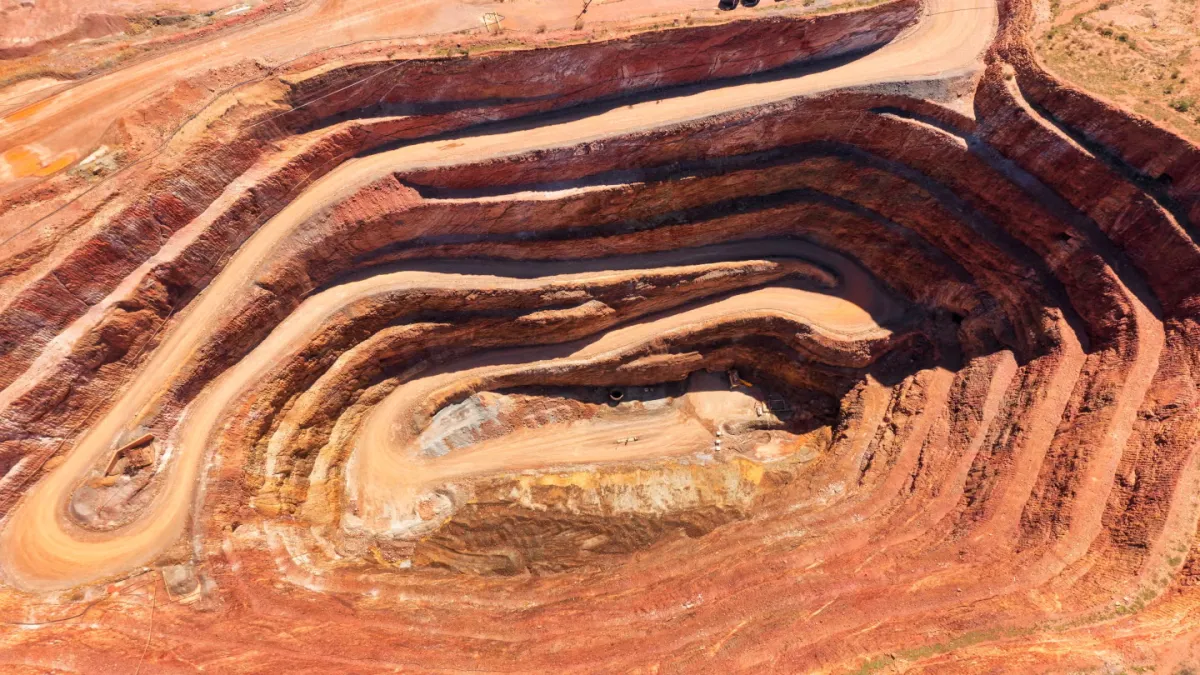
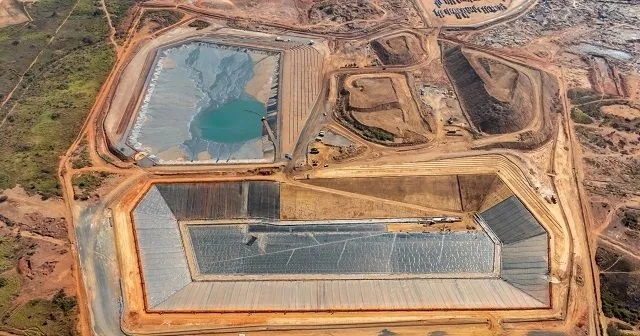
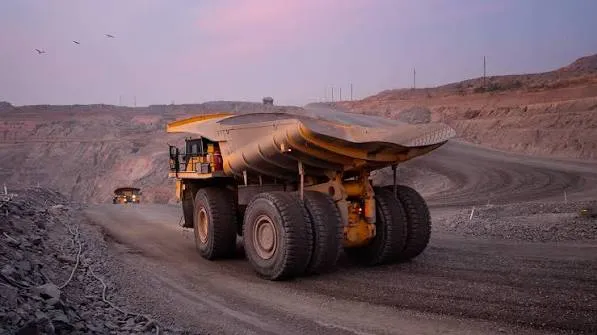
The DRC's cobalt dominance is geological, not political. The Central African Copperbelt — stretching across Lualaba and Haut-Katanga Provinces in the DRC and into Zambia — contains the world's largest and highest-grade copper-cobalt deposits. In the DRC specifically, cobalt occurs in unusually high concentrations alongside copper, at grades of 0.1–0.3% cobalt — far exceeding the 0.02–0.05% grades typical of cobalt-bearing ores elsewhere in the world.
The DRC's cobalt geology was known for decades, but it was the explosion of lithium-ion battery demand — beginning with the smartphone revolution in the 2000s and accelerating with the EV revolution in the 2010s — that transformed cobalt from a niche industrial metal into one of the most strategically important commodities in the world.
Between 2010 and 2020, cobalt demand from the battery sector grew by over 600%. The DRC was the only country with the geological endowment and existing mining infrastructure to respond to that demand at scale.
Who Mines DRC Cobalt? The Key Producers
1. Glencore — Kamoto Copper Company (KCC)
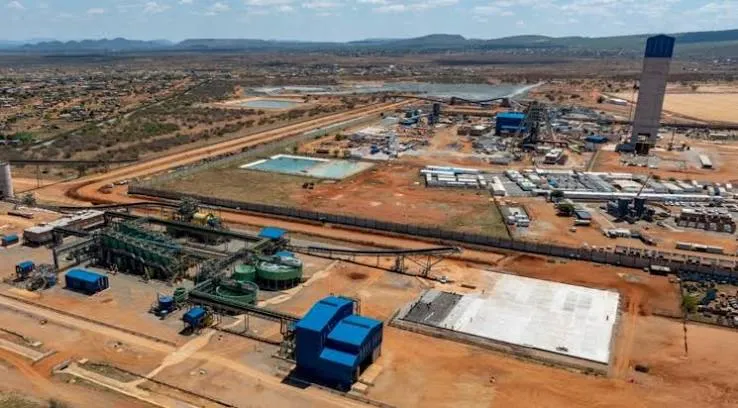
Glencore is the world's largest cobalt producer and the world's largest cobalt trader. Its KCC operations at Kolwezi produced approximately 20,000–22,000 tonnes of cobalt in 2024. Glencore markets cobalt directly through its trading division — meaning it not only mines the metal but also controls a significant share of the global cobalt trading market.
2. CMOC Group — Tenke Fungurume Mining (TFM)
CMOC Group (formerly China Molybdenum, HKEX: 3993) operates Tenke Fungurume — the world's second-largest cobalt mine — producing approximately 18,000–20,000 tonnes of cobalt per year after its Phase 3 expansion. CMOC also operates the Kisanfu project (adjacent to TFM), which adds further cobalt production. CMOC became a dominant cobalt producer almost overnight with its 2016 acquisition of TFM from Freeport-McMoRan.
3. Ivanhoe Mines — Kamoa-Kakula
Kamoa-Kakula is primarily a copper mine but produces significant cobalt as a by-product. As Phase 3 develops and the on-site smelter processes more concentrate, cobalt recovery is expected to increase substantially.
4. Chemaf SA (Shalina Resources) — Etoile and Mutoshi Mines
Chemaf operates the Etoile Mine — described as the world's fourth-largest cobalt mine as of 2019 — and is developing the Mutoshi project in Kolwezi, backed by a $600 million financing agreement with Trafigura. At full production, Chemaf's two assets are expected to produce over 20,000 tonnes of cobalt per year.
5. Sicomines SARL
The Sino-Congolaise des Mines joint venture (68% China Railway Group + Sinohydro, 32% Gécamines) produced approximately 17,000 tonnes of cobalt in 2021 — making it one of the top five cobalt producers in the DRC. Sicomines is the centrepiece of China's landmark infrastructure-for-minerals deal in the DRC.
6. Ruashi Mining (Jinchuan Group / Metorex)
Ruashi Mining, located 10 km east of Lubumbashi, is operated by Metorex Ltd, which is wholly owned by Jinchuan Group — China's largest nickel producer. The operation produces copper cathodes and cobalt hydroxide from three open-pit mines.
China's Control of DRC Cobalt: The Full Picture
Chinese companies do not merely mine DRC cobalt — they control the entire value chain from mine to battery cell.
Mining: CMOC (TFM + Kisanfu), Sicomines (China Railway + Sinohydro), CNMC (Deziwa), Zijin (Kamoa 39.6% + Manono), MMG (Kinsevere), Ruashi (Jinchuan), Huayou Cobalt (supply chain), CATL (offtake agreements) — collectively account for approximately 80% of DRC cobalt output by value.
Processing: Chinese companies control approximately 80% of global cobalt refining capacity, primarily through facilities in Zhejiang, Jiangxi, and Guangdong Provinces. DRC cobalt concentrate and hydroxide is shipped predominantly to Chinese refineries, where it is processed into battery-grade cobalt sulphate.
Battery manufacturing: China accounts for approximately 75% of global lithium-ion battery cell manufacturing capacity. Companies including CATL, BYD, CALB, and Gotion dominate global EV battery supply.
The result is a vertically integrated supply chain in which Chinese companies control mining, refining, and battery cell manufacturing — with Western automakers and governments dependent on this chain for the batteries they need to meet their electrification targets.
The Cobalt Price Collapse and Market Instability (2022–2026)
Cobalt's strategic importance does not translate into price stability. The cobalt market experienced one of the most dramatic boom-bust cycles in commodity history between 2018 and 2025:
- 2018 peak: Cobalt reached approximately $95,000 per tonne as battery demand surged and supply appeared constrained
- 2019–2020 correction: Prices fell to $30,000–35,000/tonne as DRC supply ramped up rapidly
- 2021–2022 recovery: Prices recovered to $80,000–85,000/tonne on EV demand optimism
- 2022–2025 collapse: A wave of new DRC supply — particularly from CMOC's TFM Phase 3 expansion — flooded the market. By late 2024, cobalt prices had fallen to approximately $24,000–26,000/tonne — below the all-in cost of production for many mines
- 2025 policy response: In February 2025, the DRC government introduced a four-month cobalt export suspension to support prices, followed by the announcement of export quotas from October 2025
The cobalt price collapse had severe consequences. Several junior miners suspended operations. Western companies seeking to develop alternative cobalt sources found projects uneconomic. Ironically, the price collapse — driven by Chinese-controlled oversupply — reinforced Chinese dominance by making it harder for non-Chinese producers to compete.
The Geopolitical Battle for DRC Cobalt
The DRC cobalt supply chain has become a central theatre of the US-China strategic competition.
China's Position
Two decades of patient investment — beginning with the Sicomines infrastructure-for-minerals deal in 2008 — gave Chinese SOEs and private companies an entrenched position in DRC cobalt. Chinese companies offered infrastructure investment, development finance, and state-backed capital that Western companies could not match. The result: Chinese firms control approximately 80% of DRC cobalt output by value.
The US Counter-Strategy
The United States has moved aggressively since 2023 to create alternative supply chains:
- Mineral Security Partnership (MSP): A coalition of 14 governments (US, EU, UK, Australia, Japan, Canada, South Korea) committed to financing critical mineral projects that meet ESG and transparency standards
- DRC minerals-for-security framework: In 2025, preliminary US-DRC talks produced a framework for American companies to gain preferential access to DRC minerals in exchange for security assistance, infrastructure financing, and diplomatic support
- Gécamines-Mercuria-DFC JV (2026): The US Development Finance Corporation took an equity stake in a Gécamines-Mercuria joint venture to market 500,000 tonnes per year of copper cathodes and significant cobalt volumes to Western buyers — the first major Western-aligned marketing channel from the DRC
- USAID artisanal mining programmes: The US has funded formalisation of artisanal cobalt mining in the DRC, partly to address child labour concerns and partly to create supply chains certifiable for Western buyers
The DRC's Strategy: Playing Both Sides
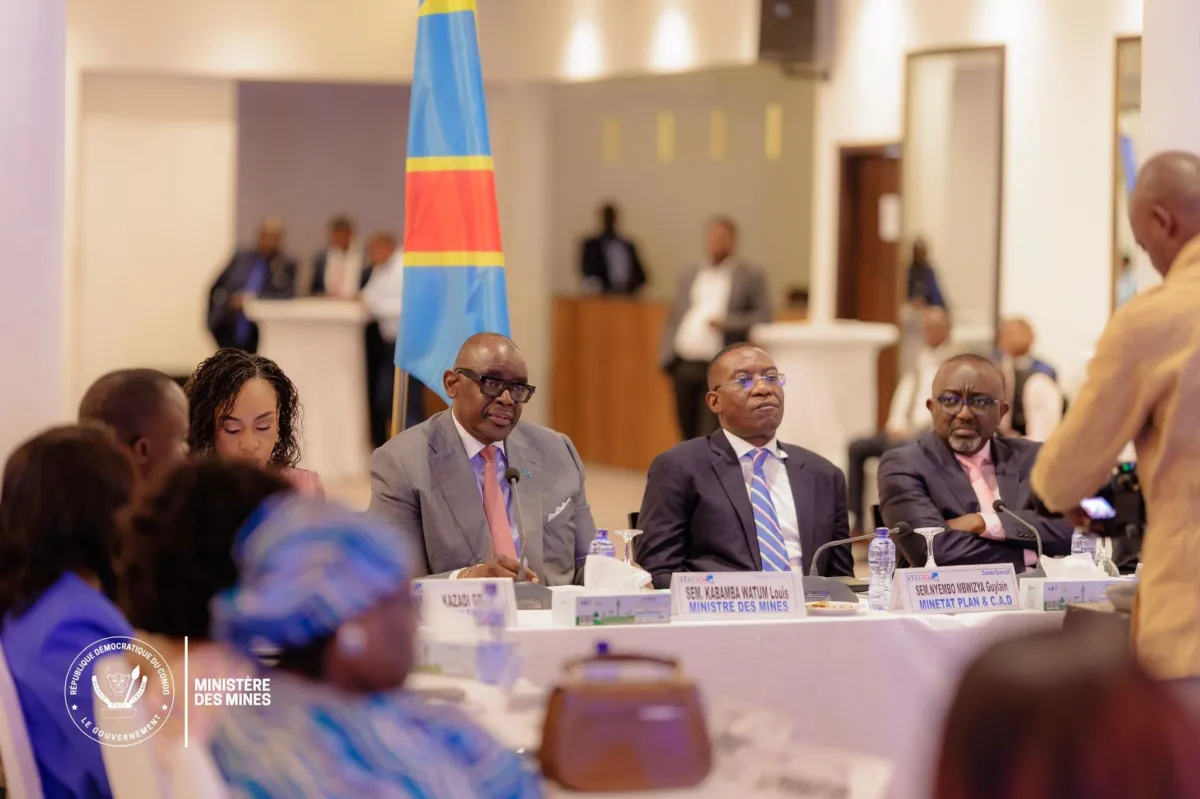
The DRC government under President Tshisekedi has pursued a deliberate strategy of leveraging both Chinese and Western interest to maximise its own returns:
- Sicomines renegotiation (January 2024): The Fifth Amendment raised the infrastructure commitment from $3 billion to $7 billion, after findings that Chinese partners earned ~$10 billion while delivering only $822 million in infrastructure
- Sicomines audit (March 2026): The DRC government appointed Mayer Brown (international law firm) to conduct a comprehensive independent audit of Sicomines operations from 2008 to 2024
- Cobalt export quotas (October 2025): Established export quotas as a market management tool — asserting sovereignty over the resource
- US engagement: Active pursuit of the minerals-for-security framework as a counterweight to Chinese dominance
Artisanal Cobalt Mining: The Human Cost
Approximately 15–20% of DRC cobalt output comes from artisanal and small-scale mining (ASM) — informal miners working with hand tools in often dangerous conditions. Artisanal cobalt mining has been associated with:
- Child labour: UNICEF estimated in 2016 that approximately 40,000 children worked in DRC mining, primarily in cobalt. Subsequent years have seen government crackdowns, NGO programmes, and corporate supply chain audits reduce but not eliminate the practice
- Safety: Artisanal cobalt tunnels — known as creuseurs — frequently collapse. Hundreds of miners have died in tunnel collapses
- Health: Cobalt dust exposure causes hard metal lung disease (cobalt lung); artisanal miners have minimal protective equipment
- Traceability: Artisanal cobalt enters the formal supply chain through négociants (traders) and is difficult to trace to individual mines — creating reputational risk for brands in the supply chain
In response, several initiatives have been launched:
- ITSCI (ITRI Tin Supply Chain Initiative): Traceability programme covering DRC artisanal cobalt
- Responsible Minerals Initiative (RMI): Corporate supply chain audit standard used by Apple, Tesla, and major automakers
- SAEMAPE: DRC government artisanal mining authority, working to formalise and regulate the sector
- Fair Cobalt Alliance: Industry body supporting improved conditions for artisanal miners
The Future of Cobalt: Battery Chemistry and Demand Trends
The cobalt market faces a structural tension: demand is growing (driven by EVs) but battery manufacturers are actively working to reduce cobalt intensity per battery.
Cobalt reduction trends:
- NMC 111 (equal parts nickel, manganese, cobalt) has been largely replaced by NMC 622 and NMC 811 (8 parts nickel, 1 cobalt, 1 manganese) — reducing cobalt content by approximately 70% per kWh
- LFP (Lithium Iron Phosphate): Contains no cobalt. Now accounts for approximately 40% of global EV battery production (BYD Blade Battery, CATL standard range). LFP is gaining market share in entry-level EVs
- Cobalt-free NMX chemistries: Under development at several laboratories but not yet commercial
The net effect: Despite significant cobalt intensity reduction per battery, total cobalt demand from the battery sector is still projected to grow from approximately 175,000 tonnes per year (2024) to approximately 250,000–300,000 tonnes per year by 2030, driven by the overall volume growth in EV production.
The DRC's cobalt — and the geopolitical contest over it — will remain central to the global energy transition for at least the next decade.
Frequently Asked Questions
Where does cobalt come from? Approximately 72% of the world's cobalt comes from the Democratic Republic of Congo (DRC), primarily as a by-product of copper mining in the provinces of Lualaba and Haut-Katanga. The next largest producers are Australia (~5%), Philippines (~3%), and Russia (~4%).
Why is cobalt important for electric vehicles? Cobalt is a key component of the cathode in lithium-ion batteries used in electric vehicles. It provides thermal stability — preventing batteries from overheating — and contributes to energy density and cycle life. Most long-range EVs use NMC or NCA battery chemistries which contain 10–20% cobalt.
Do all electric vehicles use cobalt? No. EVs using LFP (Lithium Iron Phosphate) batteries contain no cobalt. LFP is used in many short-range and budget EVs, including BYD's standard-range models and Tesla's standard-range Model 3. However, most long-range EVs still use cobalt-containing NMC or NCA chemistries.
Why did cobalt prices collapse? Cobalt prices fell from approximately $80,000/tonne in 2022 to approximately $24,000/tonne in 2024–2025, primarily due to a large increase in DRC supply — particularly from CMOC's TFM Phase 3 expansion — which flooded the market. The DRC government responded with an export suspension (February 2025) and export quotas (from October 2025).
Who controls cobalt supply? Chinese companies control approximately 80% of DRC cobalt output and approximately 80% of global cobalt refining capacity. The major producers include Glencore, CMOC Group, Sicomines, Chemaf SA, and Ivanhoe Mines (DRC); processing is dominated by Huayou Cobalt, CATL, GEM, and others in China.
Is cobalt ethically sourced? Industrial cobalt from large-scale mines in the DRC is generally subject to international ESG standards, third-party audits, and supply chain traceability programmes. Artisanal cobalt (approximately 15–20% of DRC output) has been associated with child labour and unsafe working conditions, though improvement programmes are active. Major buyers including Apple, Tesla, and Volkswagen publish supply chain transparency reports.
Sources: USGS Minerals Yearbook 2024; IEA Critical Minerals Market Review 2024; Glencore Annual Report 2024; CMOC Group Annual Report 2024; Benchmark Mineral Intelligence Cobalt Market Report 2025; UNICEF DRC Child Labour Report; Responsible Minerals Initiative 2024; DRC Ministry of Mines Statistical Bulletin 2024.
Last updated: May 2026. Africa Mining Network updates this article annually.