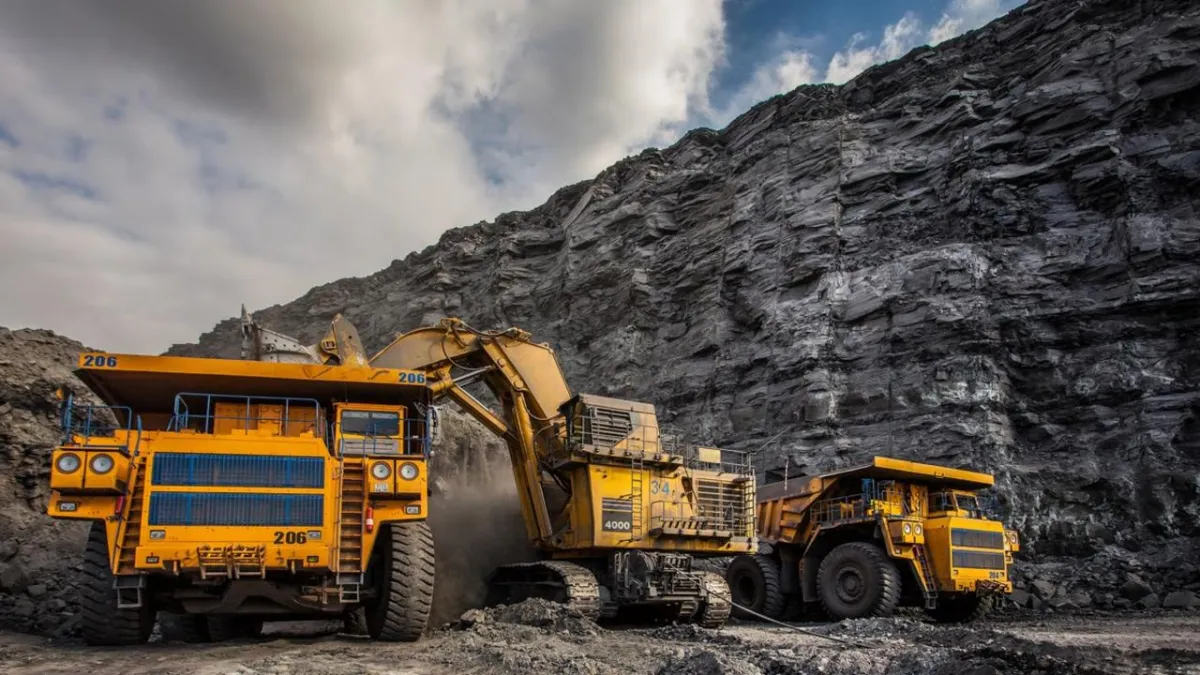
Artisanal and small-scale mining (ASM) of cobalt in the DRC is legal within the country's formal ASM framework, but the distance between legal framework and field reality is large. The sector involves an estimated several hundred thousand miners, operates primarily in Lualaba province, produces between 15 and 25 percent of national cobalt output, and generates most of the sourcing-risk disclosures that battery manufacturers, automotive OEMs, and their investors must manage.
What ASM means in the DRC
The DRC Mining Code establishes a formal category for artisanal and small-scale mining. Under the Code, artisanal mining is legal in designated areas called Zones d'Exploitation Artisanale (ZEA). A ZEA is a defined geographic area where individual artisanal miners may dig and produce minerals without an individual exploitation permit, operating instead under the collective designation of the zone.
CAMI is responsible for designating ZEA and has identified approximately 30 active zones in Lualaba province according to its 2023 annual report. Outside designated zones, mining by artisanal miners is technically illegal. In practice, the boundary between legal ZEA activity and non-compliant digging in permit-adjacent areas or on industrial concessions is poorly enforced and frequently crossed.
Artisanal miners extract cobalt-bearing ore — primarily heterogenite, the characteristic copper-cobalt mineral in the Copperbelt — by hand, using manual digging tools, and sometimes descend into unsupported pits to reach higher-grade ore. They sell ore or crude concentrate to negociants (local traders), who aggregate and on-sell to processing companies or export agents.
How copper-cobalt ASM is changing
The ASM cobalt sector in Lualaba province has been in transition since approximately 2019, when several major industrial buyers — under pressure from EU and US downstream customers — began implementing due-diligence requirements that excluded non-traceable, non-audited supply streams.
The most significant structural response has been the growth of what practitioners call semi-industrial or mechanised ASM — operations that use small mechanical excavators rather than pure hand-digging, often organised under cooperatives or company structures rather than purely individual miner arrangements. Pact and the responsible sourcing community have documented this transition in DRC field reports.
Semi-industrial ASM can produce higher volumes per operator than pure artisanal mining and may be more amenable to traceability systems because production is more concentrated geographically. However, it also raises questions about whether operators that size still qualify for the legal ASM designation or should be regulated as small-scale industrial miners under a different permit category.
Governance and traceability issues
The governance of DRC cobalt ASM involves multiple actors: CAMI for land and permit oversight; the Division des Mines (provincial mining authority) for operational supervision; the police and army for site-level order; and SAEMAPE (Service d'Assistance et d'Encadrement des Mines Artisanales et de Petite Envergure), the government agency specifically responsible for supporting and supervising artisanal miners.
Traceability systems that have been applied to DRC ASM cobalt include the iTSCi programme (managed by ITRI in partnership with Pact), which uses physical tagging at extraction and trading points; the Responsible Minerals Initiative's (RMI) cobalt refinery scheme; and commercial traceability platforms operated by several technology companies.
The limitations of these systems are documented in EITI and OECD reports. Physical tags can be transferred between compliant and non-compliant ore lots. SAEMAPE is under-resourced relative to the scale of the sector. ZEA boundary enforcement is limited. Revenue from informal cobalt trading is partly misreported, meaning both the national and provincial fiscal accounts understate ASM cobalt's actual contribution.
What formalisation would require
Full formalisation of DRC cobalt ASM would require: adequate ZEA designation to cover areas where miners are already working; sufficient SAEMAPE field staff to supervise extraction; functioning tag-and-trace systems that cover the full chain from pit to trading house; ban enforcement on child labour at sorting and trading sites; and processing intermediaries that buy only from verified compliant sources.
None of these conditions are fully met at present. Several are partially in place at specific well-resourced sites. Progress has been faster at sites where industrial companies have invested in local formalisation initiatives — Glencore's Kamoto Copper Company has run a formal artisanal mining zone at its concession boundary, and CMOC has implemented supply-chain risk systems for cobalt purchased from traders adjacent to its operations.
Semi-industrial shift and revenue
The shift from purely artisanal to semi-industrial ASM affects the revenue calculation for both miners and government. Semi-industrial operations generate higher volumes and in principle more taxable turnover, but because they often operate in the grey area between legal ASM and unlicensed small-scale industrial mining, their fiscal contribution is often not captured correctly. The EITI reconciliation reports note this as a gap in national mineral revenue accounting.