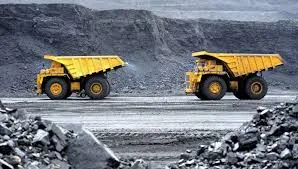
Africa holds the largest reserves of cobalt, platinum group metals, phosphate, chromite, and manganese of any continent on Earth. The continent produces 72% of the world's cobalt, 71% of its platinum group metals, and controls 70% of global phosphate reserves. These are not marginal contributions — they are structural dependencies that underpin the global electric vehicle industry, fertiliser supply chains, and clean energy transition.
This article compiles the most current production and reserve data for Africa's most strategically important minerals, drawing on data from the United States Geological Survey (USGS), World Gold Council, International Energy Agency (IEA), and the Intergovernmental Forum on Mining, Minerals, Metals and Sustainable Development (IGF).
Africa's Key Mineral Statistics at a Glance (2024–2026)
| MineralAfrica's sharePrimary countryGlobal significance | |||
| Cobalt | ~72% of production | DRC | EV batteries, superalloys |
| Platinum Group Metals | ~71% of production | South Africa | Catalytic converters, fuel cells |
| Phosphate reserves | ~70% of reserves | Morocco | Global food supply / fertilisers |
| Chromite | ~44% of production | South Africa | Stainless steel |
| Manganese | ~36% of production | South Africa, Gabon | Steel, EV battery cathodes |
| Bauxite | ~25% of exports | Guinea | Aluminium production |
| Gold | ~21% of production | Ghana, Mali, Sudan | Currency, electronics, jewellery |
| Diamonds | ~65% of production | Botswana, DRC, Angola | Industrial + gem use |
| Uranium | ~20% of production | Namibia, Niger | Nuclear energy |
Cobalt: The DRC's Global Dominance
The Democratic Republic of Congo is the world's dominant cobalt producer, accounting for approximately 72% of global cobalt mine production in 2024 (USGS Minerals Yearbook 2024). The DRC's cobalt reserves are estimated at 4 million tonnes — the largest in the world by a wide margin.
Cobalt is a critical input for lithium-ion battery cathodes used in electric vehicles, consumer electronics, and grid-scale energy storage. Every major EV manufacturer — including Tesla, BYD, Volkswagen, and Samsung SDI — depends on DRC cobalt in its supply chain.
Key DRC cobalt producers include:
- Glencore — Katanga Mining, the world's largest cobalt producer by volume
- CMOC Group — Tenke Fungurume, the world's second-largest cobalt mine
- Ivanhoe Mines — Kamoa-Kakula (copper-cobalt complex)
- Chemaf SA (Shalina Resources) — Etoile Mine, one of the top five cobalt mines globally
- Sicomines SARL — the Sino-Congolaise des Mines, a landmark China-DRC infrastructure-for-minerals JV
In February 2025, the DRC government introduced a four-month cobalt export suspension to support global prices amid severe market oversupply, followed by the announcement of export quotas from October 2025. Chinese companies, primarily through their control of processing and trading, account for approximately 80% of DRC cobalt output by value.
All DRC mining companies are listed in the Africa Mining Network DRC directory →
Platinum Group Metals: South Africa's Irreplaceable Position
South Africa holds approximately 87% of the world's known platinum group metal (PGM) reserves and produces approximately 71% of the world's platinum (World Platinum Investment Council, 2024). The Bushveld Igneous Complex — a geological formation stretching across Limpopo and North West Provinces — is the world's largest known PGM deposit by a factor of ten.
PGMs include platinum, palladium, rhodium, iridium, osmium, and ruthenium. They are essential for:
- Automotive catalytic converters (the largest end-use for both platinum and palladium)
- Hydrogen fuel cells (platinum is the primary catalyst)
- Industrial processes including glass production and petroleum refining
- Jewellery and investment products
South Africa's major PGM producers operating in the Bushveld Complex include:
- Sibanye-Stillwater — the world's largest primary platinum and palladium producer
- Impala Platinum (Implats) — Rustenburg, Marula, and Zimbabwe operations
- Anglo American Platinum (Amplats) — Mogalakwena, the world's largest open-pit PGM mine
- Northam Platinum — Booysendal and Zondereinde
Zimbabwe also holds significant PGM resources in the Great Dyke formation, with Zimplats (Implats subsidiary) and Mimosa Mining (Sibanye-Stillwater / Sumitomo) as key producers, contributing an estimated 12–14 tonnes of platinum per year.
Browse South Africa's platinum mining companies in the AMN directory →
Phosphate: Morocco's Strategic Dominance in Global Food Supply
Morocco and the disputed territory of Western Sahara together hold an estimated 70–75% of the world's known phosphate reserves (USGS, 2024), estimated at approximately 50 billion tonnes. This is not merely a mining statistic — it is a food security issue for the entire world. Phosphate rock is the primary input for phosphoric acid and phosphate fertilisers, which are essential for agricultural yields at scale.
OCP Group (Office Chérifien des Phosphates), the Moroccan state-controlled enterprise, is the world's largest phosphate producer and exporter, generating revenues of approximately $9.76 billion in 2024. OCP has invested over $13 billion in expanding its production and processing infrastructure since 2010, including a major push into fertiliser production for African markets — a strategic pivot from raw rock exports to downstream value-added products.
Other African countries with significant phosphate reserves include:
- Egypt (Abu Tartur deposit, ~1.2 billion tonnes)
- Algeria (Djebel Onk)
- Tunisia (Gafsa basin)
- Senegal and Togo (smaller but commercially active deposits)
OCP Group and Morocco's mining sector are profiled in the AMN Morocco directory →
Chromite: South Africa as the World's Primary Source
South Africa produced approximately 44% of global chromite ore in 2024, making it the world's largest chromite producer (USGS). The country's chromite reserves — concentrated in the Bushveld Igneous Complex — are the largest in the world, estimated at 3.5 billion tonnes.
Chromite is the only commercial source of chromium, which is essential for:
- Stainless steel production (the dominant end-use, approximately 85% of chromium consumption)
- Chrome chemicals for leather tanning, pigments, and surface treatment
- Refractory materials for high-temperature industrial processes
Zimbabwe is the second-largest chromite producer in Africa, with significant production from African Chrome Fields and other operators along the Great Dyke formation.
Manganese: Gabon and South Africa Lead the World
Africa produces approximately 36% of global manganese ore (Eramet, 2024), with South Africa and Gabon as the two dominant producers.
- South Africa holds the world's largest manganese reserves (approximately 2.4 billion tonnes, or ~30% of global reserves) concentrated in the Kalahari Manganese Field in the Northern Cape — the largest known manganese deposit in the world.
- Gabon is home to the world's largest high-grade manganese deposit at Moanda, operated by Comilog SA (an Eramet Group subsidiary), which produced 6.8 million tonnes of manganese ore in 2024.
Manganese is a critical input for steelmaking (approximately 90% of use) and is increasingly important as a battery cathode material in lithium manganese iron phosphate (LMFP) batteries, which are gaining market share in the EV sector.
Comilog and other manganese producers are listed in the AMN Gabon directory →
Gold: Africa Produces One in Five Ounces Mined Globally
Africa produced approximately 21% of global gold output in 2024 (World Gold Council). Unlike cobalt or PGMs, African gold production is geographically diversified across the continent — from West Africa's Birimian Greenstone Belt to East Africa's Archean cratons to South Africa's Witwatersrand Basin.
Top African gold-producing countries (2024):
- Ghana — approximately 130 tonnes/year; Africa's largest gold producer; hosts Newmont's Ahafo complex, Gold Fields' Tarkwa, and AngloGold Ashanti's Obuasi
- Mali — approximately 70 tonnes/year; B2Gold's Fekola, Barrick's Loulo-Gounkoto, Allied Gold's Sadiola
- Sudan — approximately 70 tonnes/year (significant artisanal sector)
- South Africa — approximately 100 tonnes/year; declining from historic peak of 1,000+ tonnes/year in 1970
- Tanzania — approximately 55 tonnes/year; Barrick's North Mara, Shanta Gold's New Luika
- Burkina Faso — approximately 55 tonnes/year; IAMGOLD Essakane, West African Resources
- Guinea — approximately 40 tonnes/year; growing rapidly
- DRC — approximately 35 tonnes/year; largely artisanal
Browse gold mining companies across all 22 countries in the AMN gold directory →
Emerging Critical Minerals: Africa's Next Frontier
Lithium
Africa holds the world's sixth-largest lithium resources, concentrated in:
- Zimbabwe — Africa's largest lithium resource; Bikita Minerals (Sinomine) and Arcadia Lithium (Huayou Cobalt) are the primary producers; combined investment exceeds $1.4 billion since 2021
- Mali — Ganfeng Lithium's Goulamina project is Africa's largest hard-rock lithium mine, with first production in 2024
- DRC — Manono Lithium (Zijin Mining + Cominière), commissioning June 2026; among the world's largest spodumene deposits
- Côte d'Ivoire — Kodal Minerals shipped its first lithium concentrate from the Bougouni project in May 2026 — a historic first for West Africa
Rare Earth Elements (REE)
Africa's rare earth potential is largely undeveloped but strategically significant, particularly following China's April 2025 export restrictions on dysprosium, terbium, gadolinium, and scandium:
- Uganda — Ionic Rare Earths' Makuutu project (532 million tonnes resource, 640 ppm TREO) is one of the world's largest ionic adsorption clay REE deposits; demonstration plant producing since Q1 2024
- South Africa — Rainbow Rare Earths' Phalaborwa project, containing yttrium and other heavy REEs
- Tanzania and Madagascar — significant REE exploration activity
Bauxite and Aluminium
Guinea is the world's largest bauxite exporter, accounting for approximately 25% of global seaborne bauxite supply (approximately 95–100 million tonnes per year). The SMB-Winning Consortium exports 55 million tonnes per year from Kamsar alone. The Simandou iron ore project (Rio Tinto/SimFer + Winning Consortium Simandou) in Guinea, which shipped its first cargo in December 2025, is expected to add 60 million tonnes per year of iron ore to world supply within five years.
Why Africa's Mineral Endowment Matters in 2026
The clean energy transition — electric vehicles, solar panels, wind turbines, grid-scale battery storage — is creating structural demand growth for cobalt, lithium, nickel, copper, manganese, and rare earth elements that significantly exceeds historical rates. Africa holds dominant or significant positions in nearly all of these commodities.
At the same time, geopolitical competition — particularly between China, the United States, and the European Union — is intensifying over access to African mineral supply. Chinese state-owned enterprises have invested over $30 billion in African mining over the past two decades.
The US is countering through the Mineral Security Partnership (MSP), the US-DRC minerals-for-security talks (2025–2026), and USAID/DFC financing for alternative supply chains.
The result is that African mining is no longer just an economic story — it is a strategic and geopolitical one. The decisions being made in Kinshasa, Lusaka, Accra, and Harare today will shape the global energy transition for the next 30 years.
Frequently Asked Questions
Which country in Africa produces the most cobalt?
The Democratic Republic of Congo (DRC) produces approximately 72% of global cobalt supply, making it the world's dominant cobalt producer by a wide margin. The country's cobalt is produced primarily as a by-product of copper mining in the Copperbelt region of Lualaba and Haut-Katanga Provinces.
Which African country has the most platinum?
South Africa holds approximately 87% of the world's known platinum reserves and produces approximately 71% of the world's annual platinum supply. Most South African platinum comes from the Bushveld Igneous Complex in North West and Limpopo Provinces.
Does Africa have lithium? Yes. Africa has significant lithium resources, concentrated primarily in Zimbabwe (Africa's largest lithium resource, 6th largest globally), Mali (Goulamina — Africa's largest hard-rock lithium mine), the DRC (Manono), and Côte d'Ivoire (Bougouni, first production 2026).
What percentage of the world's gold comes from Africa? Africa produces approximately 21% of the world's annual gold output. Ghana is Africa's largest gold producer, followed by Mali, Sudan, and South Africa. South Africa was historically the world's largest gold producer, but production has declined sharply since its peak in the 1970s.
What is Africa's most important mineral for the energy transition? Cobalt is currently the most strategically critical, given the DRC's near-monopoly on supply and its essential role in lithium-ion battery cathodes. However, copper (for electrical wiring and EV motors), lithium (for battery anodes), platinum (for hydrogen fuel cells), and manganese (for LMFP batteries) are all critically important and all significantly supplied by Africa.
Where can I find a directory of African mining companies? The Africa Mining Network directory lists mining companies, service providers, and industry bodies across 22 African countries, with detailed company profiles, contact information, and commodity classifications.
Sources: USGS Minerals Yearbook 2024; World Gold Council Gold Demand Trends 2024; IEA Critical Minerals Market Review 2024; World Platinum Investment Council 2024; Eramet Annual Report 2024; IGF Mining Policy Framework Assessment; OCP Group Annual Report 2024.
Last updated: May 2026. Africa Mining Network publishes annual updates to this article each January.