Responsible sourcing of minerals from the DRC means more than compliance with a checklist. Companies that source cobalt, copper, or 3T minerals from Congolese supply chains are expected to identify, manage, and disclose human-rights risks, conflict-finance risks, governance weaknesses, and traceability gaps — using systems and standards that can be independently verified. This article explains the framework in plain terms and describes what mine-level practice looks like at the operations where it is most systematically applied.
OECD framework in plain English
The OECD Due Diligence Guidance for Responsible Supply Chains of Minerals from Conflict-Affected and High-Risk Areas is the primary international standard for mineral supply-chain risk management in the DRC context. It applies to all companies — smelters, refiners, buyers, traders, and downstream manufacturers — that source minerals from conflict-affected or high-risk areas, a category that covers most of the DRC.
The guidance is built around a five-step framework:
Step 1: Establish strong company management systems. This means a publicly stated sourcing policy, internal compliance procedures, and supplier due diligence requirements flowing down the supply chain.
Step 2: Identify and assess risks. Map the supply chain to source and assess it against the OECD's list of red flags — armed-group involvement, systematic bribery, money laundering, serious human-rights abuses, non-payment of taxes to legitimate governments.
Step 3: Design and implement a strategy to respond to identified risks. Options include engaging to improve conditions, temporarily suspending supply, or ceasing sourcing from a supplier.
Step 4: Carry out independent third-party audit. Audits of smelters and refiners provide downstream buyers with a scalable verification mechanism.
Step 5: Report on due diligence. Public disclosure of due-diligence activities is expected for companies listed on exchanges with relevant reporting obligations and for large companies subject to the EU Conflict Minerals Regulation.
[Internal link: "OECD due diligence explained" → Pillar: What is the OECD due diligence guidance for Congo minerals?]
What RMI and Copper Mark signals mean
The Responsible Minerals Initiative (RMI), managed by the Responsible Business Alliance, operates the Responsible Minerals Assurance Process (RMAP). RMAP audits smelters and refiners against the OECD standard and provides a publicly available list of conformant facilities. Battery-grade cobalt sulfate refineries and copper refiners that appear on the RMAP conformant list have been independently audited against OECD criteria.
For institutional buyers, RMAP conformance at the refiner stage provides one form of assurance but does not verify conditions at the mine level. Mine-level conditions — including ASM sites adjacent to industrial operations — require separate assessment.
The Copper Mark is a mine-site responsible production standard developed by the Copper Mark association. It covers environmental, social, and governance criteria at the mine level and has been adopted by several DRC copper operators including Ivanhoe Mines and Glencore for their principal operations.
How site-level practice looks at KCC and Mutanda
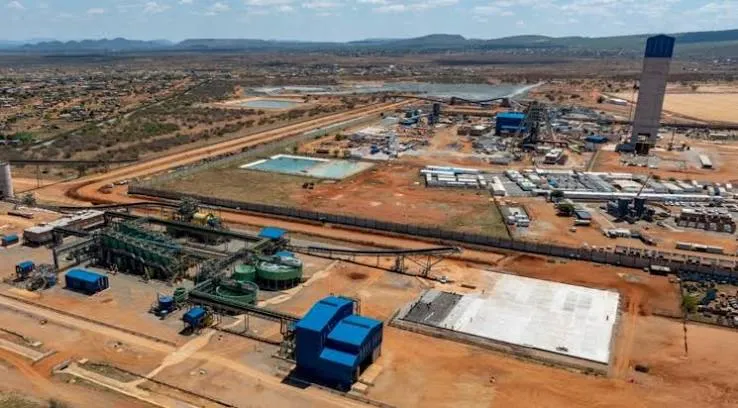
Glencore's KCC and Mutanda operations in Lualaba province represent the most extensively documented examples of large-scale responsible sourcing practice in the DRC copper-cobalt sector.
KCC operates a designated artisanal mining zone (ZEA) at its concession boundary, where artisanal miners are permitted to operate in a managed area with safety supervision and purchasing arrangements that include source verification. Glencore publishes an annual responsible sourcing and sustainability report that describes both the formal industrial operation's compliance programme and the community ASM management approach.
Mutanda returned from care and maintenance in 2022 with a revised social and environmental management framework that included supply-chain risk controls on third-party cobalt purchases. The operation does not purchase cobalt from external ASM sources directly; all production is from its own concession.
[Internal link: "Glencore DRC operations" → Pillar: KCC and Mutanda: Glencore's copper-cobalt footprint in the DRC]
RMAP and chain of custody
The RMI cobalt refinery programme requires that participating refiners document their cobalt input sources, conduct risk assessments of sourcing origins, and submit to independent audit. Refiners on the RMAP conformant list typically source cobalt hydroxide from industrial DRC mines on verified off-take agreements and, where they purchase from traders, require trader source documentation and due-diligence disclosures.
Chain of custody for cobalt from mine to refinery typically runs: cobalt hydroxide production at industrial mine → direct sale under off-take agreement to a named refinery → refinery processing into cobalt sulfate or metal → sale to cathode active material manufacturer → battery cell production. Each step in that chain can in principle be verified, but verification quality depends on the robustness of documentation at each transfer point.
Limits of assurance
Independent assurance of DRC mineral supply chains has documented limitations that buyers and their investors should understand:
Audit access. Some mine-site or trader-level audits in the DRC encounter access restrictions or document-completeness problems that result in qualified findings rather than clean opinions.
ASM coverage. RMAP and Copper Mark apply to industrial operations and refiners. ASM production that enters the industrial supply chain through traders is harder to audit at origin.
Price-sensitive fraud. When cobalt prices rise sharply, the financial incentive to misrepresent the origin of non-compliant ore as compliant increases. Physical tagging systems are not immune to this.
[Internal link: "ASM cobalt risks" → Pillar: ASM cobalt in the DRC: how the sector works and where the risks sit] [Internal link: "responsible sourcing explained" → AEO: What does responsible sourcing mean in DRC mining?]