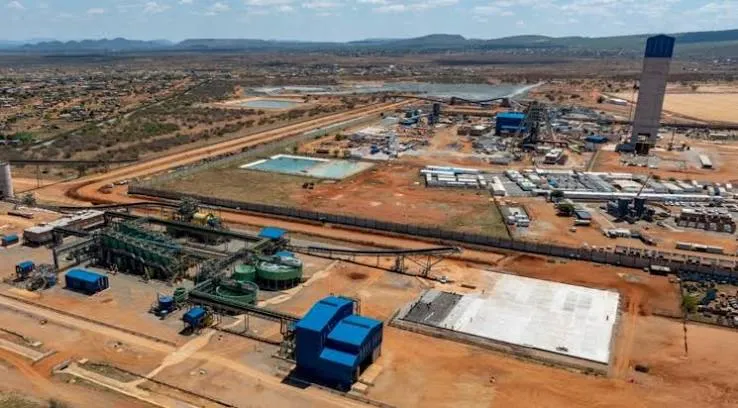
Infrastructure is one of the most persistent determinants of DRC mine economics and investment risk. The country lacks a reliable national electricity grid at the scale required by current and planned mining operations, has a road and rail network that imposes substantial transport costs, and depends on ports in neighbouring countries for all mineral exports. Understanding the infrastructure landscape is necessary for assessing project feasibility, operating cost structures, and the likely effect of major planned investments in the Lobito Corridor.
Power
The DRC's national electricity utility, SNEL (Société Nationale d'Electricité), operates the national grid from the Inga hydroelectric complex on the Congo River and several smaller hydro facilities. The Inga 1 and Inga 2 dams, commissioned in the 1970s and 1980s, have combined installed capacity of approximately 1,750 MW but have operated at a fraction of that due to maintenance constraints.
The national grid does not reach all mining areas with sufficient reliability or capacity. Major operators have responded through captive generation:
Kamoa-Kakula: Ivanhoe and Zijin's Kamoa-Kakula operation has a dedicated power supply arrangement supplemented by the on-site Mwadingusha hydro refurbishment project, bringing approximately 150 MW of newly rehabilitated power capacity to the Kolwezi grid.
Kibali: Barrick's Kibali mine operates entirely on hydroelectric power generated from dams on the Kibali River. Three run-of-river plants provide the mine with energy self-sufficiency — a critical advantage in a location with no grid access.
Other operators: Diesel generation remains a significant component of power costs at several operations that are not yet served by captive hydro. Diesel costs add materially to operating costs in the DRC context.
Inga 3, the proposed third-phase Inga dam development with design capacities of 4,800–11,000 MW (depending on design configuration), has been discussed for decades.
The project has attracted interest from South African, Chinese, and European investors at different points but has not reached financial close. If developed, Inga 3 would provide the power capacity needed for large-scale mineral processing within the DRC, including potential cobalt refining and other value-addition steps. As of April 2026, the project's timeline remains uncertain.
Roads
Road infrastructure in the DRC Copperbelt is adequate for current mining volumes at high cost. Kolwezi-to-border routes are unpaved in significant stretches and subject to seasonal deterioration. Operators maintain in-house road maintenance teams for critical sections of access roads.
The Kasumbalesa border crossing between DRC and Zambia handles large copper volumes daily and experiences periodic congestion.
Road transport within the DRC to the Zambia border is a cost item of $60–100 per tonne for copper cathode on most published estimates, depending on distance and season. Beyond the border, trucking or rail to Durban or Dar es Salaam adds further logistics cost.
Rail
The DRC's national rail network is operated by SNCC (Société Nationale des Chemins de Fer du Congo). The network covers routes from Lubumbashi to Ilebo in the central DRC and connects to Zambian rail at Sakania. Historical capacity and reliability constraints have made rail a secondary option for most large copper operators, which predominantly use road.
The Zambian and Zimbabwean rail sections connecting to Durban (through Beit Bridge) and Dar es Salaam are more reliable but still subject to periodic disruptions.
Lobito Corridor
The Lobito Corridor is the most significant infrastructure initiative affecting DRC mining logistics in the current decade. The project involves rehabilitating the Benguela Railway from Angola's Atlantic port of Lobito through Zambia to the DRC Copperbelt, and constructing a new rail branch from Zambia into Lualaba province.
Funding commitments include the US Development Finance Corporation, European Investment Bank, EU Global Gateway, and African Development Bank. An operator consortium led by Trafigura, Mota-Engil, and Vecturis was awarded the concession for the Angolan section in 2023.
The DRC extension branch requires additional permitting and funding.
When operational, the Lobito Corridor would reduce the export route from Lualaba copper operations to a port by approximately 1,000 kilometres compared to the Durban corridor, with Atlantic access preferable for European buyers and potentially competitive for US buyers.
Logistics cost savings for copper and cobalt shipped via Lobito versus Durban are estimated at $50–80 per tonne on various project feasibility assessments.
[Internal link: "Lobito Corridor article" → Supporting: Why the Lobito Corridor matters for Congo mining] [Internal link: "DRC exports" → Pillar: DRC export data for miners: copper, cobalt and gold explained]