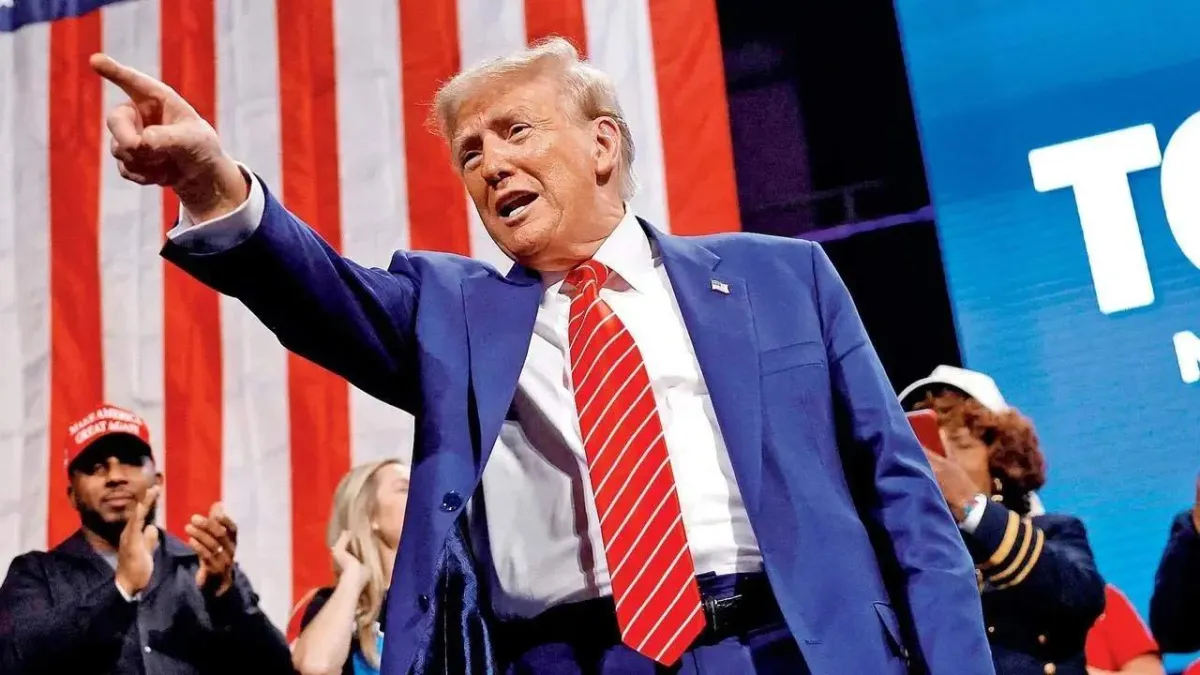
Gold prices eased in early Asian trading on Monday, weighed down by a stronger U.S. dollar after President-elect Donald Trump warned BRICS nations that his administration would require assurances they would not pursue plans for a new global currency. The remarks buoyed the greenback, making gold—a dollar-denominated commodity—more expensive for buyers using other currencies.
Spot gold traded around $2,635 an ounce, down 0.4% to $2,632.11 as of 9:13 a.m. in Singapore. The Bloomberg Dollar Spot Index, meanwhile, climbed 0.3%, extending last week’s rally. The precious metal fell nearly 3% over the past week, reflecting a pullback in safe-haven demand and the strengthening dollar.
Haven Demand Eases but Geopolitical Risks Persist
Gold’s recent losses can be partly attributed to a reduction in haven appetite following a U.S.-brokered cease-fire agreement between Israel and Hezbollah that took effect midweek. The truce temporarily cooled tensions in the Middle East, reducing demand for defensive assets like gold. However, concerns over an escalation in Russia’s war on Ukraine continue to provide underlying support for the metal, as investors remain wary of broader geopolitical risks.
Despite recent declines, gold remains up about 30% year-to-date, driven by a confluence of factors, including the Federal Reserve’s monetary easing, record central-bank purchases, and heightened economic and geopolitical uncertainty. Analysts at Goldman Sachs and UBS remain bullish, forecasting that the metal could set fresh records in 2025, fueled by persistent global risks and strong demand from central banks.
Market Focus Turns to U.S. Jobs Data
Traders are now shifting their focus to upcoming U.S. nonfarm payrolls data, set to be released later this week. The figures are expected to shape expectations ahead of the Federal Reserve’s next policy meeting on December 18. Lower borrowing costs typically favor gold, as the metal does not generate yield and becomes more attractive in a low-rate environment.
This delicate balance between rising interest rates and safe-haven demand has defined much of gold’s performance this year. While the Fed’s monetary easing cycle has supported gold prices, the metal remains sensitive to fluctuations in the dollar and shifts in investor sentiment.
Other Precious Metals Also Under Pressure
Gold was not the only casualty of a stronger dollar on Monday. Silver, platinum, and palladium also declined in early trading, reflecting broad pressure across the precious metals market. Still, gold’s resilience as a hedge against geopolitical and economic turmoil continues to attract long-term investors.
Broader Implications
President-elect Trump’s warning to BRICS nations highlights concerns over the potential emergence of a rival currency bloc that could challenge the dollar’s dominance in global trade. While such plans remain speculative, the remarks have underscored the U.S. dollar’s entrenched role as the world’s primary reserve currency, further strengthening the greenback.
At the same time, gold’s long-term appeal remains intact, supported by global central-bank purchases and its role as a hedge against both geopolitical instability and economic uncertainty. With major institutions like Goldman Sachs and UBS projecting bullish trajectories for the metal in the years ahead, gold continues to serve as a critical asset for investors navigating unpredictable markets.
For now, the interplay between a strengthening dollar, evolving geopolitical risks, and upcoming U.S. economic data will set the tone for gold’s short-term trajectory. As markets digest Trump’s comments and prepare for the Federal Reserve’s next move, the precious metal will remain in focus as a barometer of global risk sentiment.